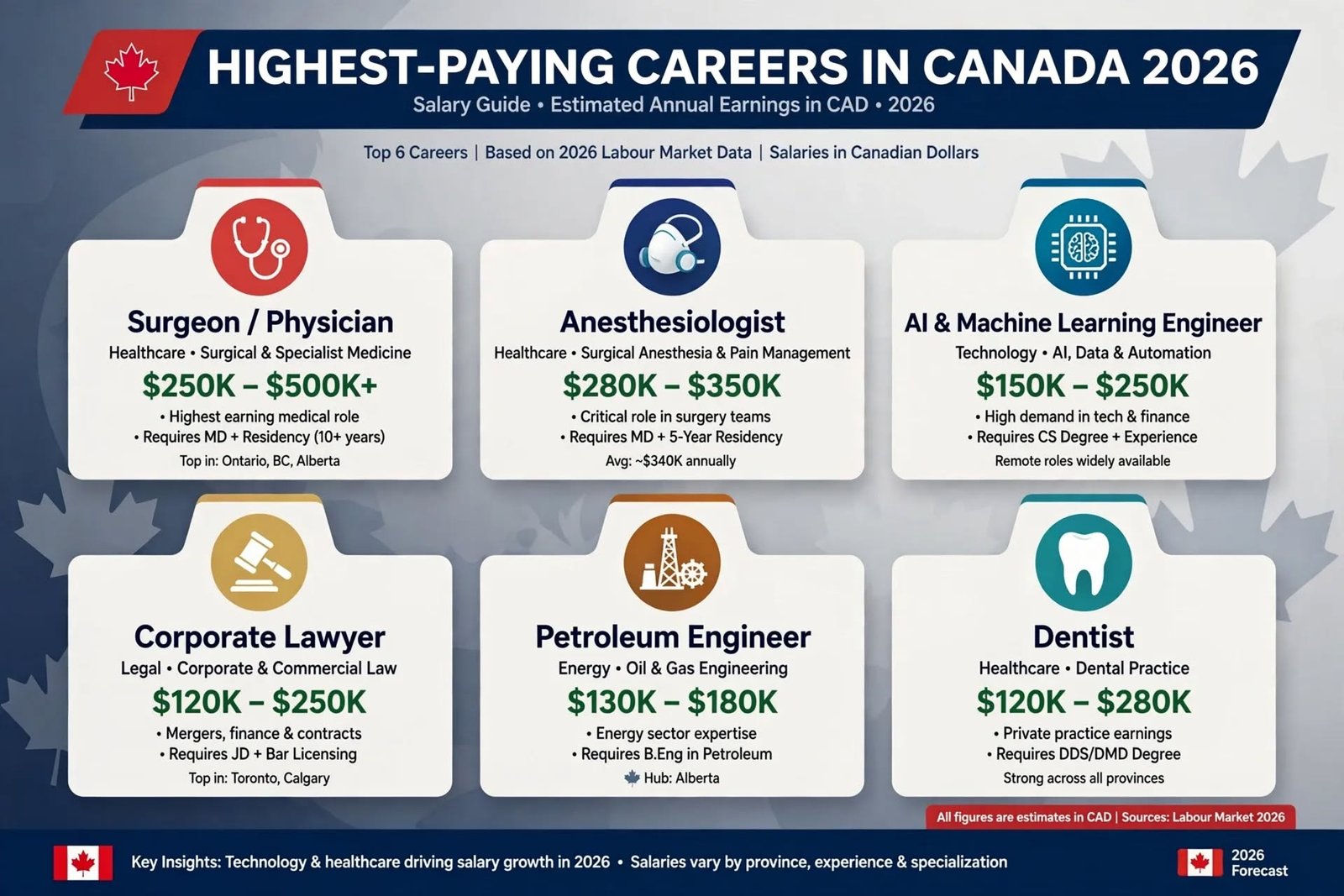
Canada has become one of the world’s most popular destinations for skilled professionals. It offers a stable economy, strong public services, and a welcoming approach to newcomers. But whether you are a student planning your future, a professional considering a move, or a Canadian looking to change careers, one question matters most: which careers pay the best?
The answer is not as simple as “become a doctor.” Canada’s job market is shaped by an aging population, a booming technology sector, a growing demand for skilled trades, and steady investment in energy and infrastructure. These forces have created high salaries across a surprisingly wide range of fields.
This guide covers the highest-paying careers in Canada in 2026, including typical salary ranges, what each role involves, and what it takes to get started. You will also find practical advice for newcomers and answers to common questions at the end.
Note: All salaries are approximate annual figures in Canadian dollars (CAD). Actual pay varies by province, employer, experience, and industry.
Why Canada Is a Strong Choice for High Earners
Before the list, it helps to understand why these careers pay well.
A Growing Demand for Skilled Workers
Many Canadian employers struggle to fill specialized positions. Retirements are leaving gaps in healthcare, trades, and engineering, while technology companies keep expanding. When demand outpaces supply, salaries rise.
Strong Benefits Beyond the Paycheque
Salary is only part of the picture. Many Canadian jobs include:
- Extended health and dental coverage
- Pension or retirement savings matching
- Paid vacation and parental leave
- Professional development budgets
When you compare offers, count these benefits as part of your total compensation.
Pathways for Newcomers
Programs such as Express Entry and various provincial nominee programs give extra weight to in-demand occupations. This makes many of the careers below a smart fit for people planning to apply for permanent residency.
The Highest-Paying Careers in Canada in 2026
1. Physicians and Surgeons
Typical salary range: $200,000 to $500,000+
Doctors remain at the top of Canada’s earnings ladder. Specialists such as surgeons, anesthesiologists, and radiologists often earn the most, while family physicians earn somewhat less but are in very high demand.
Key points:
- Requires a medical degree and residency training
- Regulated profession, so licensing is mandatory
- Internationally trained doctors face a longer process, but several provinces offer faster routes for those who fill local shortages
2. Dentists and Dental Specialists
Typical salary range: $150,000 to $300,000+
Dentists, especially orthodontists and oral surgeons, enjoy excellent earning potential. Many eventually run their own practices, which can raise income significantly.
Key points:
- Requires a dental degree and licensing exam
- Practice ownership brings higher income but also business responsibilities
3. Software Engineers and AI/Machine Learning Specialists
Typical salary range: $90,000 to $180,000+
Canada’s technology sector is thriving, with hubs in Toronto, Vancouver, Waterloo, Montreal, and Ottawa. Artificial intelligence in particular has attracted global attention, and Canadian cities are home to major research communities.
Roles That Pay the Most
- Machine learning engineers
- Cloud architects
- Senior full-stack developers
- Engineering managers
Key points:
- No licence required, so a strong portfolio and experience matter most
- Remote and hybrid work is common
- Senior roles at large tech firms can exceed the upper end of this range
4. Cybersecurity Specialists
Typical salary range: $100,000 to $160,000+
As businesses and governments digitize, the cost of cyberattacks keeps rising. Security analysts, penetration testers, and security architects are in constant demand.
Helpful credentials:
- CISSP
- CEH
- CompTIA Security+
5. Pharmacists
Typical salary range: $100,000 to $130,000
Pharmacists are no longer limited to dispensing medication. In many provinces they can prescribe for minor ailments, give vaccinations, and manage chronic conditions, which expands both responsibility and pay.
Key points:
- Requires a pharmacy degree and provincial registration
- Steady demand in both urban and rural areas
6. Nurse Practitioners and Experienced Registered Nurses
Typical salary range: $110,000 to $140,000 (nurse practitioners); $75,000 to $110,000+ (registered nurses, higher with overtime and specialization)
Nursing is one of Canada’s most in-demand professions. Nurse practitioners can diagnose conditions and prescribe treatment, which places them among the best-paid healthcare professionals outside medicine. Specialized nurses in intensive care, surgery, or remote communities can also earn premium pay.
7. Engineering Professionals (Petroleum, Mining, and Electrical)
Typical salary range: $95,000 to $200,000
Canada’s natural resources and energy sectors remain major employers. Petroleum engineers are among the best paid, particularly in Alberta, while mining and electrical engineers also earn strong salaries, especially in remote or specialized roles.
Key points:
- Requires an engineering degree and registration as a Professional Engineer (P.Eng.)
- Growth in renewable energy is opening new, well-paid opportunities
8. Lawyers
Typical salary range: $90,000 to $250,000+
Earnings vary widely. Junior lawyers at smaller firms may start modestly, while partners at major Bay Street firms or in-house counsel at large corporations can earn well into six figures.
Key points:
- Requires a law degree and provincial bar admission
- Corporate, tax, and intellectual property law tend to pay the most
9. Financial Managers, Investment Professionals, and Actuaries
Typical salary range: $100,000 to $200,000+
Canada’s banking sector is large and stable, and finance professionals are well rewarded.
Top-Paying Finance Roles
- Financial managers and directors
- Investment analysts and portfolio managers
- Actuaries, who assess risk for insurers and pension funds
- Chartered Professional Accountants (CPAs) in senior positions
Helpful credentials: CFA, CPA, and actuarial exams
10. Data Scientists and Data Engineers
Typical salary range: $95,000 to $150,000+
Companies in every industry now rely on data to make decisions. Professionals who can build data pipelines, analyze trends, and present insights clearly are highly valued.
Key skills:
- Python, SQL, and R
- Statistics and machine learning
- Data visualization tools
11. Airline Pilots and Air Traffic Controllers
Typical salary range: $100,000 to $250,000+ (pilots, depending on airline and seniority); $100,000 to $160,000 (air traffic controllers)
Aviation is demanding, but the rewards are significant. Canada’s size and geography create steady demand for pilots, and experienced captains at major airlines earn top-tier salaries.
Key points:
- Training is expensive and time-intensive
- Seniority strongly influences pay
12. Skilled Trades: Electricians, Power Engineers, and Elevator Mechanics
Typical salary range: $80,000 to $130,000+
Not every high-paying career requires a university degree. Canada faces a serious shortage of tradespeople, and industrial electricians, power engineers, and elevator mechanics can earn very competitive wages, especially with overtime or in northern and remote regions.
Key points:
- Training happens through apprenticeships, where you earn while you learn
- Many trades carry the Red Seal designation, which is recognized across Canada
- Starting a trade business can increase earnings further
13. Construction Managers
Typical salary range: $100,000 to $150,000+
With major housing and infrastructure projects underway, experienced construction managers are in demand. They oversee budgets, schedules, and teams, which makes strong leadership skills as valuable as technical knowledge.
Quick Comparison: Education vs. Earning Potential
| Career | Approx. Salary Range (CAD) | Education Path |
|---|---|---|
| Physician/Surgeon | $200,000–$500,000+ | Medical degree + residency |
| Dentist | $150,000–$300,000+ | Dental degree |
| Lawyer | $90,000–$250,000+ | Law degree + bar admission |
| Petroleum/Mining Engineer | $95,000–$200,000 | Engineering degree + P.Eng. |
| Software/AI Engineer | $90,000–$180,000+ | Degree or equivalent experience |
| Cybersecurity Specialist | $100,000–$160,000+ | Degree/certifications |
| Skilled Tradesperson | $80,000–$130,000+ | Apprenticeship |
How to Choose the Right High-Paying Career
A big salary means little if the job does not fit you. Consider these factors before committing.
Match Your Strengths and Interests
Someone who loves problem-solving may thrive in tech or engineering, while a person who enjoys helping others may prefer healthcare. Sustained success usually comes from genuine interest, not just pay.
Weigh the Time and Cost of Training
Medicine, law, and aviation require years of expensive preparation. Trades and many tech roles let you start earning sooner. Compare the return on investment, not just the final salary.
Check Regional Demand
Salaries and demand differ by province:
- Alberta and Saskatchewan: energy, mining, and trades
- Ontario: finance, technology, and healthcare
- British Columbia: technology, film, and healthcare
- Quebec: aerospace, gaming, and AI research
Consider the Cost of Living
A $120,000 salary in a smaller city can go much further than the same income in Toronto or Vancouver. Always compare earnings against housing and daily costs.
Tips for Newcomers Aiming for a High-Paying Job in Canada
Landing a top-paying role as a newcomer takes planning. These steps help.
- Research whether your profession is regulated. Doctors, nurses, engineers, lawyers, and electricians need provincial licences. Start the credential recognition process early.
- Get your education assessed. An Educational Credential Assessment (ECA) is often required for immigration programs and helps employers understand your qualifications.
- Improve your language scores. Strong English or French results improve both your immigration prospects and your job chances.
- Adapt your resume. Canadian resumes are concise, achievement-focused, and typically exclude photos and personal details.
- Build a professional network. Many positions are filled through referrals. Use LinkedIn, attend industry events, and join professional associations.
- Consider a bridging program. Many provinces offer programs that help internationally trained professionals meet Canadian standards.
- Be patient. Some newcomers start in a related role first and then move up as they gain Canadian experience.
Trends Shaping High-Paying Careers in Canada
Looking ahead, several trends are likely to influence earnings:
- Artificial intelligence: demand for AI skills continues to climb, and many other professions are being reshaped by automation.
- Healthcare expansion: an aging population keeps pushing demand for doctors, nurses, and allied health workers.
- Green energy transition: renewable power, battery technology, and electrification are creating new engineering and trades opportunities.
- Remote and hybrid work: many employers now hire across provinces, widening access to top salaries.
- Skills over degrees: in tech and trades especially, proven skills often matter as much as formal credentials.
Conclusion
Canada offers excellent earning potential across many fields, from medicine and engineering to technology, finance, and skilled trades. The highest-paying careers in Canada in 2026 reward people who combine in-demand skills with the right credentials and a clear plan.
The best choice is the one that balances income with your strengths, your timeline, and the lifestyle you want. Research your target profession, understand its licensing requirements, and take the first step, whether that is a course, a certification, or a credential assessment. With preparation and persistence, a high-paying Canadian career is within reach.
Frequently Asked Questions (FAQ)
What is the highest-paying job in Canada?
Physicians and surgeons generally top the list, with specialists often earning $300,000 or more per year. Dentists, senior lawyers, and experienced pilots also rank near the top.
Can I earn a high salary in Canada without a university degree?
Yes. Skilled trades such as industrial electricians, power engineers, and elevator mechanics can earn $80,000 to $130,000 or more. Some tech roles also value skills and experience over formal degrees.
Which high-paying careers are in demand for immigrants?
Healthcare roles, software and IT, engineering, and skilled trades are consistently in demand. Check the current Express Entry categories and your province’s nominee program, since priorities change.
Do I need a licence to work in these careers?
For regulated professions such as medicine, nursing, law, engineering, and many trades, yes. Licensing is handled at the provincial level, so requirements differ across Canada.
Which province pays the highest salaries?
Alberta often offers high wages, particularly in energy and trades, while Ontario and British Columbia lead in technology and finance. The best province depends on your profession.
Are these salaries before or after tax?
All figures are gross annual salaries. Canadian income tax varies by province and income level, so your take-home pay will be lower.
How can I find reliable salary data?
The Government of Canada’s Job Bank, Statistics Canada, and provincial labour market reports are trustworthy starting points for current wage information.
2 thoughts on “Highest-Paying Careers in Canada in 2026”