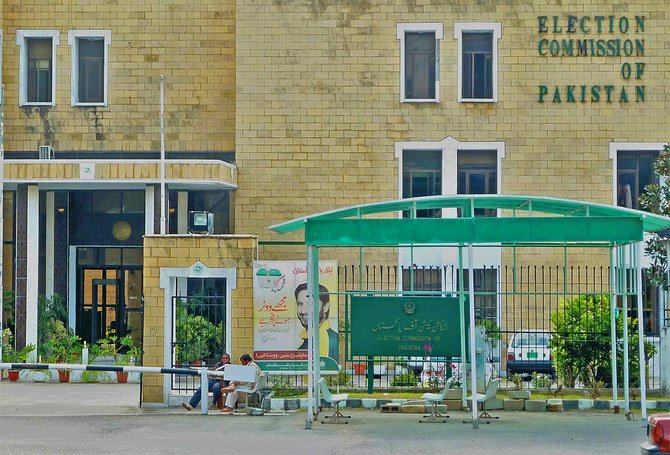
The Election Commission of Pakistan has fixed February 7, 2027 as the date for the first phase of local government elections in Punjab, ending an eleven-year wait for elected local councils in the country’s most populous province. The commission announced the decision on Thursday after a hearing on how the long-delayed polls should be conducted.
Punjab has not held local government elections since 2015. Every attempt since then has stalled, most often because of repeated changes to the province’s local government laws. The February 7 date is the first firm polling day the province has been given in years, and it gives political parties, candidates and voters a clear timetable to prepare for.
The commission also suspended the local government election process in Khyber Pakhtunkhwa until further orders, after the federal government extended the suspension of Article 140-A of the Constitution across that province.
How the February 7 date was decided

A four-member bench of the Election Commission, headed by Chief Election Commissioner Sikandar Sultan Raja, heard the case on the conduct of local government polls in Punjab. Punjab Local Government Minister Zeeshan Rafiq, the provincial chief secretary and the local government secretary appeared before the bench.
The Punjab government had first told the commission in writing that it was ready to hold the elections between December 15, 2026 and January 15, 2027. At the hearing, however, the chief secretary asked for a date after January 20, saying the province needed two months to complete election arrangements. He told the bench that preparations were complete and that the government had no objection to holding the polls in January or February.
The commission had earlier proposed December 14 as the polling date. The province’s cabinet committee had separately recommended April 2027, pointing to heavy smog and dense fog in December and January, the holy month of Ramadan and the unavailability of schoolteachers, who staff polling stations. The Election Commission rejected the April proposal. The province then asked for January or February instead, noting that weather conditions usually improve in February.
Accepting the chief secretary’s request in the interest of justice, the commission said it was its responsibility to provide a level playing field to all contesting candidates and voters. It directed its secretariat to take follow-up action on the decision. During the hearing, the chief election commissioner remarked lightly to the provincial officials: “You are celebrating Basant anyway.”
Why Punjab has waited since 2015

The delay is not new. Punjab’s last local government elections were held in 2015, and the province has had no elected local councils since then. Each subsequent attempt to hold the polls ran into amendments to the local body laws, court proceedings or changes of government, and the timetable kept slipping.
The Constitution requires local governments. Article 140-A obliges each province to establish a local government system and devolve political, administrative and financial responsibility to elected representatives. Article 219(d) of the Constitution, read with Section 219 of the Elections Act 2017, places the duty to conduct those elections on the Election Commission. In its order, the commission cited those provisions and said it was under an obligation to hold local elections in every province, as well as in the Islamabad Capital Territory and the cantonment boards.
For voters, the gap has been concrete. Without elected union councils, municipal committees and district councils, decisions about street lighting, sanitation, water supply and neighbourhood roads have been taken by administrators rather than by representatives chosen at the ballot box. The February 7 date restores a direct say for residents over the tier of government closest to their daily lives.
What happens in Khyber Pakhtunkhwa

While Punjab finally has a date, Khyber Pakhtunkhwa’s local polls have been put on hold. The Election Commission suspended the electoral process for local government elections in the province’s remaining districts until further orders, following the federal government’s extension of the suspension of Article 140-A across the province under an order issued on November 4, 2026.
After detailed deliberations, the commission said that in view of that order, holding local government elections in the remaining districts of Khyber Pakhtunkhwa was no longer possible, and it ordered that all steps taken so far toward those polls be suspended. The contrast between the two provinces is now sharp: Punjab moves toward polling day, while Khyber Pakhtunkhwa waits for the constitutional suspension to be lifted before its process can resume.
What voters and candidates should expect next
The Election Commission has directed its office to take follow-up action, which means the detailed schedule — including nomination dates, scrutiny, the campaign period and the polling scheme for the first phase — should follow in the coming weeks. The commission’s order did not publish the full schedule for the remaining phases, although reports suggest they are expected to be completed within February.
Political parties have already begun reacting. Jamaat-e-Islami Deputy Emir Liaquat Baloch welcomed the decision and said his party would take part in the local government elections in both Islamabad and Punjab. Other parties are expected to announce their preparations once the formal schedule is issued.
The Punjab announcement also comes as local elections move forward elsewhere. In Islamabad, nomination papers for the local government elections closed today, with polling set for December 20. Candidates in Punjab should watch for the commission’s schedule, which will set the deadlines for filing papers, withdrawing candidatures and campaigning.
Why these local polls matter

Local government elections are often treated as less important than national and provincial polls, but they decide who runs the services people use every day. Councillors approve local budgets, oversee cleanliness and water supply, and act as the first point of contact between citizens and the state. An eleven-year gap means an entire generation of voters in Punjab has never cast a ballot for a local representative.
The February 7 date gives that generation its first chance. If the schedule holds, Punjab’s towns and cities will elect their councils in phases, and the province will finally have a tier of government that answers directly to neighbourhoods rather than to provincial departments. For a province of more than 120 million people, that is a significant democratic step — and one that has been overdue since 2015.
Related Posts
 Pakistan NewsPM Inaugurates Kashmir Chowk Underpass in Islamabad After Record 27-Day Build
 Pakistan NewsPakistan and China Team Up to Protect Gandhara Relics as KP Digitises 10,000 Ancient Sculptures
 Pakistan NewsPakpattan Bus Crash: 11 Killed, 33 Injured as Multan–Kasur Bus Collides With Truck on Depalpur Road
 Pakistan NewsPAC Exposes Rs165.6 Million Embezzlement at Pakistan’s Embassy in Austria — FIA Summoned After Six Years Without Progress
 Pakistan NewsPM Orders Cancellation of Petrol Pump Licences for Denying Subsidised Fuel Under Fuel Relief Programme
 Pakistan NewsIslamabad Local Government Elections: Nomination Papers Close Today, Polling on 20 December
Most Popular
 How-ToPTA Tax Calculator 2026: Check Mobile Tax on Any Phone417 views
 Pakistan NewsPIA Boeing 787 Lease Deal: What It Means for the Airline389 views
 Canada JobsTech Jobs in Canada: Roles, Salaries, and Skills Needed387 views
 SportsUEFA Champions League 2026-27: Format, Teams and Schedule384 views
 TechnologyPM Shehbaz Sets November Deadline for Alibaba AI and Digitalisation Projects in Pakistan364 views
 ShowbizWomen’s Fashion in Pakistan 2026: Trends, Brands and Style Guide360 views