Pakistan’s Khyber Pakhtunkhwa province has signed agreements with Chinese institutions to digitise and promote its Gandhara collections, in a new push to protect one of the world’s great ancient civilisations from looting and smuggling.
The agreements were disclosed by Fawad Khan, an assistant director at the province’s Directorate General of Archaeology and Museums, who was speaking on the sidelines of the ninth Silk Road (Dunhuang) International Culture Expo in China on Wednesday, 5 November 2026. The news was reported by Associated Press of Pakistan and carried by China Economic Net.
Khan described looking after the province’s heritage sites as “a big job” and “a big headache” — and the numbers explain why. His directorate runs 15 museums and looks after thousands of archaeological sites across Khyber Pakhtunkhwa. The Peshawar Museum alone holds around 10,000 Gandharan sculptures, one of the largest collections of its kind anywhere in the world.
What the new agreements cover
The provincial directorate has signed memorandums of understanding with Chinese institutions and is now working on digitising its museum collections and producing digital catalogues, so the sculptures can be studied and seen far beyond the museum walls.
The digital work builds on a partnership the directorate established with Tsinghua University in March 2025, using 3D scanning and digital modelling to record Gandharan artefacts in detail. That kind of record matters twice over: it lets researchers and the public explore the collection online, and it creates a permanent digital fingerprint for each piece — a powerful tool against theft, because a stolen sculpture that has been scanned and catalogued is far harder to sell quietly.
The APP report did not name the Chinese institutions behind the latest agreements, and no timeline for the digitisation work has been made public. What is clear is the direction: Pakistan’s Gandhara heritage is being documented with Chinese technology, and the two sides are treating it as a joint project rather than a one-off exhibition.
A collection under threat
Looting and the smuggling of antiquities are among the province’s main problems, Khan said — a blunt admission that underlines why the new agreements matter. Gandharan art, with its distinctive blend of Greek, Roman and Buddhist styles, is prized by collectors around the world, and that demand has fuelled illegal digging and trafficking for decades.
The protection effort is not starting from scratch. At national level, Pakistan and China signed an agreement in 2022 on preventing the theft, clandestine excavation and illicit trade in cultural property, followed by another agreement on heritage cooperation in October 2025. The provincial agreements announced this week sit on top of that framework, turning national promises into practical work on the ground.
Fazal ur Rahman, executive director of the Pakistan Council on China, described heritage work as one strand of cooperation under the China-Pakistan Economic Corridor — a reminder that the partnership between the two countries now reaches well beyond roads, power plants and ports.
Why Gandhara matters
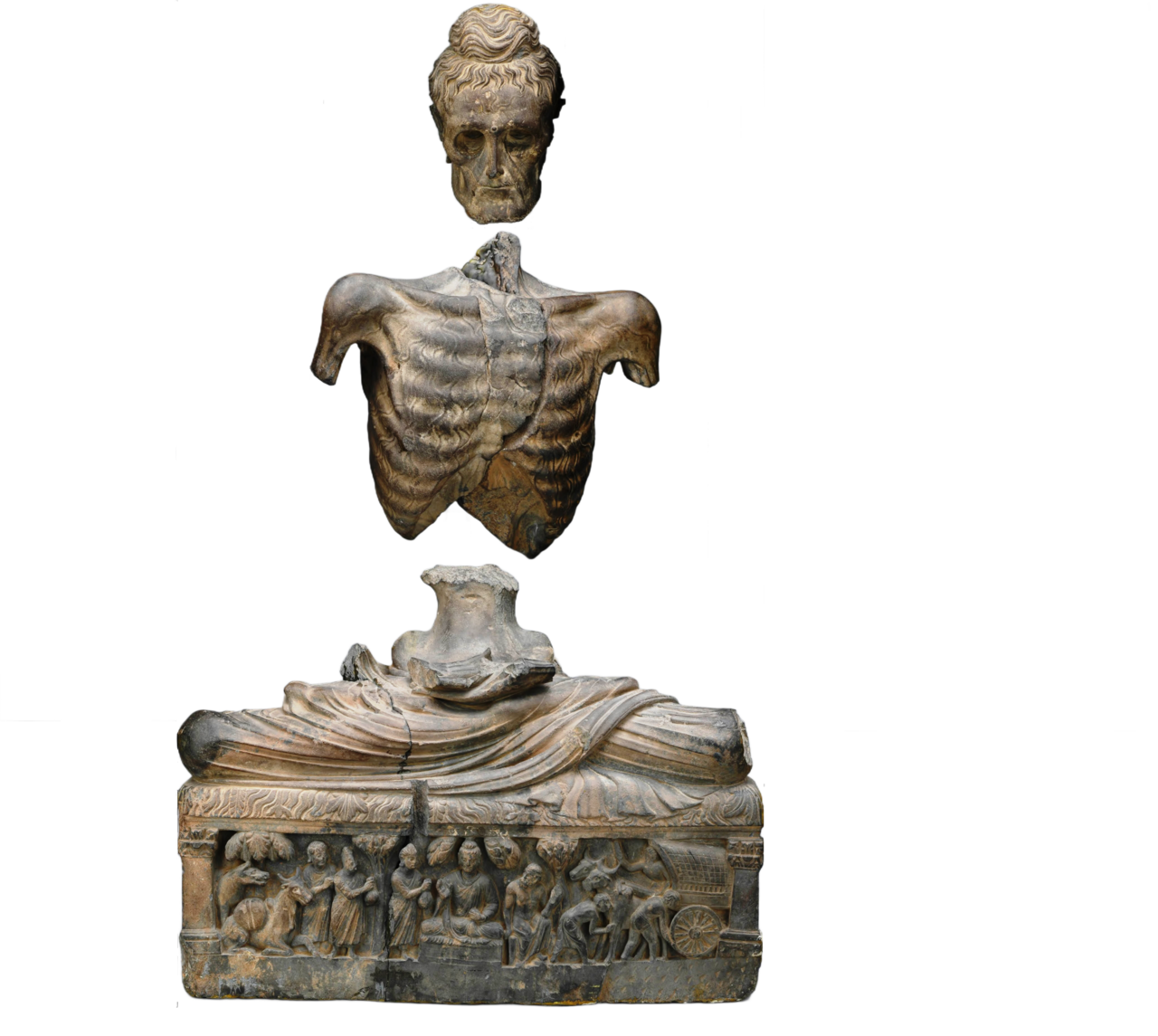
The Gandhara civilisation flourished in what is now northern Pakistan and eastern Afghanistan more than 2,000 years ago, where Buddhism met the art and ideas of the Greek world left behind by Alexander’s armies. Its stone Buddhas and carved reliefs — serene faces, flowing robes, stories from the Buddha’s life — are among the finest religious art ever made, and Pakistan holds the richest share of it.
Taxila, the ancient city near modern Islamabad, was one of Gandhara’s great centres and is today a UNESCO World Heritage site. Its museum and ruins draw scholars and visitors from around the world, and its art shows the same east-west exchange visible in China’s Mogao Caves, where Gandharan influence travelled along the Silk Road.
That shared history has already been put on display. In 2023, an exhibition of 173 Pakistani cultural relics travelled to the Forbidden City in Beijing — the largest Gandhara art exhibition ever held. And in July 2026, the government set up a task force to advance tourism linked to the Gandhara heritage, betting that the ancient sites can become a draw for visitors as well as scholars.
What happens next
For now, the practical work is digitisation: scanning, cataloguing and publishing the collections so they can be protected, studied and shared. Researchers say the digital records will also support future joint excavations in the Taxila region, where memorandums of understanding for further fieldwork are already in progress, and where Chinese archaeological teams have worked alongside Pakistani colleagues before.
There is also a push to bring young people into the story. At a cultural exhibition in Islamabad this week, speakers urged both countries to do more to pass their shared Silk Road heritage on to the next generation — through exhibitions, education and visits — so that the Gandhara legacy is not only preserved in museums but understood by the people who live alongside it.
For Khyber Pakhtunkhwa, the stakes are simple. Ten thousand sculptures in a single museum, thousands of sites across the province, and a smuggling trade that never sleeps. Digitising the collection with Chinese help will not end looting overnight, but it gives the province something it has never had before: a complete, permanent record of what it owns — and a partner committed to helping it keep that heritage safe.
Related Posts
 Pakistan NewsPakpattan Bus Crash: 11 Killed, 33 Injured as Multan–Kasur Bus Collides With Truck on Depalpur Road
 Pakistan NewsPAC Exposes Rs165.6 Million Embezzlement at Pakistan’s Embassy in Austria — FIA Summoned After Six Years Without Progress
 Pakistan NewsPM Orders Cancellation of Petrol Pump Licences for Denying Subsidised Fuel Under Fuel Relief Programme
 Pakistan NewsIslamabad Local Government Elections: Nomination Papers Close Today, Polling on 20 December
 Pakistan NewsLahore Smog Worsens: AQI Hits 722 in Iqbal Town as Punjab Sends Out Road Washers
 Pakistan NewsArmy and Rangers Approved for NA-77 Gujranwala and PP-203 Sahiwal By-Elections on 8 November
Most Popular
 How-ToPTA Tax Calculator 2026: Check Mobile Tax on Any Phone417 views
 Pakistan NewsPIA Boeing 787 Lease Deal: What It Means for the Airline389 views
 Canada JobsTech Jobs in Canada: Roles, Salaries, and Skills Needed387 views
 SportsUEFA Champions League 2026-27: Format, Teams and Schedule384 views
 TechnologyPM Shehbaz Sets November Deadline for Alibaba AI and Digitalisation Projects in Pakistan364 views
 ShowbizWomen’s Fashion in Pakistan 2026: Trends, Brands and Style Guide360 views