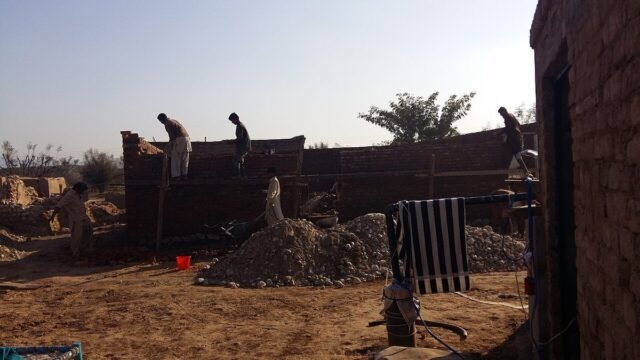
Many families in Punjab own a small plot of land but cannot afford to build on it. Saving enough money for bricks, cement and labour can take years, and a normal bank loan is out of reach for most low-income households. The Punjab government’s Apni Chhat Apna Ghar programme was created for exactly these families. It offers an interest-free loan of up to Rs 1.5 million so that a family which already owns a plot can finally build a house on it.
Before you apply, it is important to understand who this scheme is really for. This guide explains the eligibility conditions in simple words, so you can check whether your family qualifies before spending time on an application.
What the Scheme Actually Offers
Apni Chhat Apna Ghar, often shortened to ACAG, is a housing programme of the Government of Punjab. It was launched in August 2024 by Chief Minister Maryam Nawaz. The idea is straightforward: instead of giving people a house, the government helps them build one on land they already own.
The loan is completely interest-free. A qualifying family can receive up to Rs 1.5 million (15 lakh rupees) for construction, and the amount is paid back in easy monthly instalments spread over several years. Because there is no interest, the family repays only the amount it borrowed, which makes the instalments far lighter than a commercial housing loan.
One point must be clear from the start: this is a Punjab-only programme. It is run by the provincial government, so it is open only to residents of Punjab. Families living in Sindh, Khyber Pakhtunkhwa, Balochistan or other parts of the country cannot apply under this scheme.
The Basic Conditions Every Applicant Must Meet
Although the final decision is always made through the official process, the commonly applied conditions are as follows:
- You must be a resident of Punjab and hold a valid CNIC.
- You must already own the plot on which the house will be built.
- You must not already own a house. The scheme is meant for families who have land but no home of their own.
- Your household’s poverty score, known as the PMT score and based on the national NSER survey data, should be up to 60.
- You must not be a bank defaulter.
The PMT score condition is important. The programme is aimed at low and middle-income families, and the score is used to confirm that the help goes to households that genuinely need it. If your family’s score is above the limit, your application is unlikely to be accepted, even if you meet the other conditions.
Plot Size and Ownership Rules
The scheme supports small plots, because those are what most low-income families own. In urban areas, plots of up to 5 marla are commonly covered. In rural areas, where land is less expensive and plots are bigger, plots of up to 10 marla are commonly covered.
The plot must be in your name, and you should be able to prove ownership with proper documents. If the land is disputed, jointly owned in a confusing way, or has no clear paperwork, the application can get stuck. Families are advised to sort out their ownership documents first, and only then apply, so that verification moves quickly.
Remember that the loan is only for building on your own plot. It cannot be used to buy a new plot, to purchase a ready-made house, or to pay off an old debt.
Banking and Verification Checks
Applications go through verification before any money is released. Officials check your identity through your CNIC, confirm the plot and its ownership, and review your PMT score. Your banking record is also checked, which is why existing bank defaulters are not eligible.
This checking process protects the programme. The loan money is public money meant for house construction, so the government confirms that each approved family is real, eligible, and building on its own land. If you are asked for documents during verification, provide them promptly and honestly. Wrong or incomplete information can lead to rejection.
How Large the Programme Has Become
According to figures shared by the Punjab Housing Minister in October 2026, more than Rs 284 billion had been disbursed to over 217,000 families under the programme, and more than 126,000 houses had been completed. Numbers of this size make Apni Chhat Apna Ghar one of the largest housing support efforts ever run by a province in Pakistan.
The programme has also received international recognition, winning a UN-Habitat Scroll of Honour in 2026. For applicants, the practical lesson is simple: the scheme is active and large, but demand is also very high, so a complete and correct application matters.
How to Apply If You Qualify
Applications are submitted through the official portal, acag.punjab.gov.pk, where you register and log in using your CNIC. After logging in, you can apply and later check the status of your application from the same account. The programme’s helpline, 0800-09100, is shown on the official portal for guidance.
Be careful about agents and middlemen. You do not need to pay anyone to submit your application. Apply yourself through the official portal, and trust only information published on official government channels.
Frequently Asked Questions
Can I apply if I live outside Punjab?
No. Apni Chhat Apna Ghar is a Punjab government programme, so only Punjab residents with a Punjab connection can apply.
I own a plot but also a small house. Am I eligible?
The scheme is intended for families who do not own a house. If you already own a house, you are not the target of this programme and your application is unlikely to succeed.
Is the loan really interest-free?
Yes. The programme provides interest-free loans of up to Rs 1.5 million, repaid in easy monthly instalments over several years. Always confirm the current terms on the official portal before applying.
Related Posts
 Govt SchemesPM Youth Laptop Scheme: Who Could Apply, Who Could Not, and How to Check Your Status
 Govt SchemesApna Ghar Housing Loans in Pakistan 2026: What Actually Exists
 Govt SchemesNaya Pakistan Housing Programme 2026 Update: Are Registrations Open?
 Govt SchemesPunjab Kisan Card Registration 2026: How Small Farmers Can Register by SMS
 Govt SchemesPunjab Himmat Card Guide 2026: Rs. 10,500 Quarterly Stipend for Persons With Disabilities
 Govt SchemesPunjab Free Solar Panel Scheme 2026: Registration Closed — What Is Happening Now?
Most Popular
 How-ToPTA Tax Calculator 2026: Check Mobile Tax on Any Phone421 views
 Pakistan NewsPIA Boeing 787 Lease Deal: What It Means for the Airline396 views
 Canada JobsTech Jobs in Canada: Roles, Salaries, and Skills Needed394 views
 SportsUEFA Champions League 2026-27: Format, Teams and Schedule390 views
 TechnologyPM Shehbaz Sets November Deadline for Alibaba AI and Digitalisation Projects in Pakistan370 views
 ShowbizWomen’s Fashion in Pakistan 2026: Trends, Brands and Style Guide366 views