
London-based defence AI company Agon has raised $70 million in a Series A funding round, valuing the young company at $450 million as it sets out to build what it calls Europe’s defence AI lab. The Agon Series A round was announced on Monday, 23 November 2026, and it is one of the largest European defence technology Series A rounds of the year. The new money takes Agon’s total funding to $100 million, after a $30 million seed round earlier in 2026.
What Agon actually builds: a synthetic battle arena
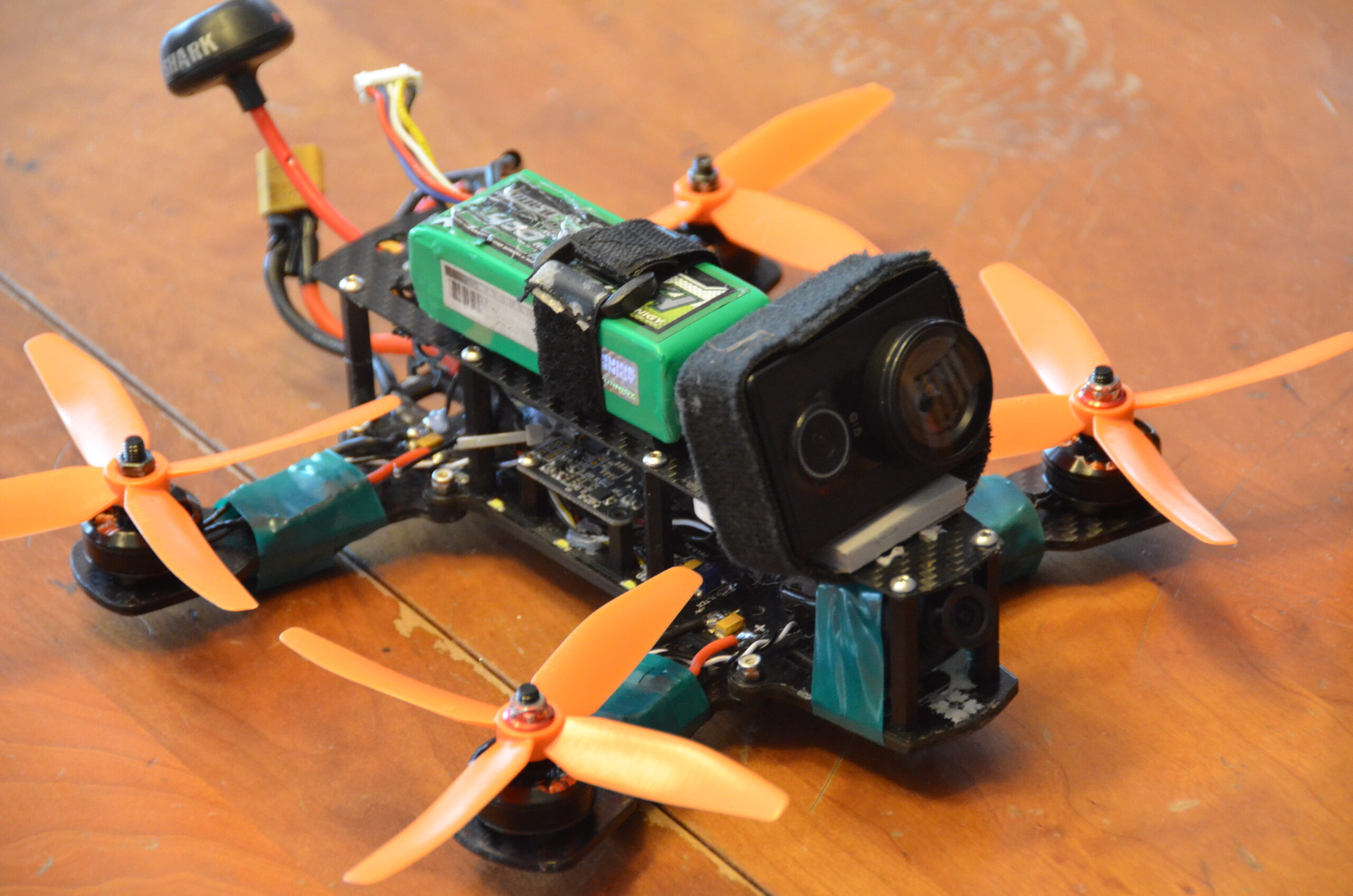
At the heart of Agon’s technology is a synthetic battle arena, built on software the company calls the Agon Engine. It gives developers and defence organisations a safe, repeatable environment in which to train and test autonomous systems against thousands of demanding scenarios before anything is deployed in the real world. Inside the virtual arena, systems face adaptive virtual adversaries and can be tested against mass drone attacks designed to overwhelm conventional air defences, or against situations where communications are disrupted, navigation is degraded, or an adversary changes tactics mid-fight. The idea is to do in software, at machine speed, what physical testing alone cannot match: train, break, fix and retrain autonomous systems thousands of times over, learning from every failure without any real-world risk. Agon does not build weapons itself. It builds the infrastructure that lets others design, validate and orchestrate autonomous defence systems, starting with air defence and expanding from there.
Who is backing the Agon Series A
The round was led by Northzone, which had already backed Agon’s seed round. Existing investors Lakestar, XYZ, Lux Capital, Global Founders Capital and Speedinvest all returned for the Series A. Two new backers stand out: the UK Sovereign AI Fund and the National Security Strategic Investment Fund (NSSIF), the UK government’s venture funds for artificial intelligence and national security. It is the first time the two government-backed funds have invested together in a single company. Agon chairman David Helgason, the founder of Unity Technologies, increased his own investment, and Roelof Botha, the former global leader of Sequoia Capital who sits on the boards of SpaceX and Unity, joined as a new investor. The backing matters because Agon’s pitch is explicitly about sovereignty: European countries should be able to train and evolve the AI that controls their autonomous systems on European infrastructure, rather than depending on technology built elsewhere.

The founders behind Agon
Agon was founded in 2026 by Tristam Constant and Junaid Hussain. Constant brings two decades in defence, spanning the British Army, Anduril and Applied Intuition, where he was most recently head of European defence. Hussain is a founder of Cambridge Aerospace, a European air defence company, and of Iconic, a Google-backed AI and gaming startup. Helgason, whose Unity game engine powers a large share of the world’s games, serves as chairman and founding investor. The company is headquartered in London, with an office in Berlin, and has drawn technologists from Belgium, France, Germany, Iceland, Italy and the UK. Most of the new funding will go towards hiring AI researchers and engineers and buying the computing power needed to train large models, as the team grows from a simulation platform into a full AI lab for European defence.
Why Europe’s sovereign AI push matters now
Constant frames the moment bluntly: Europe is in an AI arms race as it enters the era of what he calls agentic warfare, where intelligent machines must understand their environment, make decisions and adapt at a speed and scale humans alone cannot match. The UK’s AI minister, Kanishka Narayan, said Britain needs sovereign defence AI capabilities to bolster national security, and that the country is well placed to lead efforts to make sure such technologies are reliable, trustworthy and deployed responsibly. The Agon Series A sits in a wider wave of defence technology funding: only a day earlier, Chinese humanoid startup Simplexity Robotics raised $100 million led by Ant Group, and Amazon moved to buy Decart’s AI chip software in a reported $7.5 billion deal. For Agon, the next step is to expand its engineering and research teams, accelerate work on its platform and foundation models, and deepen its work with industry and government customers across Europe. Whether a company founded less than a year ago can become the continent’s defence AI lab is now a $450 million question — and the UK government has just put its money behind the answer.

Related Posts
 TechnologySimplexity Robotics Raises $100 Million at $1.6 Billion Valuation as Ant Group Bets on Humanoid Robots
 TechnologyAIET’26: ITU Lahore Hosts AI and Emerging Technologies Summit Today
 TechnologyVirginia and Oregon Sue Elon Musk’s SpaceX in Grok AI Lawsuit
 TechnologyAmazon Buys Decart’s AI Chip Software in Reported $7.5 Billion Deal to Take On Nvidia
 TechnologyUsed Smartphone Imports Surge 68-Fold in Pakistan as Local Assembly Falls — 40,000 Jobs at Risk
 TechnologyZeeshan Ali Shenzhou-24 Launch: Pakistan’s First Astronaut Flies Tomorrow at 5:18 AM
Most Popular
 How-ToPTA Tax Calculator 2026: Check Mobile Tax on Any Phone421 views
 Pakistan NewsPIA Boeing 787 Lease Deal: What It Means for the Airline396 views
 Canada JobsTech Jobs in Canada: Roles, Salaries, and Skills Needed394 views
 SportsUEFA Champions League 2026-27: Format, Teams and Schedule390 views
 TechnologyPM Shehbaz Sets November Deadline for Alibaba AI and Digitalisation Projects in Pakistan370 views
 ShowbizWomen’s Fashion in Pakistan 2026: Trends, Brands and Style Guide366 views