China and Pakistan have launched two joint agricultural research platforms in Lahore, bringing Chinese dryland farming expertise together with Pakistani universities in a new China Pakistan agricultural research push for smarter, more resilient agriculture. The platforms were officially launched at the 2026 Punjab Innovation and Technology Expo (PINTECH EXPO) in Lahore on 14 November, the Associated Press of Pakistan reported on Tuesday.
The move links one of China’s leading agricultural universities with more than 10 Pakistani universities, and it covers everything from joint laboratories and demonstration farms to a shared research fund and new farming guides written for Pakistani growers.
Two platforms launched at Lahore tech expo
The first of the two platforms is the Shaanxi Belt and Road Joint Laboratory on Dryland Biological Resources and Green Smart Agriculture. The second is the Pakistan Branch of the Shaanxi International Technology Transfer and Innovation Cooperation Centre. Both were launched together at PINTECH EXPO, Punjab’s flagship innovation and technology showcase.
The initiative is led by Professor Zhang Lixin of Northwest A&F University (NWAFU), one of China’s top agricultural research institutions, based in Shaanxi province. The joint laboratory focuses on dryland biological resources — the crops, seeds and farming methods suited to areas with limited water — alongside green smart agriculture, the use of sensors, data and modern equipment to grow more with fewer resources.
For Pakistan, where large areas of farmland depend on limited rainfall and groundwater is under growing pressure, dryland farming research is directly relevant. Techniques developed for the dry regions of northwest China could be tested and adapted for Pakistan’s arid and semi-arid zones.
More than 10 Pakistani universities on board

File photo
The collaboration reaches well beyond a single institution. The scale of the China Pakistan agricultural research effort is what sets it apart from earlier one-off exchanges. More than 10 Pakistani universities are part of the initiative, including the University of Agriculture Faisalabad, the University of Sargodha, PMAS-Arid Agriculture University Rawalpindi, the University of Veterinary and Animal Sciences Lahore, the University of Engineering and Technology Lahore, and the Islamia University of Bahawalpur.
The proposed cooperation covers the establishment of joint laboratories and agricultural demonstration bases, as well as talent development programmes. Demonstration bases matter because they let farmers see new methods working on real fields before adopting them — a step that often decides whether research ever leaves the laboratory.
The talent programmes are aimed at building a pipeline of researchers and agricultural professionals who can carry the joint work forward, with students and faculty moving between the partner institutions.
A joint research fund and four new farming guides
File photo
Alongside the two platforms, the Shaanxi International Technology Transfer and Innovation Cooperation Centre and Pakistan’s Higher Education Commission signed a letter of intent to establish a joint research fund, according to CEN. The fund is intended to support collaborative projects between Chinese and Pakistani researchers.
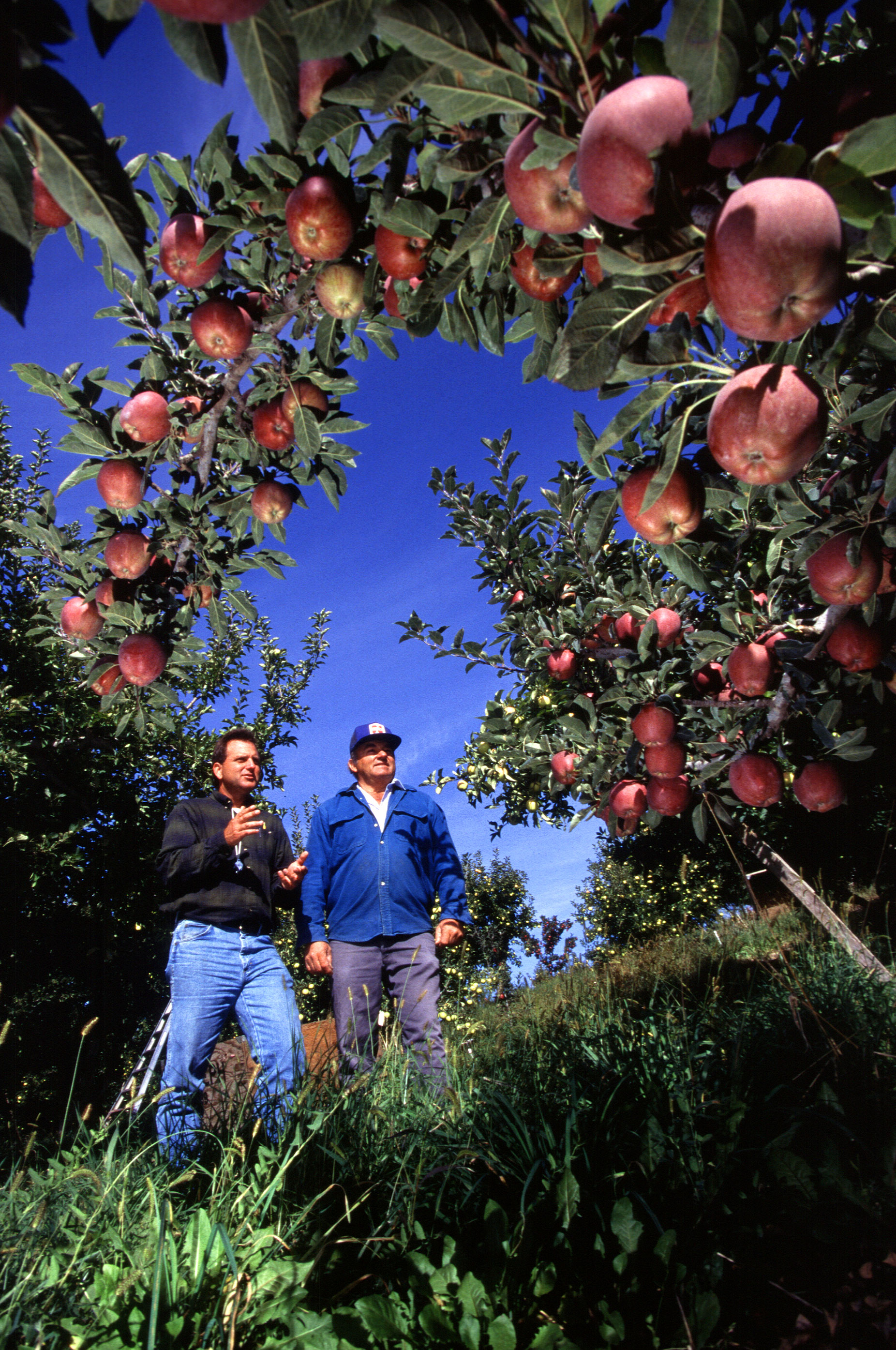
Four agricultural technical publications were also announced for distribution in Pakistan. Published by Shaanxi Science and Technology Press and Northwest A&F University Press, they cover sesame cultivation, apple cultivation, layer chicken farming and bio-healthy agricultural product production. Editions will be available in English, Urdu, Chinese and Russian, so the material is usable by Pakistani farmers, students and extension workers as well as Chinese partners.
Sesame and apples are both crops where Pakistan has room to grow exports, while layer chicken farming sits at the centre of the country’s poultry sector, which supplies affordable protein to millions of households. Practical guides in Urdu on these topics could reach far beyond university campuses.
Why it matters for Pakistani farmers

File photo
Pakistan’s agriculture faces a familiar set of pressures: water shortages, changing weather patterns, rising input costs and the need to raise yields without exhausting the soil. Research partnerships of this kind are designed to attack those problems with shared knowledge rather than each country working alone.
China’s experience with dryland farming is particularly valuable. Shaanxi province has spent decades developing crop varieties and water-saving methods for arid land, and the joint laboratory creates a formal channel for that knowledge to reach Pakistani fields. The demonstration bases planned under the agreement will show whether those methods hold up under Pakistani conditions.
The launch also fits a wider pattern of China-Pakistan cooperation moving beyond roads and power projects into science, education and technology. Agriculture employs nearly two in five Pakistani workers and feeds the country’s food supply, so research that lifts farm productivity has an impact far beyond the laboratory.
What happens next will depend on follow-through: joint laboratories need funding and staff, demonstration farms need land and seasons to prove themselves, and the promised research fund needs to move from a letter of intent to real grants. But the launch at PINTECH EXPO gives the China Pakistan agricultural research partnership a public starting point — and a network of universities on both sides ready to build on it.
Related Posts
 TechnologyPakistan Digital Payments Hit 4.2 Billion Transactions in Q4 FY26, Worth Nearly Rs60 Trillion
 TechnologyDigiSkills Batch 05: 300,000 Free Seats for 24 Online Courses — Register Before 30 November
 TechnologyGTA 6 PS5 Update Now Mandatory as Sony Patches Firmware Days Before Launch
 TechnologyGoogle Gemini Privacy Change: History Off No Longer Means Deleted — Chats Kept for Two Months
 TechnologyNSA Classified Network Goes Down During Routine Maintenance — No Sign of Cyberattack
 TechnologyApple Outage Hits App Store, iCloud and Apple Pay — Company Blames Internal Update, Rules Out Cyberattack
Most Popular
 How-ToPTA Tax Calculator 2026: Check Mobile Tax on Any Phone420 views
 Pakistan NewsPIA Boeing 787 Lease Deal: What It Means for the Airline396 views
 Canada JobsTech Jobs in Canada: Roles, Salaries, and Skills Needed392 views
 SportsUEFA Champions League 2026-27: Format, Teams and Schedule389 views
 TechnologyPM Shehbaz Sets November Deadline for Alibaba AI and Digitalisation Projects in Pakistan369 views
 ShowbizWomen’s Fashion in Pakistan 2026: Trends, Brands and Style Guide366 views