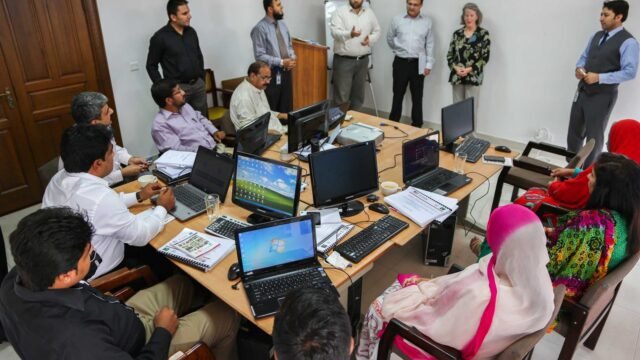
Pakistan’s young space scientists have brought home three international honours from Moscow. The Institute of Space Technology (IST) delegation won three prestigious distinctions at the International Space Games 2026, the Associated Press of Pakistan (APP) reported on 5 November 2026. The result caps a remarkable week in which the International Space Games Pakistan team competed against teams from eight countries in space engineering, robotics, artificial intelligence and mission operations — and spent two full days sealed inside a mock space habitat, running a simulated mission from start to finish.
A week of space challenges in Moscow
The International Space Games Pakistan team took part in the event in Moscow from 26 October to 1 November 2026, where teams from eight countries gathered for a week of practical space challenges. The programme mixed hands-on space engineering with mission operations, robotics and artificial intelligence, alongside an immersive Mars-habitat experience. For the Pakistani delegation, it was a chance to test their skills against young innovators from around the world — and to show what Pakistan’s space students can do on an international stage.
The International Space Games are built around doing, not just talking. Participants work through real engineering problems, operate simulated missions and solve technical faults under pressure, with teamwork and decision-making scored alongside technical skill. That format suited the International Space Games Pakistan team, whose training at Pakistan’s dedicated space university centres on exactly those disciplines.
48 hours inside a mock space habitat
The toughest test of the week came in the analog habitat. A five-member crew from the International Space Games Pakistan delegation entered the mock space habitat and began a 48-hour expedition across the Angara and Volga habitat stations, living and working exactly as astronauts would on a real mission.
For two intensive days, the crew ran mission operations inside the sealed habitat: engineering tasks, communications, control systems, technical troubleshooting and research activities, all while making decisions under simulated space-mission conditions. They emerged on 2 November after completing the full expedition — an experience IST described as an important milestone both for the team and for Pakistan’s participation in the International Space Games.
Analog habitat missions are a standard part of astronaut training worldwide. They test whether a crew can keep a mission running when things go wrong, with no outside help and no way out until the clock runs down. Completing 48 hours in the habitat was one of the standout achievements of the International Space Games Pakistan campaign in Moscow.
Who was on the team
The 11-member Pakistani delegation was led by the Institute of Space Technology and comprised Dr Rehan Mahmood, Maheen Zulfiqar, Mohammad Daniyal Hasnain, Talha Zubair, Humail Amir Nawaz, Syeda Maryam Murtaza Naqvi, Ayesha Jamil, Fakhar Arooj, Alishba Tanveer, Maheera Fatima and Hafiz Muhammad Abdullah.
Six of the eleven team members are women — a fact IST has highlighted with pride as the team shared its journey from Moscow. The International Space Games Pakistan delegation’s mix of students and young researchers reflects the institute’s growing role as the training ground for Pakistan’s next generation of space engineers.
Why this win matters for Pakistan
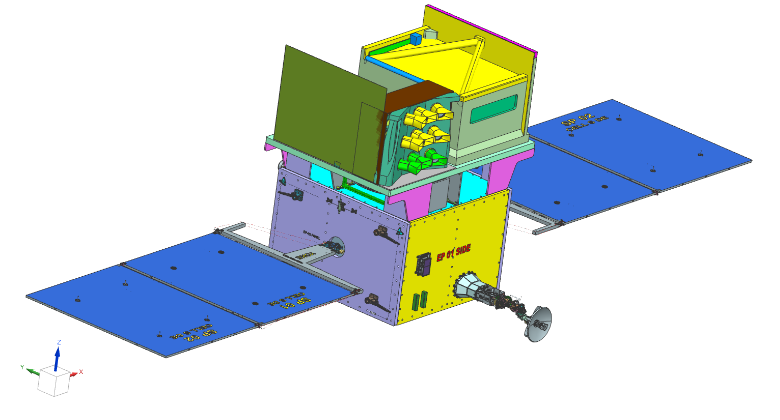
IST was founded in 2002 under the Pakistan Space and Upper Atmosphere Research Commission (SUPARCO) and is based on Islamabad Highway in the capital. Its motto is “Exploring the Final Frontier”, and its students work on aerospace engineering, satellite technology and space science — including the small-satellite research that produced Pakistan’s lunar CubeSat mission, ICUBE-Q.
The three honours won by the International Space Games Pakistan team in Moscow are the latest sign of how far that work has come. APP reported the distinctions as a showcase of the country’s growing capabilities in space science and technology, and the exact categories of the three awards were not specified in the report. What is clear is that a Pakistani student team held its own against seven other nations in engineering, robotics and mission operations — and finished a full 48-hour simulated mission without breaking stride.
Pakistan’s space ambitions are moving on several fronts at once, from satellite development to astronaut training. Wins like this one in Moscow give the country’s young engineers something just as valuable as hardware: proof, on an international stage, that they belong there.
Sources: Associated Press of Pakistan report on Pakistan’s participation in the International Space Games 2026 in Moscow (via TezKhabar, 28 October 2026) and the Institute of Space Technology (ist.edu.pk).
Related Posts
 TechnologyFree AI Training for 100 Women Project Managers in Pakistan Starts Today
 TechnologyNCCIA Karachi Call Centre Raid: 273 Arrested Including 42 Minors in Alleged Scam Targeting Foreigners
 TechnologyIslamabad Surgeon Removes Patient’s Gallbladder Remotely in Capital’s First Robotic Telesurgery
 TechnologyMercedes-Benz CLA 200 EV Launches in Pakistan Today: 528 km Range, 224 hp Electric Coupe
 TechnologyPTA Registers BIGO LIVE and Likee in Pakistan: What the Registration Means for Users
 TechnologyBinance Reveals How the $6.3 Billion Hack Happened: A Fake Job Interview and a Poisoned Coding Test
Most Popular
 How-ToPTA Tax Calculator 2026: Check Mobile Tax on Any Phone417 views
 Pakistan NewsPIA Boeing 787 Lease Deal: What It Means for the Airline388 views
 Canada JobsTech Jobs in Canada: Roles, Salaries, and Skills Needed387 views
 SportsUEFA Champions League 2026-27: Format, Teams and Schedule384 views
 TechnologyPM Shehbaz Sets November Deadline for Alibaba AI and Digitalisation Projects in Pakistan364 views
 ShowbizWomen’s Fashion in Pakistan 2026: Trends, Brands and Style Guide359 views