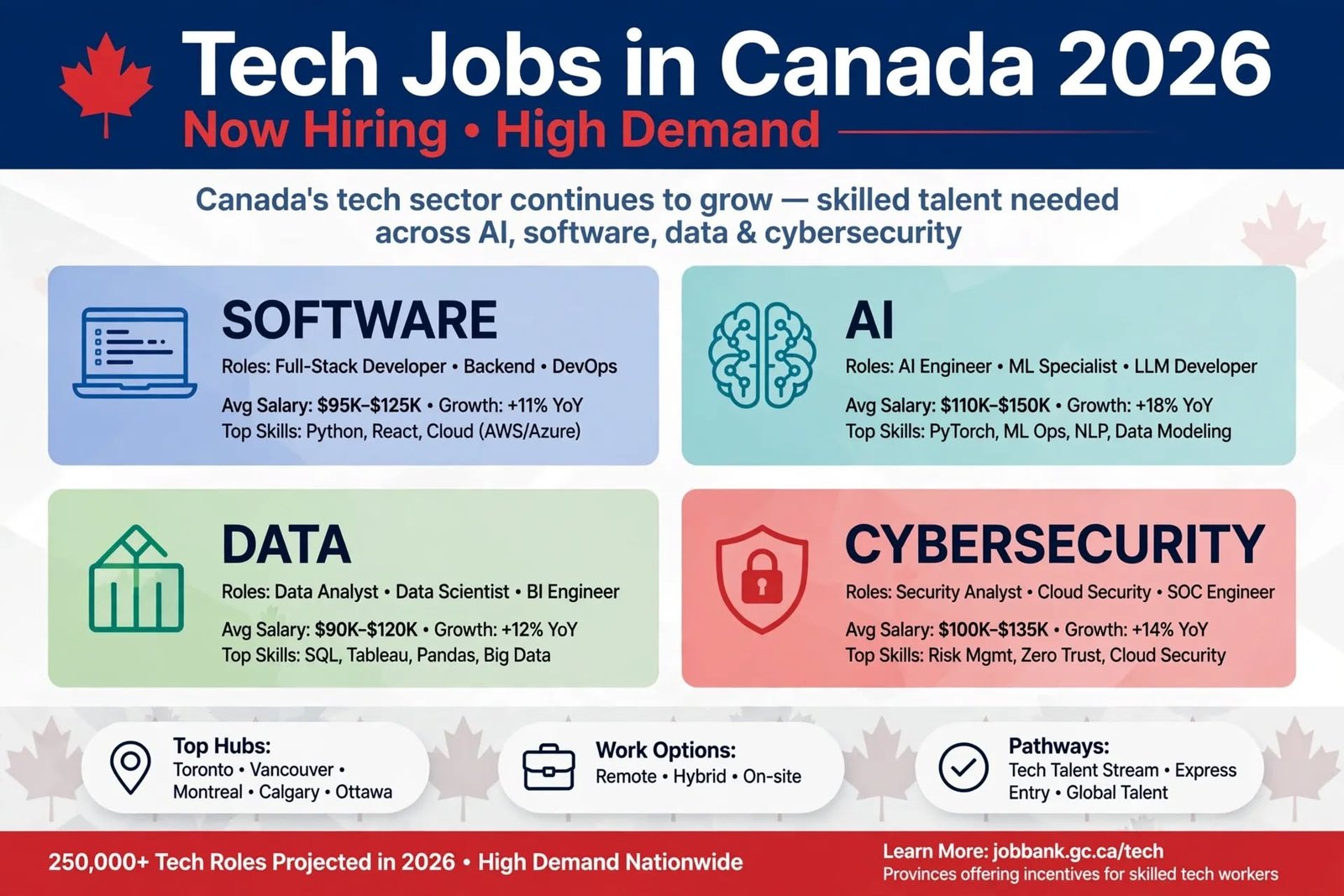
If you work in technology, Canada deserves a place on your radar. Over the past decade, the country has grown from a quiet neighbour of Silicon Valley into a major global tech destination. Toronto, Vancouver, Montreal, Waterloo, Ottawa, and Calgary are home to startups, research labs, and the Canadian offices of the world’s largest technology companies.
For job seekers, this means one thing: opportunity. But opportunity can be confusing. Which roles are actually in demand? How much do they pay? Which skills should you learn, and how do you get hired if you’re new to the country?
This guide answers those questions. You’ll find the most popular tech jobs in Canada, realistic salary ranges, the skills employers want, and practical steps to start your search, whether you’re a recent graduate, an experienced developer, or an international professional planning a move.
Why Canada Is a Great Place for Tech Careers
A Fast-Growing Tech Ecosystem
Canada’s technology sector spans software, fintech, health tech, clean tech, gaming, and artificial intelligence. Each of its major cities has its own strengths:
- Toronto: finance, fintech, enterprise software, and a large startup scene
- Vancouver: gaming, entertainment technology, and cloud companies
- Montreal: artificial intelligence research, video games, and aerospace tech
- Waterloo: a university-driven hub with strong engineering talent
- Ottawa: telecommunications, cybersecurity, and government technology
- Calgary and Edmonton: energy tech, data, and a rapidly growing digital sector
Friendly Immigration Pathways
Canada actively courts skilled tech workers. Programs such as Express Entry and the Global Talent Stream (a fast-track work permit option for certain tech roles) are designed to help employers hire international talent quickly. Immigration policies change, so always confirm current rules on the official government website.
Work-Life Balance and Benefits
Compared with some other markets, Canadian tech employers often offer reasonable working hours, generous vacation time, and strong benefits such as health coverage and retirement matching. Many companies also offer remote or hybrid arrangements.
Most In-Demand Tech Jobs in Canada
Below are the key roles, with typical salary ranges. Pay depends on city, company size, and experience, and top-tier employers can pay above these ranges.
1. Software Developer / Software Engineer
Typical salary range: $70,000 to $150,000+
Software developers design, build, and maintain applications. This remains the most common tech role in Canada, with openings in nearly every industry.
Core skills:
- JavaScript, Python, Java, C#, or Go
- Version control (Git)
- APIs and databases
- Strong problem-solving and teamwork
Junior developers typically start around the lower end of the range, while senior engineers and team leads at large firms can earn far more.
2. Front-End and Full-Stack Developer
Typical salary range: $65,000 to $140,000
Front-end developers build what users see and interact with. Full-stack developers handle both the interface and the server side.
Popular tools: React, Angular, Vue, Node.js, TypeScript
Full-stack skills are especially valuable at startups, where small teams need people who can do many things well.
3. Data Analyst
Typical salary range: $60,000 to $100,000
Data analysts turn raw numbers into insights that help businesses make decisions. This is one of the best entry-level tech jobs in Canada because you can begin without a deep programming background.
Key skills:
- SQL and Excel
- Power BI or Tableau
- Basic Python or R
- Clear communication of findings
4. Data Scientist and Machine Learning Engineer
Typical salary range: $90,000 to $160,000+
These roles build predictive models, recommendation systems, and AI-driven products. Canada has a strong reputation in artificial intelligence research, which creates steady demand.
Key skills:
- Python, TensorFlow, PyTorch
- Statistics and probability
- Model deployment and cloud platforms
Many positions prefer a master’s degree, but a strong project portfolio can carry real weight.
5. Cloud Engineer and DevOps Engineer
Typical salary range: $85,000 to $150,000
As companies move systems online, cloud and DevOps specialists keep everything running smoothly. They automate deployments, manage infrastructure, and improve reliability.
Key skills:
- AWS, Microsoft Azure, or Google Cloud
- Docker and Kubernetes
- CI/CD pipelines
- Infrastructure as code (Terraform)
Cloud certifications can noticeably improve your chances of getting interviews.
6. Cybersecurity Analyst
Typical salary range: $75,000 to $140,000
Cyber threats are growing, so organizations in banking, healthcare, and government need skilled defenders. Roles include security analyst, penetration tester, and security architect.
Helpful certifications: CompTIA Security+, CEH, CISSP
7. Quality Assurance (QA) and Test Engineer
Typical salary range: $60,000 to $110,000
QA engineers make sure software works properly before it reaches customers. With test automation skills (Selenium, Cypress, or Playwright), you can move into higher-paying roles.
8. Product Manager
Typical salary range: $90,000 to $160,000
Product managers decide what gets built and why. They work with engineers, designers, and customers. This is a great path for people who blend technical understanding with strong communication and business sense.
9. UX/UI Designer
Typical salary range: $60,000 to $110,000
Designers shape how digital products look and feel. Employers want people who understand users, not only visuals.
Key tools: Figma, Adobe XD, user research methods, prototyping
10. IT Support and Systems Administrator
Typical salary range: $50,000 to $90,000
IT support is a practical starting point for beginners. It builds troubleshooting and networking skills, and many professionals later move into cloud, security, or infrastructure roles.
Quick Salary Snapshot
| Role | Approx. Salary Range (CAD) | Entry Difficulty |
|---|---|---|
| IT Support | $50,000–$90,000 | Low |
| Data Analyst | $60,000–$100,000 | Low to Medium |
| QA / Test Engineer | $60,000–$110,000 | Low to Medium |
| UX/UI Designer | $60,000–$110,000 | Medium |
| Software Developer | $70,000–$150,000+ | Medium |
| Cybersecurity Analyst | $75,000–$140,000 | Medium to High |
| Cloud / DevOps Engineer | $85,000–$150,000 | Medium to High |
| Data Scientist / ML Engineer | $90,000–$160,000+ | High |
| Product Manager | $90,000–$160,000 | Medium to High |
Skills Canadian Tech Employers Want
Technical ability gets you noticed, but a balanced skill set gets you hired.
Technical Skills
- Programming fundamentals: pick one or two languages and learn them well
- Cloud platforms: AWS, Azure, or Google Cloud
- Data skills: SQL is useful in almost every tech role
- AI and automation: familiarity with AI tools is increasingly expected
- Security awareness: every developer benefits from knowing secure coding basics
Soft Skills
Canadian workplaces value collaboration highly. Employers look for:
- Clear written and spoken communication
- Teamwork and openness to feedback
- Adaptability and willingness to keep learning
- Ownership and reliability
If you are an international candidate, strong English or French communication can set you apart as much as technical ability.
Where Tech Jobs Are Located
Your city affects both salary and lifestyle.
- Toronto: the largest market, with the most openings and highest competition
- Vancouver: strong salaries, but housing costs are among the highest in the country
- Montreal: lower living costs and a lively AI and gaming scene (French is a real advantage)
- Waterloo region: excellent for developers and engineers, with a close-knit community
- Ottawa: stable government and telecom employers
- Calgary: growing digital and energy-tech opportunities with comparatively lower housing costs
Remote work has also widened the map. Some employers hire across provinces, so you may be able to work for a Toronto company while living in a more affordable city.
How to Get a Tech Job in Canada: Step by Step
1. Choose a Target Role
Don’t apply to everything. Pick one role, learn its required skills, and tailor your search around it.
2. Build Proof of Skill
Employers trust evidence. Create:
- A GitHub profile with real projects
- A portfolio website showing your best work
- Contributions to open-source projects
- Relevant certifications where they add value
3. Create a Canadian-Style Resume
Keep it to one or two pages. Focus on achievements and measurable results rather than long duty lists. Leave out photos, age, marital status, and other personal details.
4. Optimize Your LinkedIn Profile
Recruiters in Canada rely heavily on LinkedIn. Use a clear headline, list your skills, and keep your profile active.
5. Network Actively
Many roles are filled through referrals. Attend meetups, join online communities, and message professionals respectfully. A short, polite note asking for advice often opens doors.
6. Apply Strategically
Use job boards, company career pages, and recruiter networks. Customize each application instead of sending the same resume everywhere.
7. Prepare for Interviews
Expect a mix of technical questions, coding or case exercises, and behavioural questions (such as “Tell me about a time you resolved a conflict”). Practice describing your experience with clear examples.
Tips for Newcomers and International Applicants
Moving countries while job hunting takes extra planning.
- Check immigration options early. Explore Express Entry, provincial nominee programs, and employer-supported work permits.
- Get your education assessed if required for immigration or employer verification.
- Understand “Canadian experience.” Employers sometimes prefer local experience, so consider contract roles, internships, or volunteer projects to build a local reference.
- Research salary expectations. Compare offers against the local cost of living.
- Stay alert to scams. Never pay a fee to secure a job offer, and verify any recruiter or company independently.
Trends Shaping Tech Careers in Canada
- Artificial intelligence everywhere: AI is now part of almost every product category, increasing demand for engineers who can build and deploy it responsibly.
- Cybersecurity growth: rising threats keep security roles in high demand.
- Hybrid work becoming standard: flexible schedules are now normal at many firms.
- Skills-based hiring: many employers weigh portfolios and proven ability alongside degrees.
- Continuous learning: technologies change quickly, so ongoing upskilling is part of the job.
Conclusion
Tech jobs in Canada offer strong salaries, clear career growth, and a welcoming environment for skilled professionals. Whether you start in IT support, build software, analyze data, or secure systems, there is a pathway that fits your background.
The key is to be deliberate. Choose a role, build real skills, show your work, and network consistently. Technology rewards people who keep learning, and Canada’s tech market rewards those who combine solid technical ability with good communication. Start small, stay consistent, and your next opportunity may be closer than you think.
Frequently Asked Questions (FAQ)
What are the most in-demand tech jobs in Canada?
Software developers, data analysts, cloud and DevOps engineers, cybersecurity specialists, and AI/machine learning engineers are consistently among the most sought-after roles.
How much do tech workers earn in Canada?
Most roles fall between roughly $60,000 and $160,000 per year, depending on specialization, experience, and location. Senior and specialized positions can pay more.
Can I get a tech job in Canada without a degree?
Yes. Many employers value portfolios, certifications, and hands-on experience, especially in web development, QA, IT support, and cloud roles. Some roles, such as data science and research, often prefer advanced degrees.
Which city is best for tech jobs in Canada?
Toronto has the most openings, Vancouver and Montreal offer strong niche industries, and Waterloo, Ottawa, and Calgary are excellent alternatives. The best choice depends on your specialty and budget.
Are there remote tech jobs in Canada?
Yes. Many companies offer fully remote or hybrid roles, though some require you to live in Canada for tax and legal reasons.
Do I need to speak French?
For most of Canada, English is enough. In Quebec, French is a significant advantage and is often required.
How can newcomers find tech jobs in Canada?
Combine job boards, LinkedIn, company career pages, recruiters, and networking events. Build a Canadian-style resume and portfolio, and research immigration options early.