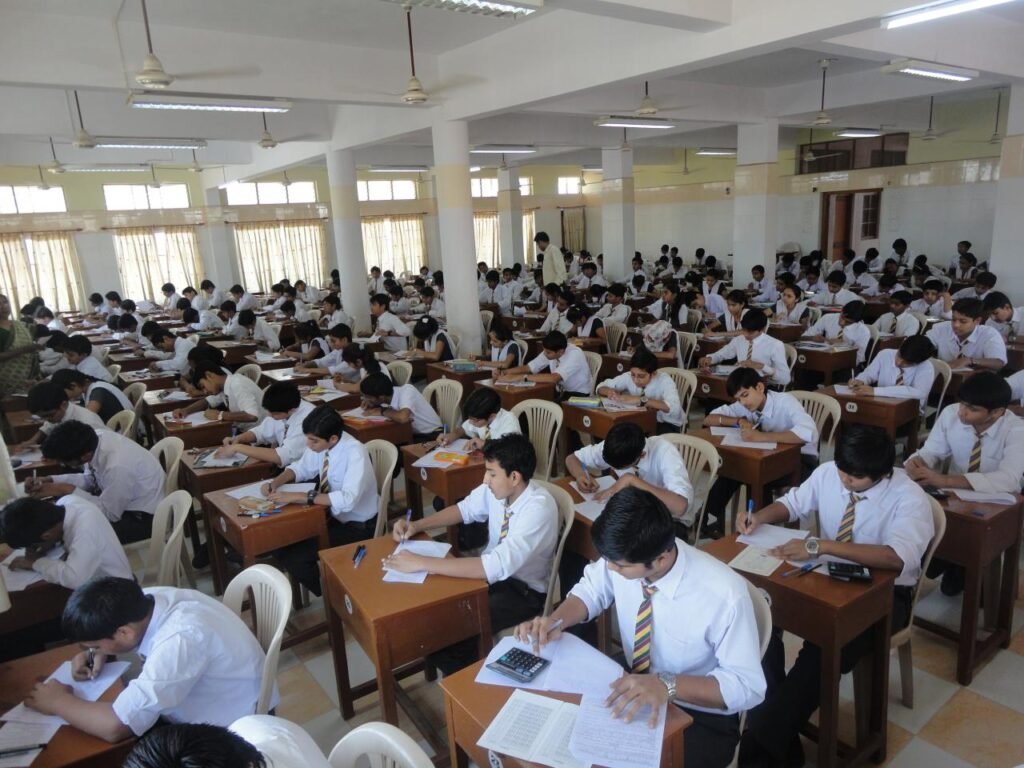
For thousands of students across Punjab, the second annual examinations are a second chance to improve a result, clear a failed paper, or complete an intermediate qualification without waiting for a whole academic year. The Punjab boards have now released the schedule for the Intermediate second annual examinations of 2026, and the first paper is only days away. This guide brings together the key dates, the main paper schedule, the practical window, and the steps students should take before entering the hall.
What the Second Annual Exams Mean and Who Can Appear
The second annual examination is the supplementary round of the intermediate examinations. It is mainly meant for students who could not pass one or more subjects in the annual examinations, students who wish to improve their marks in selected subjects, and students who missed a paper for a genuine reason in the earlier round. It lets them move forward in the same academic year instead of losing a full year of study.
Both parts are covered: Part One, which is Class 11, and Part Two, which is Class 12. Students appear only for the subjects in which they are registered for this round, not for every subject they took before. A student appearing in only two or three papers still needs the exact day, session, and centre for each paper, because a missed paper cannot usually be rearranged. Regular students generally get guidance through their colleges, while private candidates must check the roll number slip closely, since it carries the centre address and reporting time.
Key Dates at a Glance for the 2026 Round
The Intermediate second annual examinations in Punjab begin on Tuesday, 3 November 2026. Class 12 theory papers run first, from 3 November to 16 November 2026. Class 11 theory papers follow, from 17 November to 28 November 2026. Practical examinations are scheduled after the theory papers, from 1 December to 11 December 2026.
Morning papers begin at 9:00 in the morning, and evening papers begin at 2:00 in the afternoon. On Fridays, the evening paper begins slightly later, at 2:30 in the afternoon. Students should reach the centre well before the start time. These dates describe the overall window announced for Punjab. The detailed paper-by-paper schedule published so far is the date sheet of one board, and other Punjab boards have also named 3 November as the start date, so students should still confirm their own subject dates on their own board’s website or notice board.
Class 12 Theory Papers: The Main Schedule
Class 12 students begin on Tuesday, 3 November with papers such as Psychology and Commercial Geography in the morning session, and History papers in the evening session. English Compulsory follows on Wednesday, 4 November, with the first group in the morning and the second group in the evening. Students must be careful here, because appearing in the wrong group can create a serious problem, so the group printed on the roll number slip should be checked before leaving home.
The following days cover the core subjects. Tarjamat-ul-Quran and Ethics fall on Thursday, 5 November, while Mathematics and Biology are scheduled for Friday, 6 November, again split across the two sessions. Computer Science is set for Tuesday, 10 November, Urdu Compulsory for Wednesday, 11 November, and Chemistry and Civics for Thursday, 12 November. Education and Pakistan Studies Compulsory follow on Friday, 13 November, and the theory round closes on Monday, 16 November with Physics and Geography in the morning and Home Economics outlines in the evening.
Class 11 Papers and the Practical Examinations
Class 11 theory papers begin on 17 November and continue until 28 November 2026, following the same pattern of morning and evening sessions and the same reporting rules. The gap between the end of the Class 12 papers and the start of the Class 11 papers is short, so students appearing in both parts should plan their revision in advance and avoid leaving all of their Class 11 preparation until after their last Class 12 paper.
Practical examinations run from 1 December to 11 December 2026, mainly for science subjects such as Physics, Chemistry and Biology, along with Computer Science and other practical subjects. Practicals are organised in batches, and each student is assigned a specific date and shift, often communicated through the college or centre, so students should confirm their batch, laboratory, and reporting time as soon as the practical schedule is displayed. Revision should include laboratory work, neat labelled diagrams, and readiness to explain an experiment’s method in simple words.
Exam Day Rules, Roll Number Slip and Centre Discipline
The roll number slip is the most important document on examination day. Students must carry the printed slip to every paper, along with their original identity document where required. The slip shows the centre, the subject, the date, the session, and the student’s group, and it should be kept safe throughout the examination period, because it is needed for every paper, including practical examinations.
Mobile phones, smart watches, and unauthorised material are strictly prohibited inside the examination hall. Even a phone that is switched off and kept in a pocket can lead to serious action, so the safest choice is to leave such devices at home or hand them in exactly as the centre staff instruct. Students should reach the centre early, find their room and seat calmly, read the question paper carefully before writing, and manage time across all questions. If a question seems difficult, move on and return to it later rather than losing time at the start.
How to Use the Final Days Before 3 November
With the first paper only days away, the final week should be used for revision, not for starting entirely new topics. Students should work through past papers under timed conditions, revise short notes and formulas, and practise the subjects they find hardest in the morning hours when concentration is usually strongest. A simple daily plan, with fixed hours for each subject and short breaks in between, works better than long, unfocused study sessions that continue late into the night.
Health and routine matter just as much as revision. Sleeping on time, eating regular meals, drinking enough water, and keeping study material organised will help students stay calm in the hall. After the examinations finish, students should keep their roll number slip safe, because it is usually needed to check results and to apply for the next stage of admission. No result date has been confirmed in the material reviewed for this guide, so students should avoid trusting rumours and instead wait for their board’s official notice.
Related Posts
 EducationUHS Opens MBBS Admissions for Private Medical Colleges in Punjab: Last Date November 6
 EducationBenazir Taleemi Wazaif: Quarterly Education Stipends for Your Children — How Enrolment Works
 EducationDAAD EPOS Scholarship 2027/28: Funded Master’s and PhD Study in Germany for Working Professionals
 EducationStipendium Hungaricum 2027/28: Study in Hungary — HEC Applications Expected to Open in November
 EducationTürkiye Burslari Scholarship 2027: Fully Funded Study in Turkey — Applications Open 10 January
 EducationGKS Scholarship 2027 South Korea: Undergraduate University Track Still Open
Most Popular
 SportsBallon d’Or 2026: London Ceremony, Nominees and All-Time Records Ahead of 70th Anniversary282 views
 How-ToPTA Tax Calculator 2026: Check Mobile Tax on Any Phone278 views
 TechnologyAround 20 Pakistani Tech Companies Showcase Innovation at TechCrunch Disrupt 2026 in San Francisco256 views
 TechnologyRedmi K100 Launching on 28 October: 10,000mAh Battery, 185Hz Display and Full Specs252 views
 SportsUEFA Champions League 2026-27: Format, Teams and Schedule251 views
 Canada JobsTech Jobs in Canada: Roles, Salaries, and Skills Needed246 views