
Barclays 5000 Jobs Cut Amid AI Drive: What the Bank Announced and What It Means for Careers
Barclays has confirmed that the Barclays 5000 jobs cut will be largely complete by the end of 2026, as Britain’s biggest lenders reshape their workforces around artificial intelligence and long-running technology investment. The announcement, made alongside the bank’s third-quarter results, is one of the clearest signals yet that AI is now directly reducing headcount at major global banks.
Group chief executive CS Venkatakrishnan — known as “Venkat” — tied the reductions to years of technology spending, saying the cuts were “a result of the investments which we’ve made into technology over a number of years and which we continue to make.” The Barclays 5000 jobs cut amounts to roughly 5% of the bank’s workforce of around 93,000 people, and the bank says it expects £1.1 billion in efficiency savings in 2027.
What Barclays Announced on Results Day

Barclays’ headquarters at 1 Churchill Place, Canary Wharf, London. Photo: Bajajvikram, Wikimedia Commons (public domain).
Barclays said about 1,000 roles were already removed in the first half of 2026, with the remainder of the Barclays 5000 jobs cut spread across the second half of the year. The bank stressed that 5,000 is its own year-end expectation — not a completed figure — and that the cuts come from several years of technology investment rather than a single round of redundancies.
The results behind the announcement were strong: third-quarter pre-tax profit of £2.3 billion, up on the same period last year but slightly below what markets had expected. Venkat said the bank needs “fewer developers as AI makes our people more productive,” underlining how directly the bank links the Barclays 5000 jobs cut to productivity gains from its AI systems.
AI Is the Cited Driver — But Not the Only One
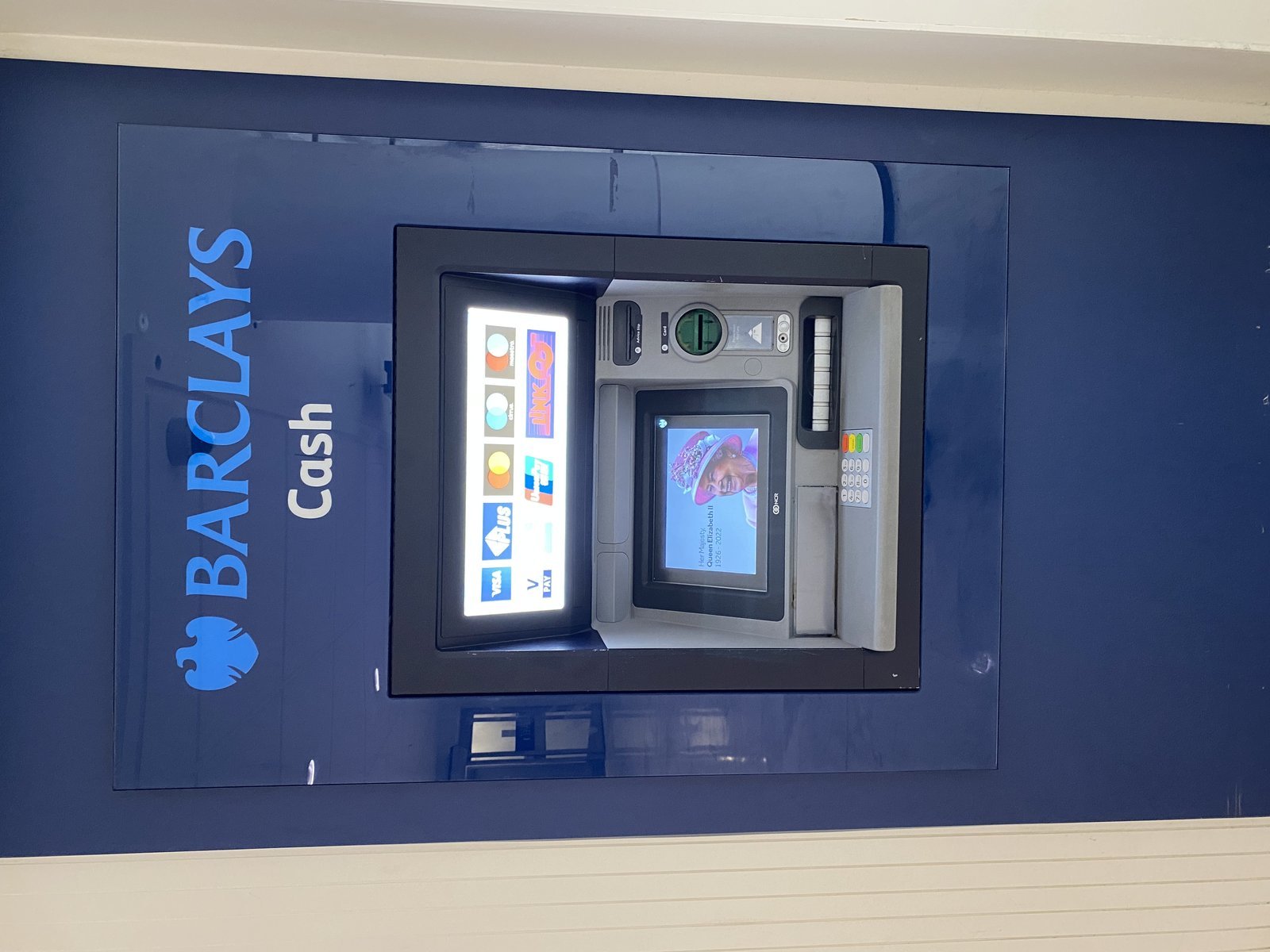
Representational photo: a Barclays ATM in London. Banks say automation and AI are absorbing more routine work. Photo: No Swan So Fine, Wikimedia Commons (CC BY-SA 4.0).
Venkat was unusually direct about the role of AI in the Barclays 5000 jobs cut. Many chief executives describe AI investments in general terms; Barclays explicitly said its people are becoming more productive through AI, so fewer of them are needed. Independent reporting on the announcement, including the BBC’s coverage, highlights the bank’s own framing that AI-driven productivity is a central reason for the reduction.
That said, honest framing matters: the bank also points to broader modernisation — years of investment in technology, automation of routine processes, and restructuring of support functions. The Barclays 5000 jobs cut is best understood as the result of AI plus modernisation together, not a simple story of every lost role being handed to a chatbot.
Which Roles Are Affected
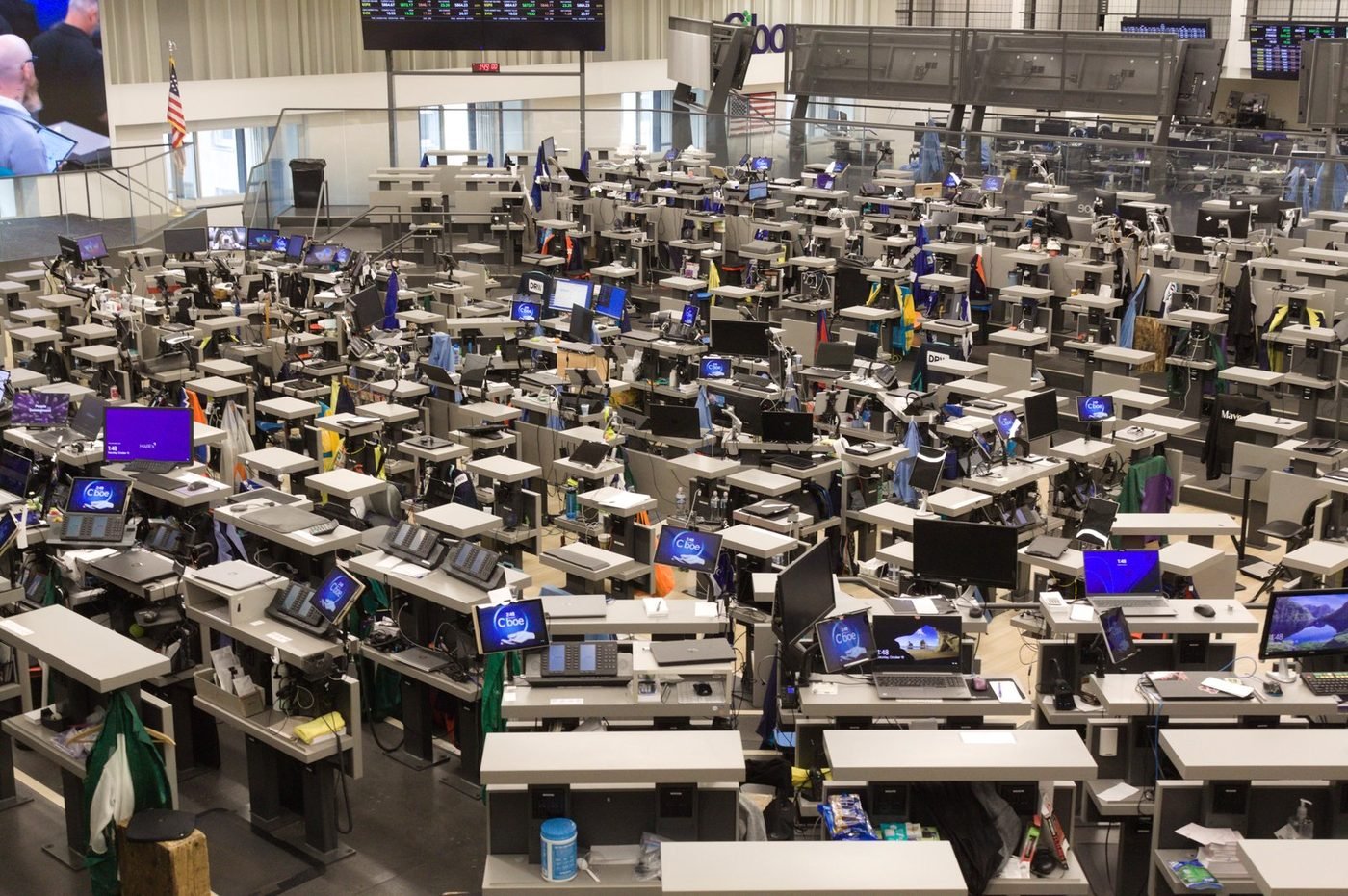
Representational photo: a banking trading and operations floor. Around 60% of Barclays’ cuts come from support and operational functions. Photo: Fixedsun, Wikimedia Commons (CC0).
Barclays said roughly 60% of the cuts will come from support and operational functions — the back-office teams that process transactions, handle compliance checks, and manage customer-service workflows. These are precisely the roles most exposed to automation: repetitive, rules-based work is exactly where AI and workflow software deliver the biggest productivity gains.
Software developers are affected too. The bank’s statement that it needs “fewer developers as AI makes our people more productive” is a striking admission: even the people building AI systems are being reduced because AI-assisted coding tools make each remaining developer more productive. That dynamic is being watched closely across the global tech industry.
A Wider Banking Trend, Not a One-Off

A Barclays branch in Windsor, England. Photo: David Hillas / geograph.org.uk, Wikimedia Commons (CC BY-SA 2.0).
The announcement arrives in a month when other global banks are moving the same way. Earlier in October, HSBC announced cuts to management and specialist roles in its wealth-management business and a reported 70% reduction in human financial advisers, with AI systems taking over much of that work. Banking executives have started using stark language about the scale of change.
As Business Recorder reported, Barclays expects its 5,000-role reduction to be complete by year-end as part of its AI-driven efficiency push. For the wider industry, the message is consistent: banks that once competed on branch networks and headcount are now competing on technology, and payrolls are being reshaped accordingly.
What It Means for Banking and IT Careers

A Barclays branch in West Kirby, England. Photo: Rodhullandemu, Wikimedia Commons (CC BY-SA 4.0).
For readers in Pakistan, Barclays is a UK bank — this story carries no claim about Pakistani banks’ staffing plans. But the Barclays 5000 jobs cut is a strong industry signal for anyone building a career in banking, finance operations, or IT. Global banks are among the biggest employers of Pakistani IT professionals through offshore and outsourcing teams, so a shift in how London and New York run their technology functions ripples outward.
The practical takeaway is reskilling rather than panic. Roles that involve overseeing, training, and validating AI systems — as well as customer-facing work that requires judgement and trust — are growing even as routine processing roles shrink. Pakistan’s own AI landscape is expanding fast, as our guide to AI policy, startups and jobs in Pakistan explains, and the skills the market rewards are shifting toward AI fluency. For IT professionals, roles that combine domain knowledge with AI tooling are in demand; our overview of tech jobs abroad shows the same pattern internationally.
The cuts may be remembered as the moment big banking stopped talking about AI as a future project and started treating it as a present-day workforce plan. For young professionals, the safest career bet is the one the banks themselves are making: learn to work with the technology, not against it.
Related Posts






Most Popular
 SportsBallon d’Or 2026: London Ceremony, Nominees and All-Time Records Ahead of 70th Anniversary289 views
 How-ToPTA Tax Calculator 2026: Check Mobile Tax on Any Phone289 views
 TechnologyRedmi K100 Launching on 28 October: 10,000mAh Battery, 185Hz Display and Full Specs267 views
 SportsUEFA Champions League 2026-27: Format, Teams and Schedule267 views
 TechnologyAround 20 Pakistani Tech Companies Showcase Innovation at TechCrunch Disrupt 2026 in San Francisco262 views
 Canada JobsTech Jobs in Canada: Roles, Salaries, and Skills Needed257 views