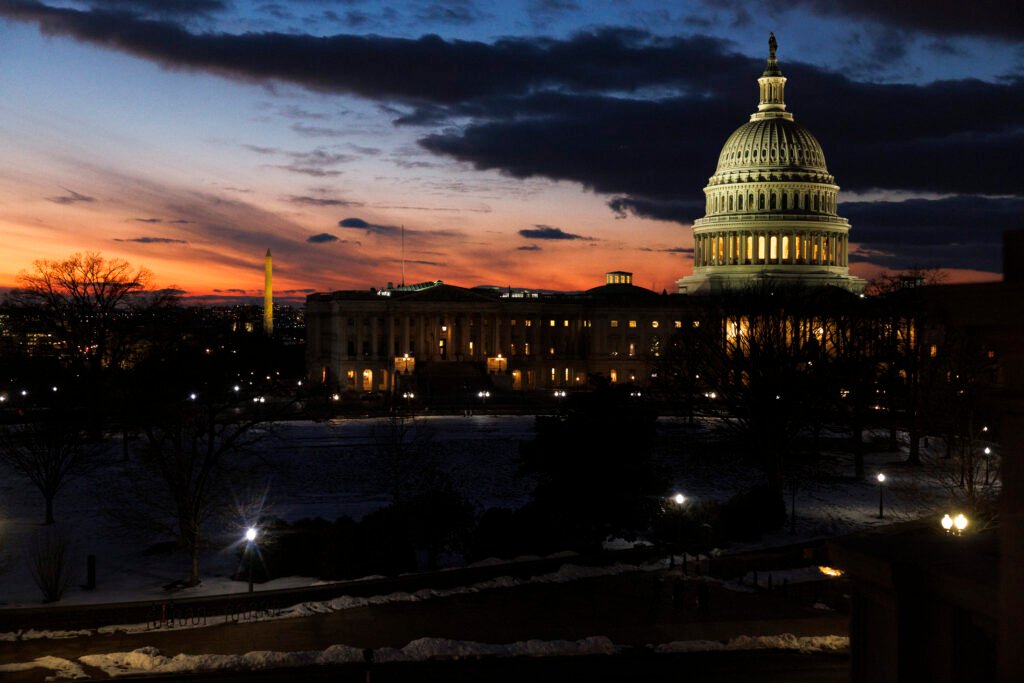
The Democrats have retaken the United States Congress. In the midterm elections held on Tuesday, 3 November 2026, the party won back both the House of Representatives and the Senate, ending two years of unified Republican government under President Donald Trump and setting up a sharply different final two years of his term.
The Associated Press called both chambers for the Democrats as results came in overnight into Wednesday. It is the first time since 2006 that an opposition party has retaken both the House and the Senate in a midterm election — a result that arrived with a series of historic firsts, including the first Muslim American elected to the US Senate.
House: Democrats Cross 218 as the Chamber Flips

The House was the first to fall. Democrats needed only a small net gain to take the chamber, and they crossed the 218 seats required for a majority in the early hours of Wednesday, with the Associated Press calling the race after a win in a redrawn Texas district put the party over the line. Projections from Fox News and Bloomberg put the Democratic total at at least 223 seats, with a small number of districts still to be counted.
House Minority Leader Hakeem Jeffries is now expected to become Speaker when the new Congress convenes in January — a step that would make him the first Black Speaker in American history. With the gavel comes control of the floor calendar, the committee chairmanships and the House’s subpoena power, all of which transfer from Republican hands. For the White House, the most immediate consequence is practical: budget reconciliation, which needs only a House majority, is no longer available as a Republican legislative tool.
The scale of the night surprised even many Democrats. Before polling day, the party was widely expected to regain the House; few strategists had predicted a sweep of both chambers. By Wednesday morning, projections had the party on course for its largest House majority since 1993.
Senate: The Four-Seat Climb That Few Predicted

The Senate was the night’s real shock. Democrats entered the election needing a net gain of four seats to overcome the Republicans’ 53–47 majority, and they cleared that bar well before midnight. The Associated Press called the Senate for the Democrats on election night, and by the early hours of Wednesday the party stood at 54 seats to the Republicans’ 44, with races in Alaska and Mississippi still too close to call.
The first pickup of the night came in North Carolina, where former governor Roy Cooper defeated Republican Michael Whatley. Democrats also held Georgia, where Senator Jon Ossoff won re-election, and captured New Hampshire’s open seat with Representative Chris Pappas. In Michigan, Democrat Abdul El-Sayed defeated Republican Mike Rogers — a result that carries its own history.
The Senate result matters because it removes the last Republican check on the new Congress. Together, the two chambers give Democrats the power to open investigations, demand documents and testimony from the administration, and block the president’s legislative agenda outright — though the president keeps his veto, and Democrats do not hold the votes to override one.
What Happens Next — and the Night’s Historic Firsts
The night produced several firsts. El-Sayed’s victory in Michigan makes him the first Muslim American elected to the United States Senate. In the House, Ilhan Omar won a fifth term, Jeffries stands to become the first Black Speaker, and Dan Koh’s election in Massachusetts added another first for Korean-American representation in Congress.
What happens next is a matter of timing. The new Congress does not take its seats until January, which leaves the current Republican majorities in charge through the lame-duck session. When the 120th Congress convenes in January 2027, the Democratic majorities take over — and the oversight machinery starts moving, with extensive investigations and policy scrutiny of the Trump administration widely expected.
For President Trump, the result complicates the final two years of his term. He acknowledged after the vote that the war in Iran had played a role in the Republicans’ losses. With Congress now in Democratic hands, his ability to advance his legislative priorities narrows sharply — and the next two years in Washington are likely to be defined as much by investigations as by lawmaking.
Related Posts
 World NewsHoax Bomb Threats Hit at Least 25 Flights Across Europe as Fighter Jets Scramble
 World NewsParaguay Bank Collapse: Ueno Bank Seized as 3 Million Customers Locked Out
 World NewsUS Sanctions Indian Couple Over Fake Flags for Iran’s Shadow Fleet — Nine Firms and a Turkish Ground Handler Also Hit
 World NewsStrait of Hormuz on Fire: Two Oil Tankers and a Tugboat Ablaze After Mine Strike
 World NewsGaza Families Build Homemade Wind Turbines from Rubble to Light Their Tents
 World NewsNabeela Syed Wins Illinois State Senate Seat, Defeats Incumbent Darby Hills
Most Popular
 How-ToPTA Tax Calculator 2026: Check Mobile Tax on Any Phone417 views
 Pakistan NewsPIA Boeing 787 Lease Deal: What It Means for the Airline389 views
 Canada JobsTech Jobs in Canada: Roles, Salaries, and Skills Needed387 views
 SportsUEFA Champions League 2026-27: Format, Teams and Schedule384 views
 TechnologyPM Shehbaz Sets November Deadline for Alibaba AI and Digitalisation Projects in Pakistan364 views
 ShowbizWomen’s Fashion in Pakistan 2026: Trends, Brands and Style Guide360 views