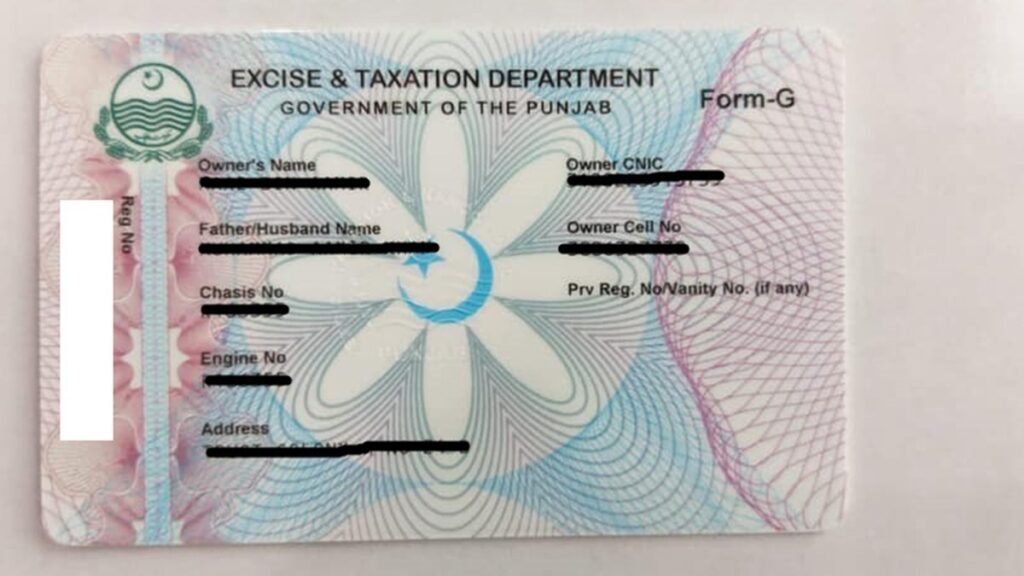
Disclaimer: UrduPro is not affiliated with the Punjab Excise & Taxation Department or any government body. Tax rates are revised by the government; always confirm the current schedule on the official portals linked below before paying. This guide explains the structure and process.
Token Tax Punjab 2026: Rates, Filer vs Non-Filer & Online Payment Guide
Every vehicle owner in Punjab must pay token tax — the annual (or lifetime, depending on the vehicle) road tax levied by the Excise & Taxation Department. Miss it and you face late-payment surcharges; buy a vehicle with unpaid token tax and the liability becomes yours. Yet the rate structure confuses almost everyone, because the amount depends on engine capacity and on whether you are a tax filer or non-filer.
This guide gives you clean, readable rate tables, explains the filer vs non-filer difference, walks through the ePay Punjab online payment process step-by-step (including the PSID flow), and covers deadlines, penalties, and how to confirm your payment in MTMIS.
What Is Token Tax and Who Must Pay It
Token tax is the provincial tax on motor vehicle ownership in Punjab, collected by the Excise & Taxation Department. It applies to cars, jeeps, motorcycles, rickshaws, and commercial vehicles registered in Punjab. Key facts:
- It is separate from income tax — even if you pay no income tax, you owe token tax on your vehicle.
- For most private cars it is an annual liability; some categories (e.g. certain motorcycles) have lifetime token tax options.
- Unpaid token tax transfers to the new owner on sale — always check MTMIS before buying a used vehicle.
- Driving with expired token tax can lead to fines and vehicle impoundment at Excise checkpoints.
Token Tax Rates 2026: Filer vs Non-Filer Tables
The single most important thing to understand: non-filers pay significantly more than filers for the same vehicle. Being on the Active Taxpayers List (ATL) directly reduces your token tax bill. Rates below reflect the structure announced by the department — confirm exact current figures on the official portal, as slabs are revised in provincial budgets.
Cars & Jeeps — Annual Token Tax (Illustrative Structure)
| Engine Capacity | Filer (Annual) | Non-Filer (Annual) |
|---|---|---|
| Up to 1000cc | Base rate | Higher rate |
| 1001cc – 2000cc | Base rate | Higher rate |
| 2001cc and above | Base rate | Higher rate |
How to read this: find your vehicle’s engine capacity on the registration book, check whether you are on the ATL (filer), and read across. The non-filer column is a multiple of the filer rate — the gap is the government’s nudge to get vehicle owners onto the tax roll.
Are you a filer? Check your ATL status on the FBR website (search “ATL FBR” and enter your CNIC). If your name appears, you pay the filer rate. Status is checked at the time of payment, so file your returns before paying token tax if you want the lower rate.
Motorcycles
Motorcycles generally attract a lower, often lifetime token tax depending on engine size and current policy. Because the motorcycle slab changes most frequently in budget announcements, verify the current figure in ePay Punjab at payment time rather than relying on last year’s number.
Commercial Vehicles
Commercial vehicles (pickups, trucks, buses, rickshaws) follow separate schedules, often with seating-capacity or laden-weight components. Check the Excise portal’s commercial schedule for your category.
How to Pay Token Tax Online: ePay Punjab Step-by-Step
ePay Punjab is the provincial government’s payment gateway. The flow uses a PSID (Payment Slip ID) — a unique challan number you generate first, then pay through any channel. Here is the full process:
- Open ePay Punjab — the official portal or mobile app.
- Select the department: Excise & Taxation Department → Token Tax (vehicle).
- Enter vehicle details: registration number and the required identifiers. The system pulls up your vehicle record and computes the due amount based on engine capacity and your filer status.
- Verify the amount against the rate tables above. If it looks wrong (e.g. charged the non-filer rate while you are a filer), resolve your ATL status first — paying the wrong amount creates refund headaches.
- Generate the PSID. This is your payment challan number — note it down or screenshot it. It has an expiry window; pay before it lapses.
- Pay via any channel:
- Mobile banking app (1Link member banks)
- Internet banking
- ATM
- Branchless banking agents (JazzCash/Easypaisa shops) — give them the PSID
- Over the counter at designated bank branches
- Keep the payment receipt (digital and printed). The transaction reference is your proof until the record updates.
- Confirm in MTMIS: after the system syncs (allow the stated processing time), re-check your vehicle on the MTMIS portal — the token tax status should now show paid up to the current year.
Deadlines and Late-Payment Penalties
- Token tax is due annually — the deadline cycle is announced by the Excise Department each year. Pay early in the cycle; the system gets congested near deadlines.
- Late payment attracts surcharges that grow the longer you delay. Two years of arrears cost materially more than two years of tax.
- Some years the department announces early-payment incentives or penalty waivers — watch official announcements rather than WhatsApp forwards.
- If you are buying a used vehicle, unpaid token tax plus accumulated penalties become your problem after transfer. Deduct a generous margin from the price or make the seller clear it first and show you the updated MTMIS record.
Token Tax vs Other Vehicle Taxes: Don’t Confuse Them
Vehicle owners in Punjab encounter several different levies. Mixing them up causes missed payments:
- Token tax: the annual provincial road tax covered in this guide — paid to the Excise & Taxation Department via ePay Punjab.
- Withholding tax on vehicle purchase/transfer: a federal tax collected at the time of buying or transferring a vehicle, with filer/non-filer differentials of its own. This is separate from the annual token tax.
- Registration fee: the one-time fee paid when a vehicle is first registered — not the same as the recurring token tax.
- Transfer fee: paid when ownership changes hands.
When budgeting for a vehicle purchase, account for all four — buyers who budget only the purchase price are regularly surprised at the Excise office.
How Token Tax Policy Has Been Changing
Recent years have seen steady movement in vehicle taxation policy. Trends to be aware of:
- Widening filer/non-filer gap: the differential has grown as the government pushes vehicle owners onto the tax roll. The financial case for becoming a filer strengthens every year.
- Digitisation of payment: the shift to ePay Punjab and PSID-based payment has reduced (though not eliminated) the role of cash agents at Excise offices.
- EV incentives: electric vehicles have periodically enjoyed exemptions or reduced rates as policy encourages adoption — but these windows open and close with budget announcements, so verify current status rather than assuming.
- Enforcement tech: Excise checkpoints increasingly verify token tax status digitally on the spot, making “I’ll pay later” a riskier strategy than it used to be.
The practical takeaway: check the current schedule every year before paying, even if you paid the same amount last year. Policy moves; your assumptions shouldn’t.
Common ePay / PSID Problems and Fixes
- PSID expired: generate a fresh one — do not try to pay an expired challan; the money can get stuck in reconciliation.
- Paid but MTMIS still shows unpaid: allow the official sync window first, then check with your transaction reference at the Excise office or helpline. Keep the receipt.
- Wrong amount computed: usually an ATL/filer-status mismatch. Confirm your filer status on the FBR ATL before regenerating the PSID.
- Vehicle record not found in ePay: verify the registration number spelling and confirm the vehicle is in the MTMIS database (see our verification guide).
- Payment deducted twice: do not panic — keep both transaction references and raise it with the bank and Excise; duplicate 1Link transactions are reconcilable with proof.
Token Tax and Vehicle Transfer: What Buyers Must Know
This deserves its own section because it is where buyers lose money:
- Before agreeing a price, check the token tax status on MTMIS yourself.
- If tax is outstanding, calculate: arrears + estimated penalties, and subtract from the offer — or require the seller to clear it.
- After the seller claims payment, re-verify on MTMIS before handing over money. Screenshots can be faked; the live portal cannot.
- Complete the ownership transfer promptly — until transfer, challans and liabilities still attach to the recorded owner.
Year-End Checklist for Vehicle Owners
Run this every year before the token tax cycle closes:
- ☐ Confirm your filer (ATL) status on the FBR website — file returns first if needed
- ☐ Check MTMIS for your vehicle’s current token tax status
- ☐ Generate the PSID on ePay Punjab and verify the computed amount
- ☐ Pay through an official channel and save the receipt (digital + printed)
- ☐ Re-verify on MTMIS after the sync window
- ☐ If you sold a vehicle this year, confirm ownership transfer completed — until it does, liabilities still attach to you
- ☐ If you bought a vehicle, confirm transfer and that token tax shows paid under the new record
Official Links
- ePay Punjab — official provincial payment gateway
- MTMIS Punjab vehicle verification: mtmis.excise.punjab.gov.pk
- Punjab Excise & Taxation Department: excise.punjab.gov.pk
- FBR Active Taxpayers List (ATL) status check — to confirm filer status
Frequently Asked Questions
How much is token tax in Punjab in 2026?
It depends on engine capacity and filer status — see the rate tables above for the structure. Confirm exact current figures on ePay Punjab or the Excise portal, as slabs are revised in provincial budgets.
Do non-filers pay more token tax than filers?
Yes — significantly more. The non-filer rate is a multiple of the filer rate for the same engine capacity. Getting on the FBR Active Taxpayers List before paying reduces your bill.
How do I pay token tax online in Punjab?
Through ePay Punjab: select Excise → Token Tax, enter your vehicle details, generate a PSID challan, and pay via mobile/internet banking, ATM, branchless banking agents, or designated bank branches.
What is a PSID?
A Payment Slip ID — the unique challan number ePay Punjab generates for your transaction. You pay against this number through any 1Link channel. It expires, so pay within its validity window.
What happens if I don’t pay token tax?
Late-payment surcharges accumulate, and you risk fines or impoundment at Excise checkpoints. Unpaid tax also transfers to the buyer if you sell the vehicle.
I bought a car with unpaid token tax. Who pays?
You do — the liability transfers with ownership. This is why verifying MTMIS before purchase is essential.
How do I check if my token tax is paid?
Verify your vehicle on the MTMIS Punjab portal — the record shows token tax paid up to a specific year and any outstanding amount.
Is token tax lifetime or annual for cars?
For most private cars it is annual. Some motorcycle categories have lifetime options depending on current policy — confirm in ePay Punjab at payment time.
I paid but MTMIS still shows unpaid. What now?
Allow the official sync window, then follow up with your transaction reference at the Excise office or helpline. Keep your payment receipt.
Can I get a refund if I paid the non-filer rate by mistake?
Refunds are handled case-by-case by the department and are slow. It is far easier to confirm your ATL filer status before generating the PSID.
Does token tax apply to electric vehicles?
EV incentives change frequently — some periods have offered exemptions or reduced rates. Check the current Excise notification for electric vehicles before paying.
Where can I complain about a wrong token tax charge?
Through the Excise & Taxation Department’s helpline/complaint channels with your PSID, transaction reference, and vehicle details.
I’m selling my car next month. Should I pay this year’s token tax first?
Yes — a clean, fully-paid MTMIS record makes your vehicle more attractive and avoids price haggling over arrears. Buyers routinely discount their offers by more than the actual tax due when they spot arrears, because they price in the hassle and penalty risk. Paying first puts you in the stronger negotiating position.
Related Posts
 BISPBISP Payment Not Received? 12-Step Diagnostic Guide (2026) | UrduPro
 BISPPMT Score Check 2026: What It Means, Cut-off & How to Check Your BISP Eligibility Score
 BISPBISP Rs 18,000 January 2027: Confirmed Payment Increase for Benazir Kafalat Beneficiaries
 BISP8171 Error 938 Fingerprint: Complete Biometric Fix Guide (2026)
 BISPMTMIS Punjab Vehicle Verification Online 2026: Complete Guide | UrduPro
 BISPDriving License Online Punjab 2026: Dastak App Complete Guide | UrduPro
Most Popular
 BISPPunjab Driving License Scam Alert: Fake Websites & “Without Test” Fraud | UrduPro51 views
 BusinessTech Stocks Trillion Loss: $1 Trillion Wiped Out as Oil Hits $11039 views
 How-ToPTA Tax Calculator 2026: Check Mobile Tax on Any Phone27 views
 Canada JobsTech Jobs in Canada: Roles, Salaries, and Skills Needed24 views
 TechnologyTecno Mobile Prices in Pakistan 2026: Spark, Camon and Pova Series Compared22 views
 How-ToNADRA Online Services 2026: Apply for CNIC, B-Form and More16 views