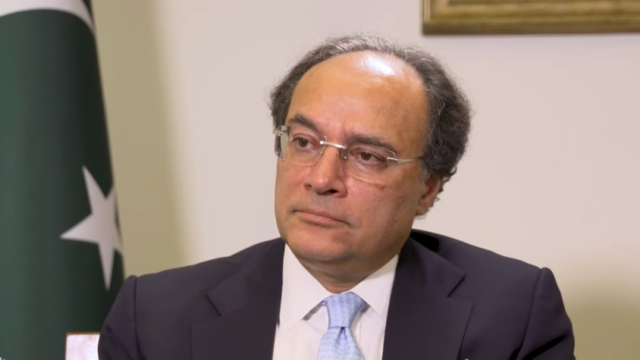
Pakistan formally assumed the chairmanship of the Intergovernmental Group of Twenty-Four (G-24) on Sunday, 1 November 2026, taking the helm of the developing world’s main coordination platform on international monetary and financial affairs. Finance Minister Muhammad Aurangzeb marked the handover by setting out an ambitious reform agenda aimed at giving developing economies a louder voice in the institutions that shape the global economy.
The Associated Press of Pakistan reported that the Finance Division announced the assumption of the chairmanship on 1 November, with Aurangzeb describing the role as a “profound responsibility” and calling for renewed international cooperation and stronger multilateral institutions.
The three priorities for the chairmanship year

Aurangzeb set three strategic priorities for Pakistan’s chairmanship, as carried by Geo News and Radio Pakistan. The first is putting development at the centre of global economic policymaking. The second is strengthening the representation of developing economies inside multilateral institutions, including the Bretton Woods institutions — the International Monetary Fund and the World Bank. The third is building an international financial architecture that is genuinely oriented toward development.
In the Finance Division’s statement, the minister argued that the future of developing economies sits at the heart of the global economy, with the capacity to drive investment, innovation, entrepreneurship and growth. He said macroeconomic stability should support investment, productivity, employment and shared prosperity, so that developing and low-income countries can move beyond crisis management toward sustainable growth.
Money, debt and climate on the agenda
The substance behind the priorities is financial. Aurangzeb’s agenda calls for affordable and timely development financing, sustainable debt solutions, stronger global financial safety nets, greater climate resilience and more mobilisation of both public and private capital. He framed the chairmanship as an opportunity to make sure developing economies are not held back by a global financial system that has not fully adapted to changing conditions — pointing to climate shocks, development financing gaps and global economic fragmentation as the challenges demanding stronger international cooperation.
Drawing on Pakistan’s own recent experience of economic stabilisation and reform, he said financial stability should be aligned with long-term development objectives, and that reforming economies need enough financing and policy space to keep growth on track. Pakistan will work with G-24 members across Africa, Asia, Latin America and the Caribbean, alongside the IMF, World Bank and other partners, to turn shared priorities into practical outcomes.
A handover from Nigeria, decided in Bangkok
The handover completes a transition that was announced in Bangkok last month. Aurangzeb acknowledged Nigeria’s leadership as the outgoing chair and pledged to build on the group’s progress. According to the Express Tribune’s 14 October report from the IMF and World Bank annual meetings in Bangkok, Aurangzeb — then the group’s first vice-chair — had already laid out the same three priorities at the G-24 ministers’ meeting and confirmed that Pakistan would take over the chair from Nigeria.
The G-24 was established in 1971 to coordinate developing countries’ positions on international monetary and financial issues. Its secretariat operates from IMF headquarters in Washington, D.C., and its ministerial Bureau meets twice a year ahead of the spring and autumn meetings of the IMF’s International Monetary and Financial Committee and the World Bank’s Joint Development Committee.
“A significant diplomatic milestone”
Prime Minister Shehbaz Sharif called the chairmanship a “significant diplomatic milestone” that reflects Pakistan’s effective role on the global economic stage, Radio Pakistan reported. He commended Aurangzeb and the Finance Ministry team, adding that the role strengthens Pakistan’s voice in international economic affairs and gives Islamabad a platform to press for reform of the international financial architecture.
For Pakistan, the chairmanship is also a credibility test. The government presents it as recognition of its stabilisation record, and Aurangzeb himself has been projecting the economy as back on a growth path on international stages in recent weeks. Whether the year produces concrete wins for developing-country financing — or simply a well-stated agenda — will be judged when the group’s ministers next meet in Washington in the spring.
Related Posts
 BusinessCabinet Overhauls Petrol Pricing: Refineries to Pay Rs49 a Litre as Levy Falls Rs14.71
 BusinessFBR Faces Rs129 Billion Tax Shortfall as Retailers Shun Fixed Tax Scheme
 BusinessAurangzeb Backs Digital Assets for Growth: Pakistan Reviews Eurobond Tokenization
 BusinessPakistan-Bound LNG Carrier Attacked Near Strait of Hormuz: Al Mayeda Struck, Forced to Turn Back
 BusinessGold Price in Pakistan Crashes Rs10,800 Per Tola in Sharpest Drop of the Year
 BusinessMaryam Nawaz Launches Punjab PIVOT Economic Plan: Rs2 Trillion Investment Push for Exports and Jobs
Most Popular
 How-ToPTA Tax Calculator 2026: Check Mobile Tax on Any Phone381 views
 SportsUEFA Champions League 2026-27: Format, Teams and Schedule369 views
 Pakistan NewsPIA Boeing 787 Lease Deal: What It Means for the Airline361 views
 Canada JobsTech Jobs in Canada: Roles, Salaries, and Skills Needed348 views
 SportsBallon d’Or 2026: London Ceremony, Nominees and All-Time Records Ahead of 70th Anniversary334 views
 ShowbizWomen’s Fashion in Pakistan 2026: Trends, Brands and Style Guide325 views