Yemen’s Iran-aligned Houthis said on Thursday that they had attacked several oil facilities in Saudi Arabia, including the kingdom’s largest refinery at Ras Tanura, in a dramatic escalation that sent global crude prices climbing on Friday and raised fresh fears about fuel costs in importing countries like Pakistan.
The claims, reported by Reuters, could not be independently verified. Saudi authorities have not confirmed any damage to the refinery, and the full extent of any impact remains unclear.
What the Houthis claimed
According to Reuters, the Houthis said they had struck Saudi Arabia’s 550,000-barrel-per-day Ras Tanura refinery — the largest in the kingdom and one of the most important in the Middle East — along with the Rabigh refinery on the Red Sea coast and a production facility at Abqaiq operated by state oil giant Saudi Aramco.
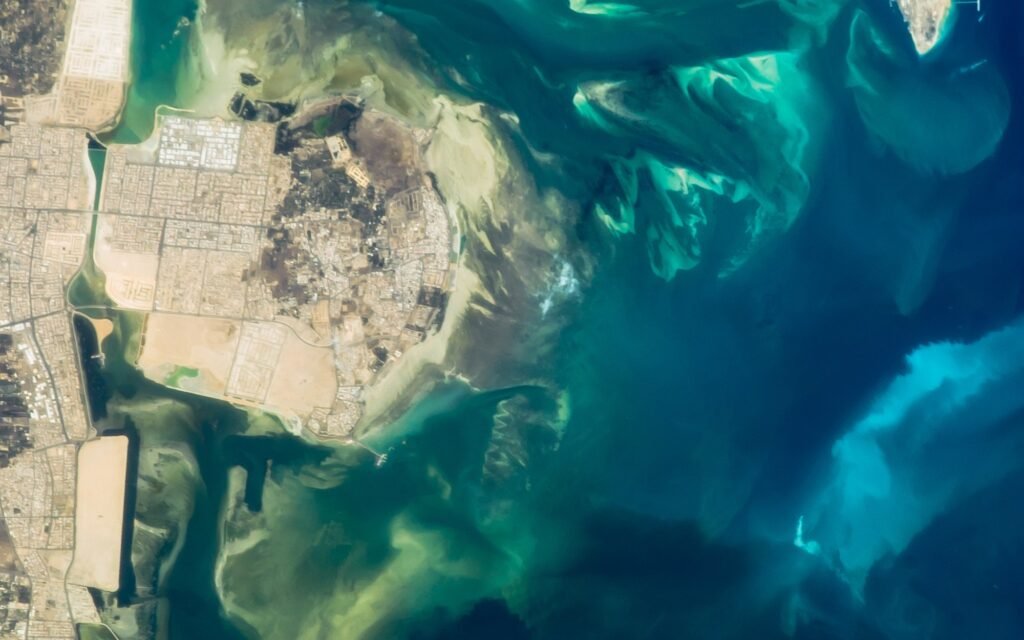
Ras Tanura, on Saudi Arabia’s Gulf coast north of Dammam, is not just a refinery. The adjoining Ras Tanura Port is the world’s largest crude oil export terminal, handling roughly a fifth of global oil exports through more than 2,000 tankers a year. Any disruption there would reverberate across world energy markets.
The Houthis had earlier claimed a ballistic missile struck Ras Tanura on October 27. Thursday’s announcement marked a widening of those claims, and the group framed the strikes as part of its ongoing campaign against Saudi Arabia.
Saudi Arabia’s response
A Saudi-led coalition said it had intercepted a cruise missile launched by the Houthis toward the kingdom’s western region, according to Reuters. Riyadh has not confirmed the Houthi claims about Ras Tanura, Rabigh or Abqaiq, and no verified images of damage at the refineries have emerged.
The gap between the Houthi claims and the Saudi account leaves the situation murky — a familiar pattern in the region’s information war. Markets, however, do not wait for confirmation: the mere claim of an attack on such a critical facility was enough to jolt prices.
Oil prices jump as markets price in supply risk
Oil climbed in early Asian trade on Friday on supply concerns. Brent crude futures rose 86 cents, or 0.75 percent, to $115.74 a barrel as of 0122 GMT, while US West Texas Intermediate (WTI) futures gained 72 cents, or 0.71 percent, to $102.72, Reuters reported.
The rally puts oil on track for a fourth consecutive monthly gain — the steepest since July. Brent was heading for a nearly 14 percent rise in October, while WTI was set for a roughly 15 percent jump, closing above $100 a barrel at month-end for the first time since April.
The price surge was reinforced by US inventory data. The US Energy Information Administration reported that crude stockpiles fell by 1.9 million barrels in the week through October 23, defying market expectations for a 100,000-barrel build — another sign of a tightening market.
Strait of Hormuz adds to the pressure
Adding to the supply anxiety, a tanker in the Strait of Hormuz — the key sea outlet for Gulf crude and fuel supplies — was hit by explosive devices attached by a small boat on Friday, the United Kingdom Maritime Trade Operations (UKMTO) said. It was not immediately clear who was behind the attack.
Separately, Iran’s Revolutionary Guards said three tankers had hit sea mines, exploded and caught fire while trying to use an unauthorized route south of the strait, Reuters reported.
Analysts warned the pressure is unlikely to ease soon. Saul Kavonic, head of energy research at MST Marquee, noted that military activity continues around the Strait of Hormuz amid doubts over a realistic diplomatic path. Ole Hansen, head of commodity strategy at Saxo Bank, said he expects crude to trade in a higher range of $70 to $90 a barrel — compared with pre-war levels of $60 to $70 — even after the current conflict ends, citing the risk of renewed hostilities and the need to rebuild inventories.
What it means for Pakistan
For Pakistan, which imports the bulk of its crude oil and petroleum products, a sustained rally in global oil prices is unwelcome news. Higher international crude prices typically feed through to domestic petrol and diesel prices at the fortnightly OGRA review, raising transport costs and adding to inflationary pressure across the economy.
The timing is delicate. Pakistan’s government has already been navigating fuel-price politics, with the petroleum levy a major contributor to the exchequer. Any sharp rise in global crude could force difficult choices between passing costs to consumers and absorbing them at the treasury’s expense.
Energy economists note that while Pakistan’s short-term supplies are secure, a prolonged period of $115-plus Brent would strain the import bill and could weaken the rupee, which in turn makes every barrel more expensive in local currency terms.
What to watch next
OPEC+, the alliance of oil-producing countries, meets on November 1 to discuss production policy — a meeting that now carries added weight. Traders will be watching for any signal that producers intend to offset potential supply disruptions with higher output.
The other key variable is whether attacks on energy infrastructure continue. As one analyst put it, the cat-and-mouse game has barely begun — and for oil-importing nations like Pakistan, the stakes of each new claim are measured at the petrol pump.
Sources: Reuters reporting via Global Banking and Finance and Zark News. Attack claims attributed as reported; damage unconfirmed by Saudi authorities.
Related Posts
 BusinessMaryam Nawaz Launches Punjab PIVOT Economic Plan: Rs2 Trillion Investment Push for Exports and Jobs
 BusinessABHI Microfinance Bank Plans Rs3 Billion IPO on PSX — Book Building on 5–6 November
 BusinessFBR Misses October Tax Target by Rs156 Billion, Collects Rs975 Billion
 BusinessSBP SMEConnect Portal: Apply for SME Loans Online from 1 November 2026
 BusinessPM Forms Committee on LPG Policy as Govt Seeks to Shift Pricing Powers from Ogra to SOEs
 BusinessDiesel Price in Pakistan Crosses Rs402 Per Litre: OGRA Revises Rates for Oct 31–Nov 2
Most Popular
 How-ToPTA Tax Calculator 2026: Check Mobile Tax on Any Phone362 views
 SportsUEFA Champions League 2026-27: Format, Teams and Schedule346 views
 Canada JobsTech Jobs in Canada: Roles, Salaries, and Skills Needed332 views
 Pakistan NewsPIA Boeing 787 Lease Deal: What It Means for the Airline328 views
 SportsBallon d’Or 2026: London Ceremony, Nominees and All-Time Records Ahead of 70th Anniversary327 views
 ShowbizWomen’s Fashion in Pakistan 2026: Trends, Brands and Style Guide314 views




One comment