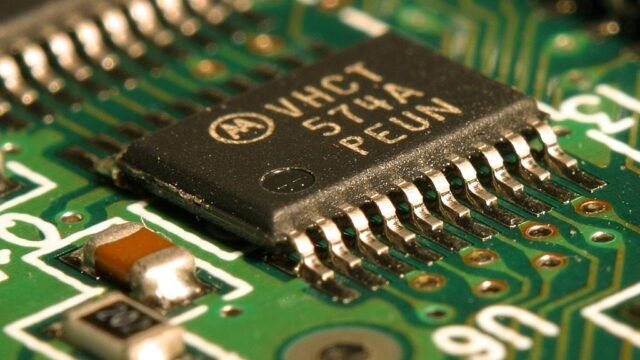
A computer orbiting the Earth has answered a question for the first time. On 30 October 2026, Google announced that its experimental Project Suncatcher satellite — a spacecraft carrying data-center-class AI chips — received a prompt from a ground station, ran it through its onboard AI model, and sent a reply back to Earth. The answer was a short poem about space, written hundreds of kilometres above the planet.
“Hello World” from orbit: the first AI answer from space
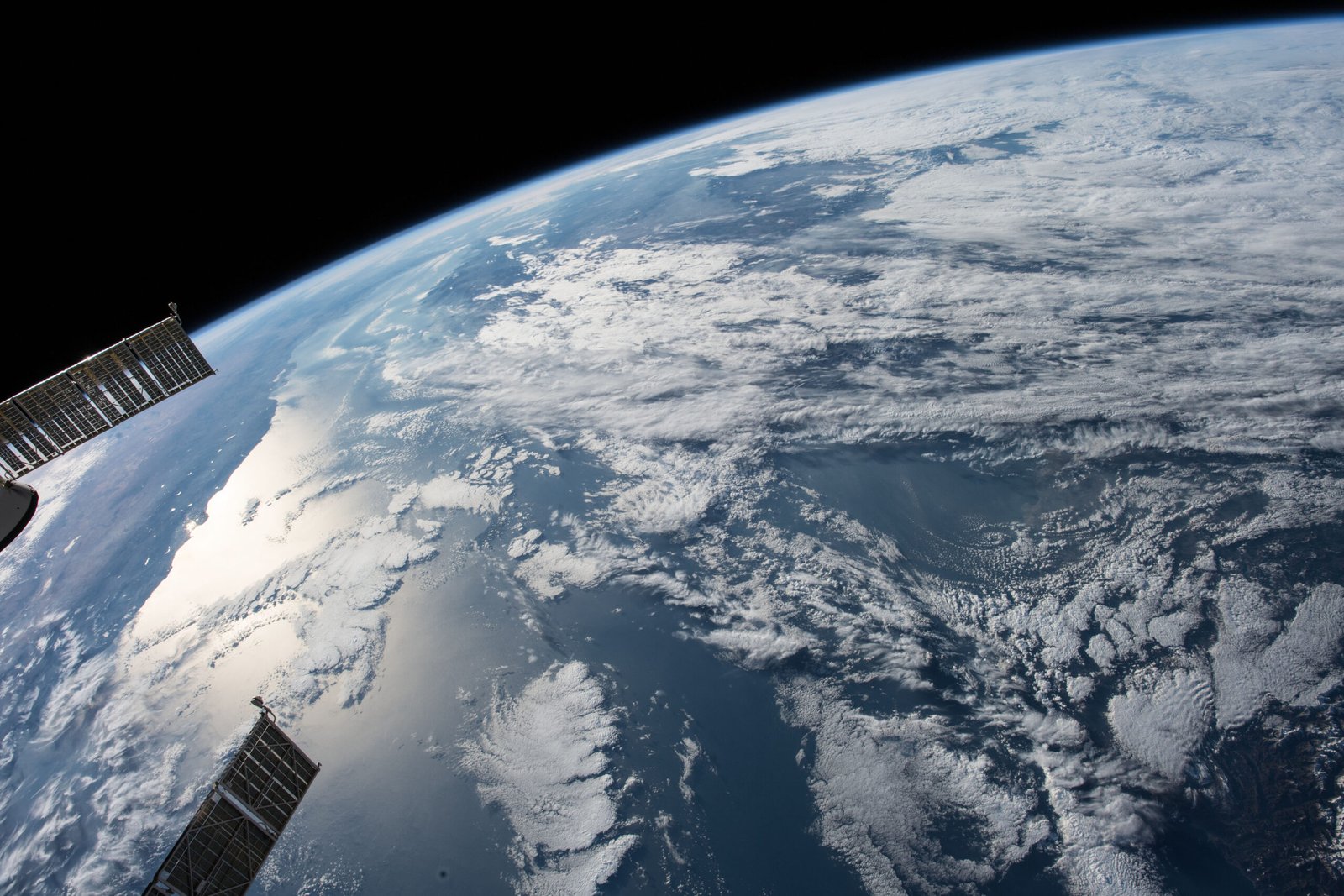
Google’s team, led by Project Suncatcher lead Travis Beals, uploaded its first prompt to the satellite during a pass over a ground station in Svalbard, Norway. The prompt asked the onboard AI to express, in haiku form, what it feels like to be in space. Moments later, the reply arrived: a three-line poem about the blue Earth below, data streaming in silence, and starlight feeding the machine’s core.
Google described the moment as the project’s “Hello World” milestone — the first AI response ever generated by a data-center-class TPU (Tensor Processing Unit) in orbit. Before the poem, engineers ran early machine-learning checks on the satellite; after it, they tried more prompts, including space-themed limericks and commands asking the satellite to report the technical status of its own payload systems.
The satellite: four TPUs riding a SpaceX Falcon 9
The prototype satellite launched on 1 October 2026 aboard a SpaceX Falcon 9 rocket and was built jointly with the satellite company Planet. It carries four custom Google TPUs — the same class of chip the company uses in its giant AI data centers on Earth — along with a one-kilowatt solar array and an experimental cooling system designed for the vacuum of space.
After about three weeks of commissioning, engineers powered up the host computer and the TPU tray, completed the initial machine-learning tests, and then ran the headline experiment. Because of tight power limits, the satellite can reportedly run only one TPU at a time, for roughly 20 minutes at a stretch.
Why Google wants data centers in the sky
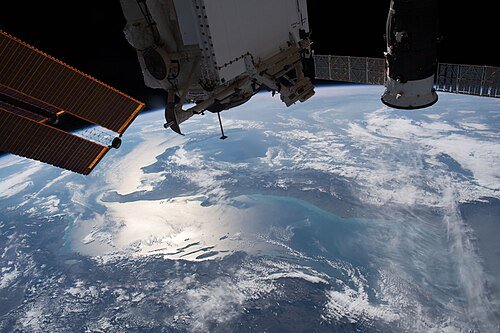
The idea sounds like science fiction, but the logic is grounded in a real crisis: AI is eating power. Training and running large AI models needs enormous amounts of electricity, and Google’s bet is that orbit offers two things Earth cannot — near-constant sunlight and abundant free space.
Google’s research, published in 2025, estimates that a solar panel in the right orbit can generate up to eight times more energy per year than the same panel on the ground. The company’s plan sketches satellites flying in a “dawn-dusk” sun-synchronous low Earth orbit, where they would be bathed in almost continuous sunlight, and even an illustrative 81-satellite constellation, with neighbours just 100 to 200 metres apart.
The pitch is simple: if energy is the bottleneck for AI, move the computers to where the Sun never sets.
The long road ahead: heat, radiation and twin satellites in 2027
Google itself is cautious. The company says the next tests will check how its TPUs handle thermal stress and radiation exposure in orbit — two of the hardest problems in space computing. Heat is especially tricky: in a vacuum, there is no air to carry heat away, so cooling must be done with radiators. Electronics are also battered by cosmic radiation that can corrupt calculations.
The stated next step is a pair of interconnected satellites in 2027, linked by laser optical communications — a far more demanding test than a single prompt and reply. The company also projects that launch prices could fall below 200 dollars per kilogram by the mid-2030s, which would make big orbital deployments dramatically cheaper.
China vs SpaceX: the race for orbital compute — and a dose of scepticism
Google is not alone. Tech watchers point to a growing race for space-based AI infrastructure, with China and Elon Musk’s SpaceX also competing to put advanced AI data centers in Earth’s orbit. The prize would be enormous: cheap, abundant solar power for the AI boom.
But independent analysts urge caution. Google has not published orbital measurements, latency figures, or error rates, and no one outside the company has independently reproduced the result. As one critique put it, this is a company’s report that inference works in orbit — a genuine milestone, but still a long way from proving that data centers belong in space.
For Pakistan’s growing community of AI students, developers and space enthusiasts, the story is a glimpse of where computing might go next. A satellite that answers questions from orbit is, for now, a poetry-writing experiment. But if the next tests survive heat, radiation and the economics of launch, the computers that run tomorrow’s AI could be circling the planet overhead.
Related Posts
 TechnologyTelenor Pakistan Launches eSIM for Prepaid and Postpaid Users — Say Goodbye to the Plastic SIM
 TechnologyCasio CMK-100 Titanium Automatic: Casio’s Mechanical Field Watch Launch, Price and Pakistan Availability
 TechnologyNational CERT Warns TeamViewer Users in Pakistan: Update to 15.83 Now
 TechnologyMIT Stranded 13 AI Agents on a Virtual Island — With Nothing to Do, They Started Playing
 TechnologyPTA Chairman: 100 Million Pakistanis on Social Media, 1.5 Billion TikTok Videos Watched Daily
 TechnologyAtta Tarar Pushes Mandatory AI Content Labelling in Pakistan — and a National Cybersecurity Council
Most Popular
 How-ToPTA Tax Calculator 2026: Check Mobile Tax on Any Phone373 views
 SportsUEFA Champions League 2026-27: Format, Teams and Schedule358 views
 Pakistan NewsPIA Boeing 787 Lease Deal: What It Means for the Airline350 views
 Canada JobsTech Jobs in Canada: Roles, Salaries, and Skills Needed343 views
 SportsBallon d’Or 2026: London Ceremony, Nominees and All-Time Records Ahead of 70th Anniversary330 views
 ShowbizWomen’s Fashion in Pakistan 2026: Trends, Brands and Style Guide320 views