
Budget 2026-27 Pakistan: Key Highlights and Tax Changes

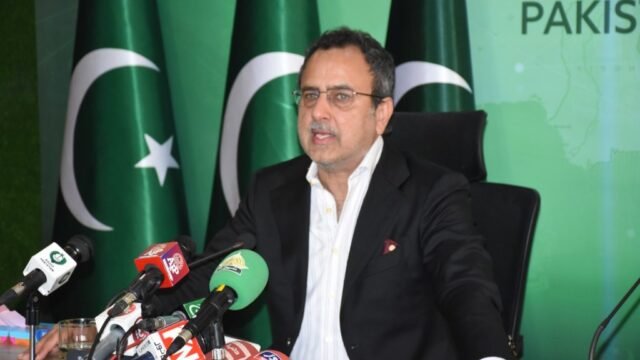
Finance Minister Muhammad Aurangzeb presented the federal budget 2026-27 in the National Assembly on 12 June 2026, outlining a Rs 18.77 trillion spending plan that pairs IMF-mandated revenue targets with relief for salaried earners, businesses and exporters. The budget 2026-27 framework projects 4 percent real GDP growth and inflation of 8.2 percent for FY27, with the FBR tasked with collecting nearly Rs 14,600 billion.
The standout feature of budget 2026-27 is income tax relief for the salaried class. Slabs were restructured with additional intermediate bands: the 23 percent rate for income between Rs 2.2 million and Rs 3.2 million was cut to 20 percent, while the 30 percent rate for Rs 3.2 million to Rs 4.1 million fell to 25 percent. The threshold for the maximum 35 percent rate rose from Rs 4.1 million to Rs 7 million, and the 9 percent surcharge on income above Rs 10 million was abolished.
Budget 2026-27: Business and Export Relief
For businesses, budget 2026-27 rationalises the Super Tax: abolished entirely for incomes below Rs 500 million and reduced from 10 percent to 8 percent for higher brackets, though banks, exploration and production companies and fertiliser firms remain at higher rates. Exporters saw withholding and advance taxes on export proceeds cut from 2 percent to 1.25 percent, while the 0.25 percent regime for IT and IT-enabled services was extended for three more years.
Real estate received a boost as Section 7E, the deemed-income tax on immovable property, was abolished. Advance taxes on property transactions under sections 236C and 236K were converted to flat rates of 2.75 percent and 1.5 percent. A proposal to scrap the 1 percent Capital Value Tax on foreign assets above Rs 100 million was also included. Compare with our Pakistan budget 2026 overview and track inflation trends.
Revenue Measures and New Taxes
The FBR expects taxation measures to add Rs 250 billion, with enforcement and administrative steps contributing another Rs 400 billion. New levies include a 5 percent withholding tax on social media platforms, federal excise duty of Rs 16,500 per kg on e-liquid (up from Rs 10,000), FED on naphtha, solvent oil, turpentine, luxury EVs, base oil and lubricants. Twenty-one branded FMCG items were brought into the GST Third Schedule at retail prices.
On the spending side, government employees and pensioners received a 7 percent increase, while the minimum wage rose 10 percent to Rs 40,700 per month. Development spending was set at about Rs 1 trillion, defence at roughly Rs 3 trillion, and debt servicing remained the largest single outlay. The GST exemption for contraceptive and menstrual hygiene products marked a notable social-policy step in budget 2026-27.
What It Means for Households
Salaried earners above Rs 250,000 per month could save up to Rs 150,000-200,000 annually from the slab restructuring. The broader picture is mixed: subsidies are being trimmed, electricity bills carry new adjustments, and the 8.2 percent inflation target keeps pressure on purchasing power. For investors, the message of budget 2026-27 is documentation, digital compliance through a new National Faceless Centre, and a growth tilt toward exports and construction.
Frequently Asked Questions
What is the total size of budget 2026-27?
Approximately Rs 18.77 trillion, presented on 12 June 2026.
What tax relief did salaried earners get?
Slab rates were cut by 2-5 points for incomes between Rs 0.6 million and Rs 4.1 million, the 35 percent threshold rose to Rs 7 million, and the high-income surcharge was abolished.
What changed for property?
Section 7E was abolished and advance taxes under 236C/236K became flat rates of 2.75 percent and 1.5 percent.
What is the FBR revenue target?
Nearly Rs 14,600 billion, up from Rs 13,000 billion collected by 30 June 2026.
What are the growth and inflation assumptions?
4 percent real GDP growth and 8.2 percent inflation for FY27.
Data sources: The News budget FY27 analysis and tax relief measures summary. Provisions may change during Finance Bill passage; verify with official FBR documents.
In-Depth Analysis: What the Budget Means for You
The budget 2026-27 sets Pakistan’s economic direction for the fiscal year: how much the government will spend, where the money comes from, and who pays more tax. Headlines capture the politics, but the details decide the impact on your household and business.
Pakistan budget 2026-27 highlights and tax changes
Pakistan budget 2026-27 highlights typically include the total outlay, development spending, defence allocation and debt servicing — the last usually the single largest item. Budget 2026-27 tax changes matter most to readers: adjustments to income tax slabs, sales tax on goods and services, withholding taxes and customs duties. Salaried individuals should check the revised slabs against their pay; businesses should review sales tax and withholding implications with their accountants.
Budget 2026-27 salary increase and the full document
The budget 2026-27 salary increase for government employees — usually a percentage raise plus pension adjustments — is announced in the speech; compare it against inflation to judge the real gain. For the complete picture, the federal budget 2026 PDF on the finance ministry’s website contains every figure. Read beyond day-one commentary: the Finance Bill’s fine print often contains the measures that actually affect you.
Sector-by-Sector Impact
The budget 2026-27 affects different Pakistanis very differently. Salaried workers feel it through income tax slabs and the salary increase announcement; businesses through sales tax, withholding regimes and customs duties on imported inputs; farmers through subsidies and support prices; and the poorest through BISP/Ehsaas allocations and utility subsidies. Reading the budget through your own situation — rather than the political commentary — is what makes it useful.
Deficit, debt and the IMF context
Every budget 2026-27 analysis must reckon with the fiscal deficit and debt servicing, which consume a huge share of revenue before a single development project is funded. IMF programme conditions typically shape the budget’s tax measures and subsidy reforms — understanding this context explains why certain unpopular measures appear. Watch the implementation, not just the announcement: revised estimates later in the year reveal which promises survived contact with reality.
What to watch in the coming months
After the budget 2026-27 speech, the Finance Bill’s passage, SROs issued by the FBR, and provincial budgets complete the picture. For individuals: recalculate your monthly tax deduction, adjust business pricing for new duties, and check whether you qualify for any newly announced relief schemes. Economic commentary is loudest in budget week — the real effects emerge over the following quarters.
Related Posts
 BusinessPakistan Introduces Electronic Power Monitoring System to Crack Down on Power Theft
 BusinessTech Stocks Trillion Loss: $1 Trillion Wiped Out as Oil Hits $110
 BusinessLululemon Chief Product Officer: Maggie Gauger Joins as President & CPO in Leadership Overhaul
 BusinessKOSPI Index Crash: South Korea’s KOSPI Suffers 7.57% Drop, Triggering Circuit-Breakers
 BusinessBlinkit Reliance Food Probe: Indian Regulators Name Executives in Expired Food Case
 BusinessHDFC Bank Profit Miss: Q2 Net Profit Rises 4.7% but Treasury Slump Disappoints
Most Popular
 How-ToPTA Tax Calculator 2026: Check Mobile Tax on Any Phone87 views
 BISPPunjab Driving License Scam Alert: Fake Websites & “Without Test” Fraud | UrduPro80 views
 Canada JobsTech Jobs in Canada: Roles, Salaries, and Skills Needed76 viewsBusinessTech Stocks Trillion Loss: $1 Trillion Wiped Out as Oil Hits $11066 views
 TechnologyTecno Mobile Prices in Pakistan 2026: Spark, Camon and Pova Series Compared62 views
 ShowbizWomen’s Fashion in Pakistan 2026: Trends, Brands and Style Guide59 views



One comment