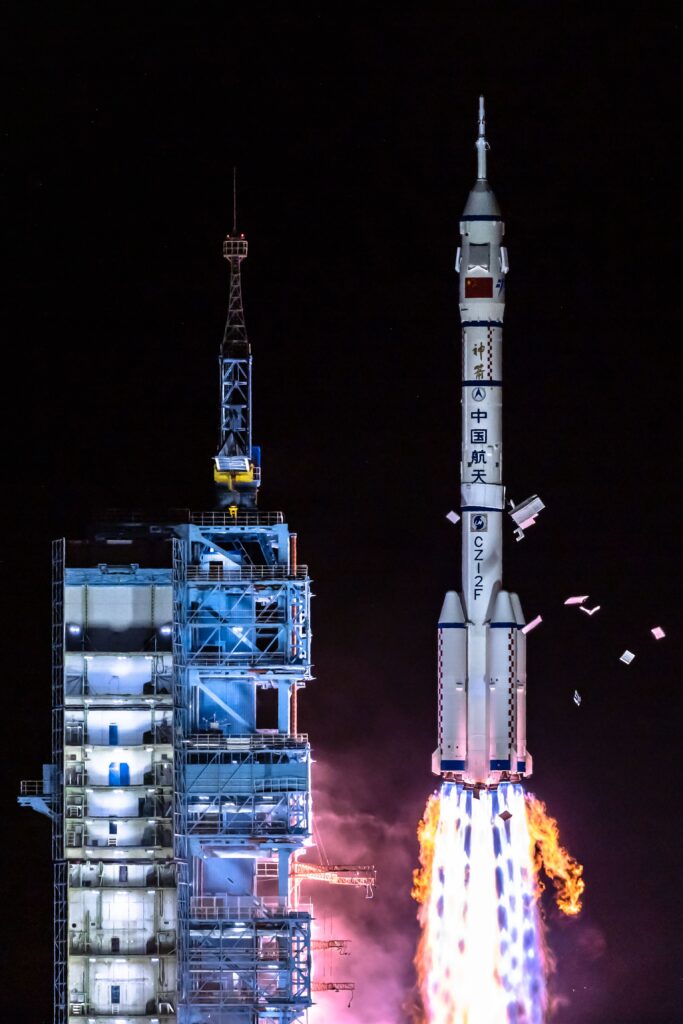
Pakistan has made history in space. Wing Commander Muhammad Zeeshan Ali lifted off aboard China’s Shenzhou-24 spacecraft at 5:18am Pakistan time on Wednesday, 25 November 2026, becoming the first Pakistani ever to reach orbit and the first foreign astronaut to visit China’s Tiangong space station.
Read our earlier report on the Shenzhou-24 launch.
A Long March 2F rocket carried the Shenzhou-24 spacecraft into orbit from the Jiuquan Satellite Launch Centre in north-western China. Liftoff took place at 8:18am Beijing time — 00:18 UTC — exactly on schedule, after the crew was confirmed by the China Manned Space Agency at a pre-launch briefing on Tuesday. The spacecraft is expected to dock with Tiangong around three and a half hours after launch.
For Pakistan, the flight is a national first. No Pakistani has ever flown to orbit before, and no guest from another country has ever boarded the Chinese station. Ali, 40, a Pakistan Air Force pilot, is flying as a payload specialist — the crew member responsible for scientific experiments rather than flying the spacecraft. He will spend about a week aboard Tiangong before returning to Earth aboard the Shenzhou-23 spacecraft.
“My first flight not only represents myself, but also my country,” Ali told reporters in Mandarin at Jiuquan on 24 November. He said he carries the hopes of 250 million Pakistanis, and described the mission as “not a finish line; it is a launch pad” for Pakistan-China space cooperation.
Liftoff at 5:18am: Long March 2F Carries Shenzhou-24 Into Orbit
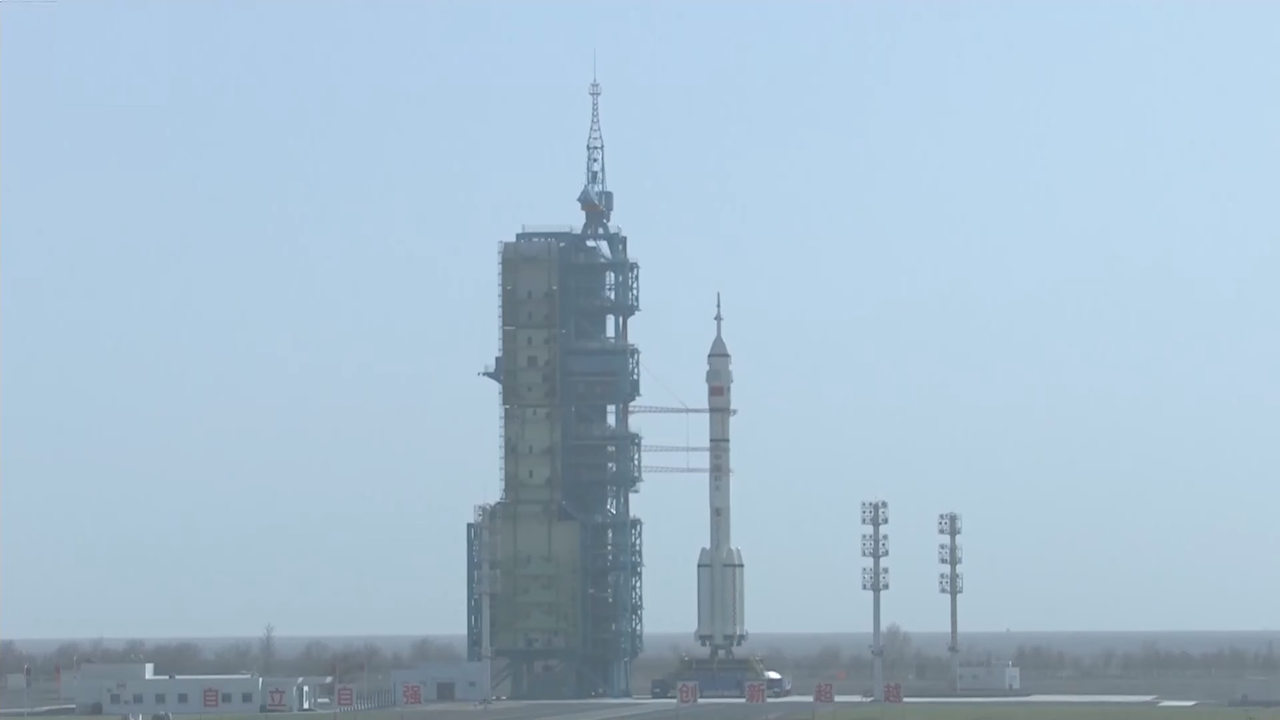
The launch went ahead exactly as planned. The Shenzhou-24 spacecraft and its Long March 2F carrier rocket were moved to the launch area on 17 November, and the final full-system rehearsal was completed successfully on 21 November. At Tuesday’s briefing, the China Manned Space Agency said the spacecraft and rocket were in controlled condition, the crew was in good shape and the station complex was operating normally.
Ali is flying alongside two Chinese astronauts. Commander Tang Hongbo, 51, has flown to Tiangong twice before, on Shenzhou-12 and Shenzhou-17, and is now set to become the first astronaut to visit the station three times. Flight engineer Wu Yi, 39, is making her first spaceflight. Tang and Wu are expected to live aboard Tiangong for about six months as part of the station’s regular crew rotation, while Ali returns after roughly a week.
Shenzhou-24 is China’s 18th crewed spaceflight and the 24th flight of the Shenzhou programme. It is also the 12th crewed mission to Tiangong, the three-module station China finished assembling in low Earth orbit in late 2022.
A Week Aboard Tiangong: Four Pakistani Experiments in Orbit
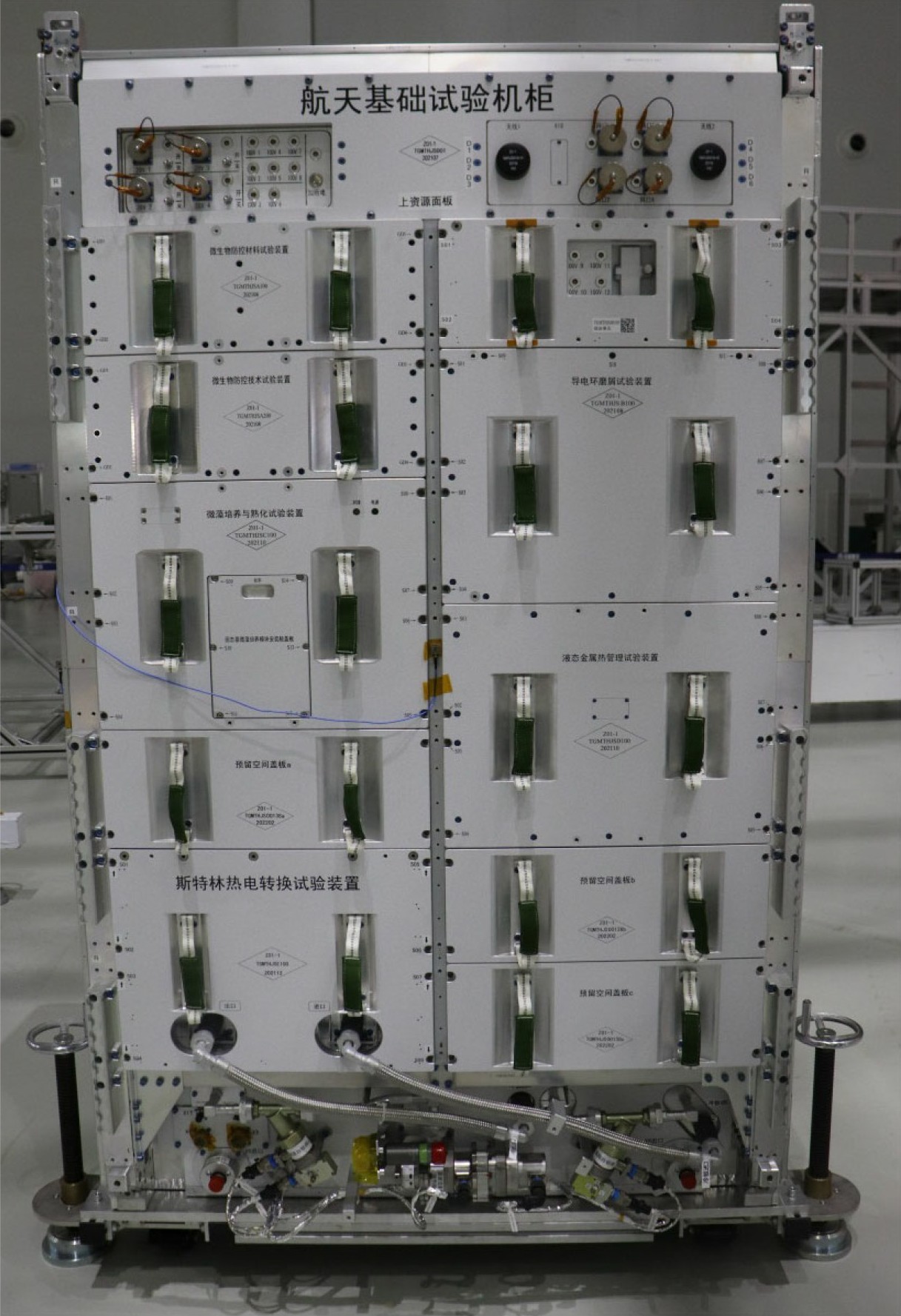
Ali’s week in orbit is a working trip, not a sightseeing visit. As payload specialist he will take part in routine crew activities, install experimental samples and research equipment, and carry out scheduled experiments aboard the orbiting laboratory.
The scientific work builds on four Pakistani biotechnology experiments, selected by Chinese institutions from more than 300 proposals submitted to Pakistan’s space agency, SUPARCO, by universities and research institutions across the country. The experiments focus on research relevant to food security and climate change, including an in-orbit experiment on photosynthetic micro-organisms, according to details shared by SUPARCO officials.
The mission will also change the crew aboard Tiangong. One astronaut from the outgoing Shenzhou-23 crew, Zhu Yangzhu, will remain aboard the station for a year-long in-orbit residency experiment, while Ali returns to Earth with two of the Shenzhou-23 crew.
A First for Pakistan — and for China
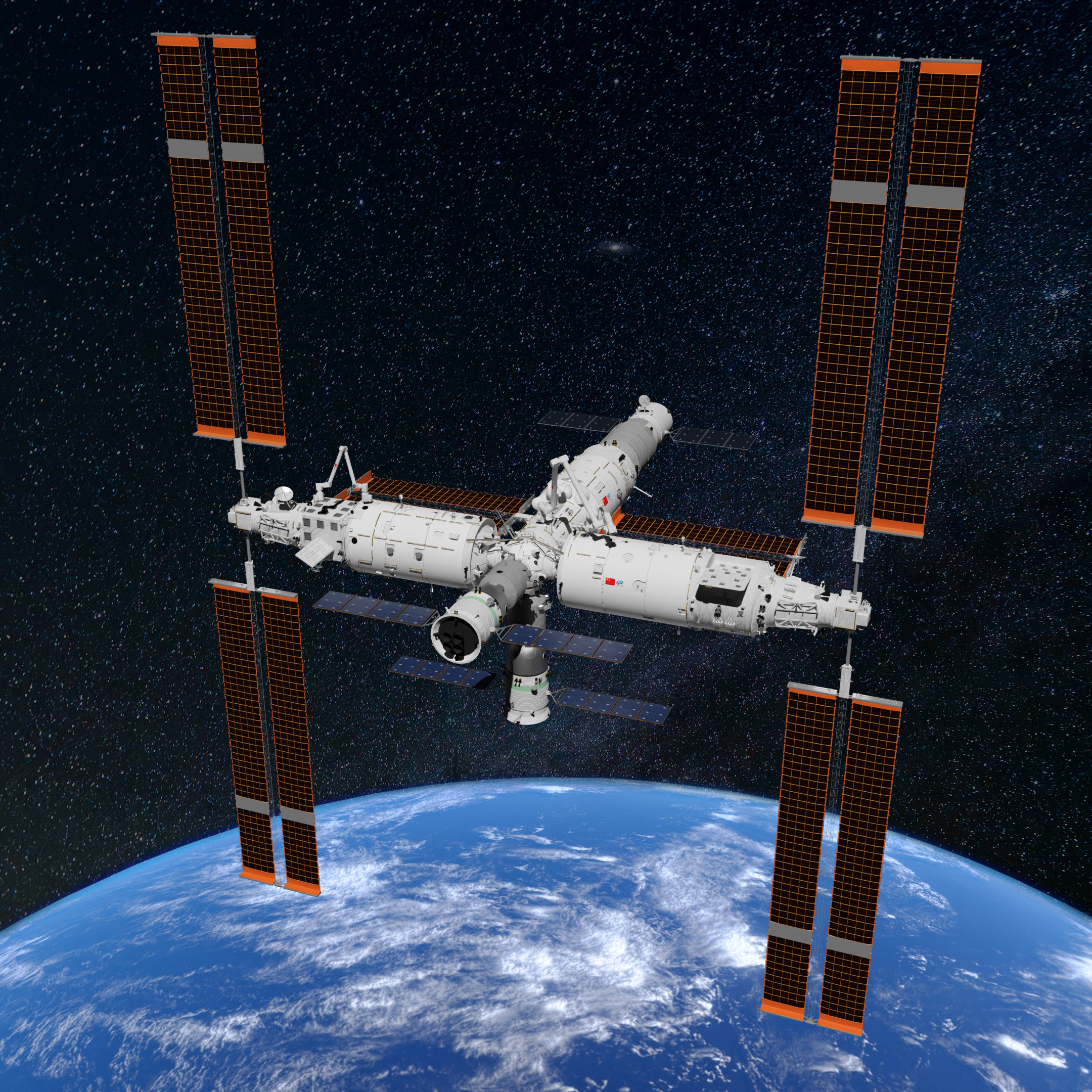
The flight is a double first. It is the first joint crewed spaceflight involving Chinese and foreign astronauts in the history of China’s human spaceflight programme, and it makes Tiangong the first Chinese space station to host a foreign astronaut.
The mission traces back to an agreement signed in Islamabad on 28 February 2025, when SUPARCO and the China Manned Space Engineering Office agreed that China would select and train Pakistani astronauts for flights to Tiangong. After three rounds of screening and assessment, Ali and Khurram Dawood were selected as reserve astronaut candidates and completed their training in China. Ali was confirmed for the historic flight, while Dawood serves as his backup.
Preparing for the joint mission meant specialist training in spacecraft and space station operations, scientific experiment procedures and emergency response, plus joint exercises on coordination and handling technical problems. Ali also received instruction in Chinese commands and technical terminology, and the Astronaut Centre of China prepared Chinese-English operating manuals and halal space food for the Pakistani astronaut.
Planning Minister Ahsan Iqbal travelled to Beijing for the departure ceremony. The flight is expected to open new avenues for Pakistan’s participation in human spaceflight, scientific experimentation and international space cooperation, extending the country’s partnership with China beyond satellite development.
One distinction is worth making clear. Namira Salim, a Pakistani, previously completed a commercial suborbital spaceflight aboard Virgin Galactic in October 2023. Ali is the first Pakistani to reach orbit, the first to live and work aboard a space station, and the first to fly as a professional astronaut under Pakistan’s own human spaceflight programme.
Further reading: Nature and The News.
Related Posts
 TechnologyMemory Shortage in Pakistan: 2027 Supply Sold Out as DDR4 Costs More Than DDR5
 TechnologyIs GTA 6 on PC? No PC Port Announced — Release Date Rumours, Leonida Shutdown and Fake Download Warning
 TechnologyPTA Proposes Solar Power for Telecom Towers in Pakistan — Operators Asked for One, Two and Three-Year Plans
 TechnologyPakistan Plans Mandatory Registration for Social Media Platforms — Naqvi Sets Four Red Lines
 TechnologyNCCIA Romance Scam: Four Arrested in Rs5.8 Million TikTok Fraud
 TechnologySBP Prepares AI Guidelines for Banks in Pakistan — Rules Await Final Approval
Most Popular
 How-ToPTA Tax Calculator 2026: Check Mobile Tax on Any Phone421 views
 Pakistan NewsPIA Boeing 787 Lease Deal: What It Means for the Airline397 views
 Canada JobsTech Jobs in Canada: Roles, Salaries, and Skills Needed395 views
 SportsUEFA Champions League 2026-27: Format, Teams and Schedule390 views
 TechnologyPM Shehbaz Sets November Deadline for Alibaba AI and Digitalisation Projects in Pakistan372 views
 ShowbizWomen’s Fashion in Pakistan 2026: Trends, Brands and Style Guide366 views