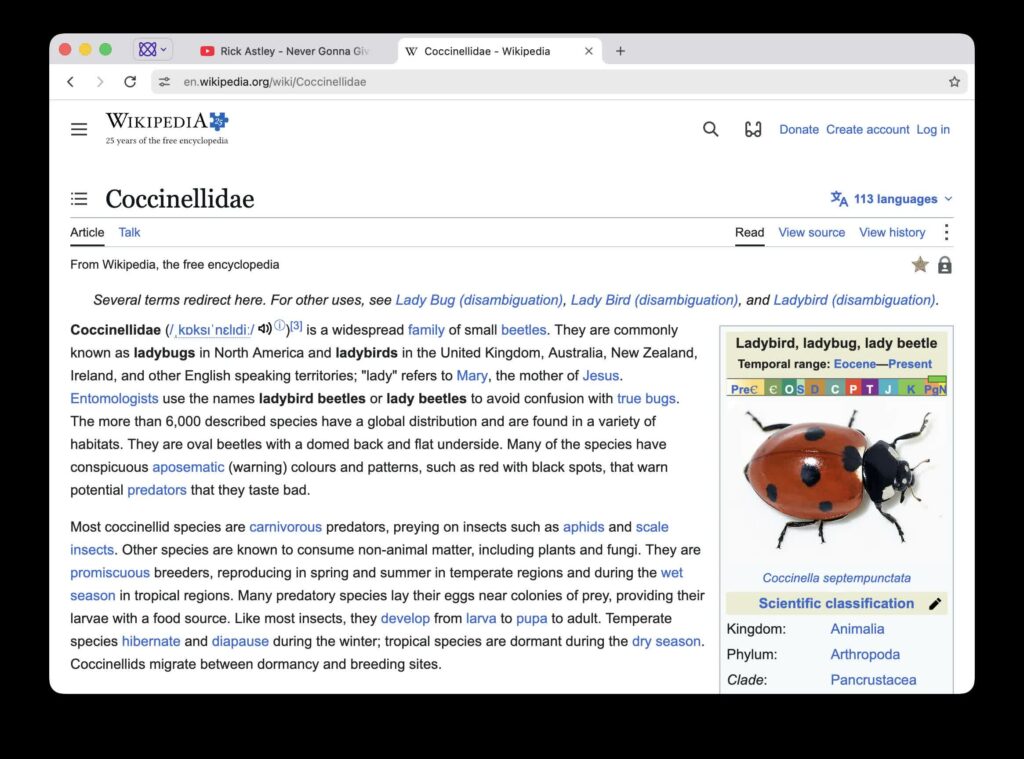
After years of development, a genuinely new web browser is finally available to download. The Ladybird browser alpha launched on Monday, 23 November 2026, for Mac and Linux — and unlike almost every other browser on the market, it is not built on Google’s Chromium, Apple’s WebKit or Mozilla’s Gecko. Its engine was written from scratch.
The announcement came from project founder Andreas Kling in a short post on the project’s official website, titled “Ladybird is now in alpha”. Until now, the only way to try Ladybird was to build it from source code, which kept it out of reach for most people. The alpha changes that: ready-made downloads are now available for macOS and Linux, distributed through a rolling channel that receives automatic updates.
The Ladybird browser alpha arrives at a time when the browser market is dominated by just a handful of engines. Chrome and Edge run on Chromium, Safari runs on WebKit and Firefox runs on Gecko — and almost every other browser is a re-skin of one of those three. Ladybird’s pitch is simple: a new engine, written from the ground up, free from the commercial interests that shape the existing ones. The project is run by the Ladybird Browser Initiative, a non-profit organisation in the United States, and it is funded entirely by donations and sponsorships. It takes no default search deals, sells no crypto tokens and has no other form of user monetisation — and its sponsors have no say in the technical roadmap.
A browser engine built from scratch
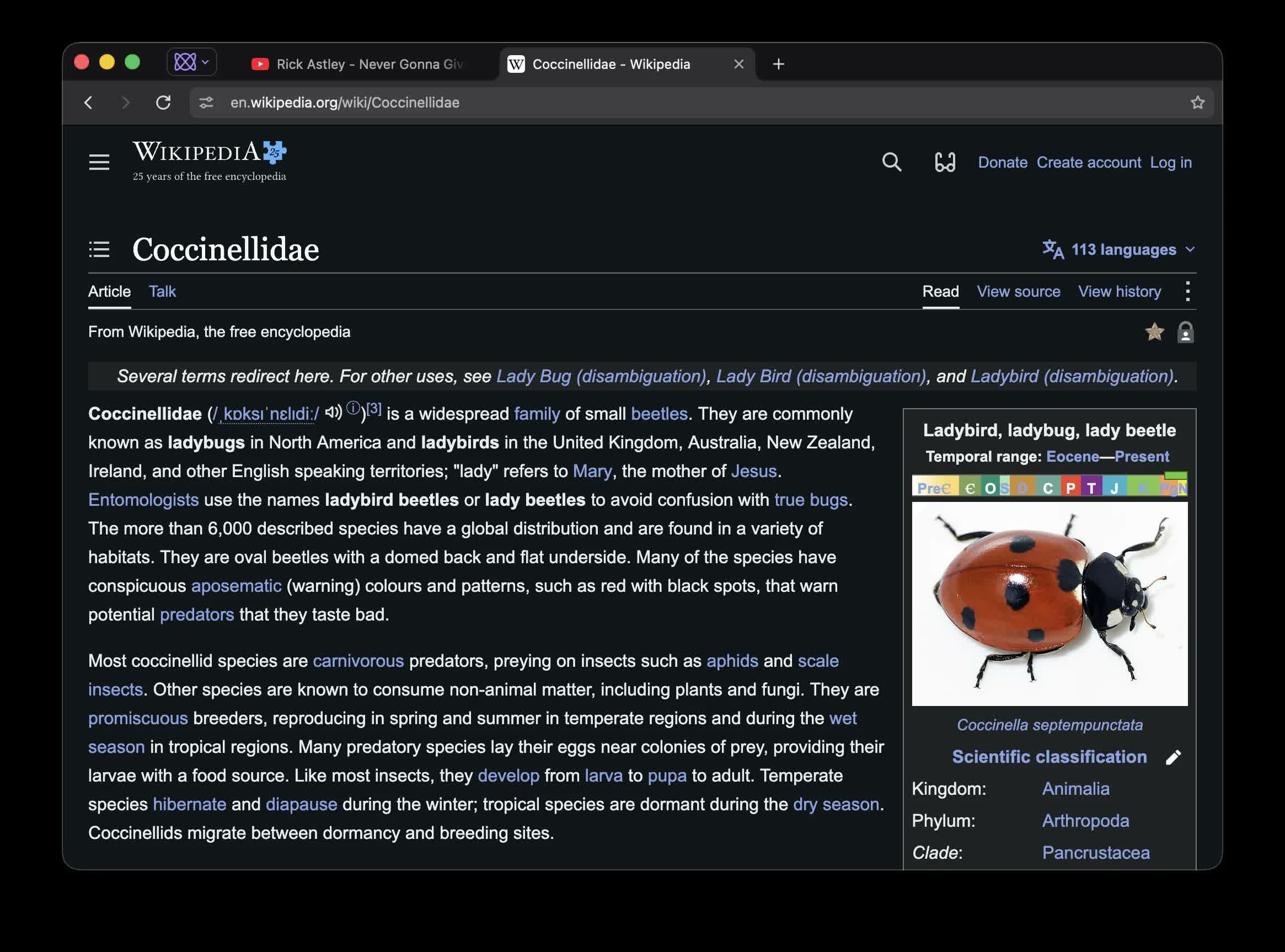
The engine is the whole point of Ladybird. The project states plainly that it uses no code from Blink, WebKit, Gecko or any other browser engine. It began life inside SerenityOS, a hobby operating system, and has since become its own project; the team is now gradually moving parts of the codebase from C++ to Rust.
That independence matters because one engine now powers nearly every browser, giving a single company enormous influence over how the web works. A working alternative, even a young one, gives the open web a second option. LinuxCompatible reports that Ladybird recently surpassed Safari Technology Preview on web standards tests — an encouraging sign, though the team itself is careful not to oversell where the browser stands today.
Kling’s own description is deliberately modest: the browser around the new engine is “modest, but functional”. It has tabs, bookmarks and a built-in way to report a broken website, and it supports WebDriver for automated testing as well as the Firefox DevTools protocol, so web developers can try their own sites in it and report what breaks.
What the Ladybird browser alpha can — and cannot — do yet

The alpha announcement warns that some websites will not work and that the browser will crash sometimes. The project makes no promises about security today, and it actively invites security researchers to try to break in and report how they did it, so the browser can be hardened.
That means the Ladybird browser alpha is a test drive, not a replacement for the browser you use every day. Tech coverage of the release advises keeping sensitive browsing — banking, work logins and password managers — in a mature browser for now, and trying Ladybird on a spare machine or a second profile instead. The project itself says the same thing in plainer terms: the first alpha is ready to explore, but it is not ready to replace your everyday browser yet.
The download picture is straightforward. Mac users need macOS 14.4 or later on Apple silicon; on Linux, Flatpak is the recommended route, with native packages also available for Ubuntu and Fedora. There is no Windows version in this alpha — full Windows support will follow at a later stage — and mobile versions for Android and iOS are not a current focus while the desktop versions are still maturing.
How to try the Ladybird browser alpha
Anyone curious can download the alpha free from ladybird.org. Because it is a rolling channel, updates arrive automatically, so early testers will see the browser improve quickly without reinstalling it. Kling calls the automatic updates the part he is most excited about.
The road ahead is long. Coverage of the launch puts a downloadable beta in 2027 and a stable release for general use in 2028. Between now and then, the project’s small full-time team is relying on the public to try real websites, report what breaks and file bugs.
For Pakistani users, the story is worth watching for a simple reason. Pakistan counts 96 million YouTube users, and hundreds of millions of people here reach the internet mainly through a browser — so the software that renders the web matters to almost everyone. But after years in which every “new” browser turned out to be Chromium with a different coat of paint, a browser that is genuinely built from scratch is a rare thing — and now, for the first time, anyone can download it and see for themselves.
Chrome’s emSign root removal showed how much power a single browser maker holds over the web’s plumbing, while Google DeepMind quantum algorithms hint at how fast the underlying technology is moving. Ladybird is a small, non-profit bet that the web deserves a genuinely independent alternative — and from this week, that bet is open for anyone to test.
Related Posts
 TechnologyMillat Tractors to Launch Five Electric Bikes and Scooters in Pakistan on 29 November
 TechnologyPTA Plans Central Database to Block Misused Foreign SIMs Across All Pakistani Networks
 TechnologyOsiris Group to Acquire EDOTCO Pakistan’s 3,000 Telecom Towers in Major Infrastructure Deal
 TechnologyDeepSeek Closes About $15 Billion Funding Round as Shanghai STAR Market IPO Nears
 TechnologyShaza Fatima Calls for Stronger Digital Security at PAK-CRYPT Cybersecurity Symposium
 TechnologyGPT-6.2 Sol Comes to ChatGPT’s Chat Tab — But Only for Paid Users
Most Popular
 How-ToPTA Tax Calculator 2026: Check Mobile Tax on Any Phone421 views
 Pakistan NewsPIA Boeing 787 Lease Deal: What It Means for the Airline397 views
 Canada JobsTech Jobs in Canada: Roles, Salaries, and Skills Needed395 views
 SportsUEFA Champions League 2026-27: Format, Teams and Schedule390 views
 TechnologyPM Shehbaz Sets November Deadline for Alibaba AI and Digitalisation Projects in Pakistan372 views
 ShowbizWomen’s Fashion in Pakistan 2026: Trends, Brands and Style Guide366 views