OpenAI and Cisco have joined forces to launch Shirudo, an open-source security runtime that lets artificial intelligence protect running Linux systems from cyberattacks — without restarting them and without waiting for a permanent patch. The project, announced on 23 November 2026, is built for the awkward gap every security team knows well: the days or weeks between discovering a vulnerability and getting a fix safely rolled out to every machine.
Shirudo takes its name from the Japanese word for “shield”, and the name fits. Instead of patching the vulnerable software itself, Shirudo places a temporary, targeted shield in front of the weak spot, blocking the specific malicious behaviour while everything else keeps running. The system is aimed squarely at the servers, cloud platforms and infrastructure that the internet depends on — not at home computers or phones.
The timing matters because attackers are moving faster than defenders. AI tools now help attackers find and weaponise flaws so quickly that exploitation can begin before a vulnerability is even publicly disclosed. Testing and deploying a full patch, meanwhile, can take days or weeks, leaving systems exposed in the meantime. Shirudo is designed to close exactly that window.
What Shirudo does — and why it matters

At its core, Shirudo is a runtime built on eBPF, a technology built into Linux that lets small, carefully checked programs run at specific points inside the operating system kernel without changing its source code or restarting anything. With it, an AI agent can investigate a newly discovered vulnerability, build a shield against it, and test that the shield stops the attack without disrupting the service it protects.
The key point is that the shield is narrow. Blocking an entire Linux operation outright can break legitimate requests and take applications offline, which is why many teams hesitate to act quickly. Shirudo instead blocks only the specific malicious behaviour, so the application keeps serving real users while the attack is stopped. Operators stay in control: every shield needs human approval before it goes live, and shields are only activated when the evidence says they are safe.
“There is nothing more important than giving security teams the tools they need to match the speed of the AI-driven threats they are facing,” said Jeetu Patel, Cisco’s President and Chief Product Officer. “We need self-defending infrastructure that acts at the speed of code, learns in real time, and shields itself until patches are safely rolled out.”
How the AI shield works

The workflow runs as a loop. When a vulnerability is found, an AI agent — in the launch demonstration, OpenAI’s Codex coding agent — studies it, writes a shield, and validates the shield against both the exploit and real workloads. The shield is then packaged, cryptographically signed, and delivered through a standard container registry, so the host can verify exactly what protection is running before it loads — even if an attacker has already gained administrator access.
Several layers of checking sit behind that process. Linux’s eBPF verifier checks every program against the kernel’s safety requirements, kernel security controls restrict unauthorised changes, and a Trusted Platform Module (TPM) keeps a verifiable record of which protections were loaded or removed. That record gives security teams evidence they can check against their own compliance requirements.
“Finding a bug today doesn’t mean you can patch every system tomorrow,” said Greg Brockman, President and co-founder of OpenAI. “We are partnering closely with Cisco on Shirudo to help teams protect the systems they need to keep running while they build and roll out a fix. So many teams rely on the same software that it makes sense to build these tools in the open.”
Tested against Java4Shell and a PHP flaw
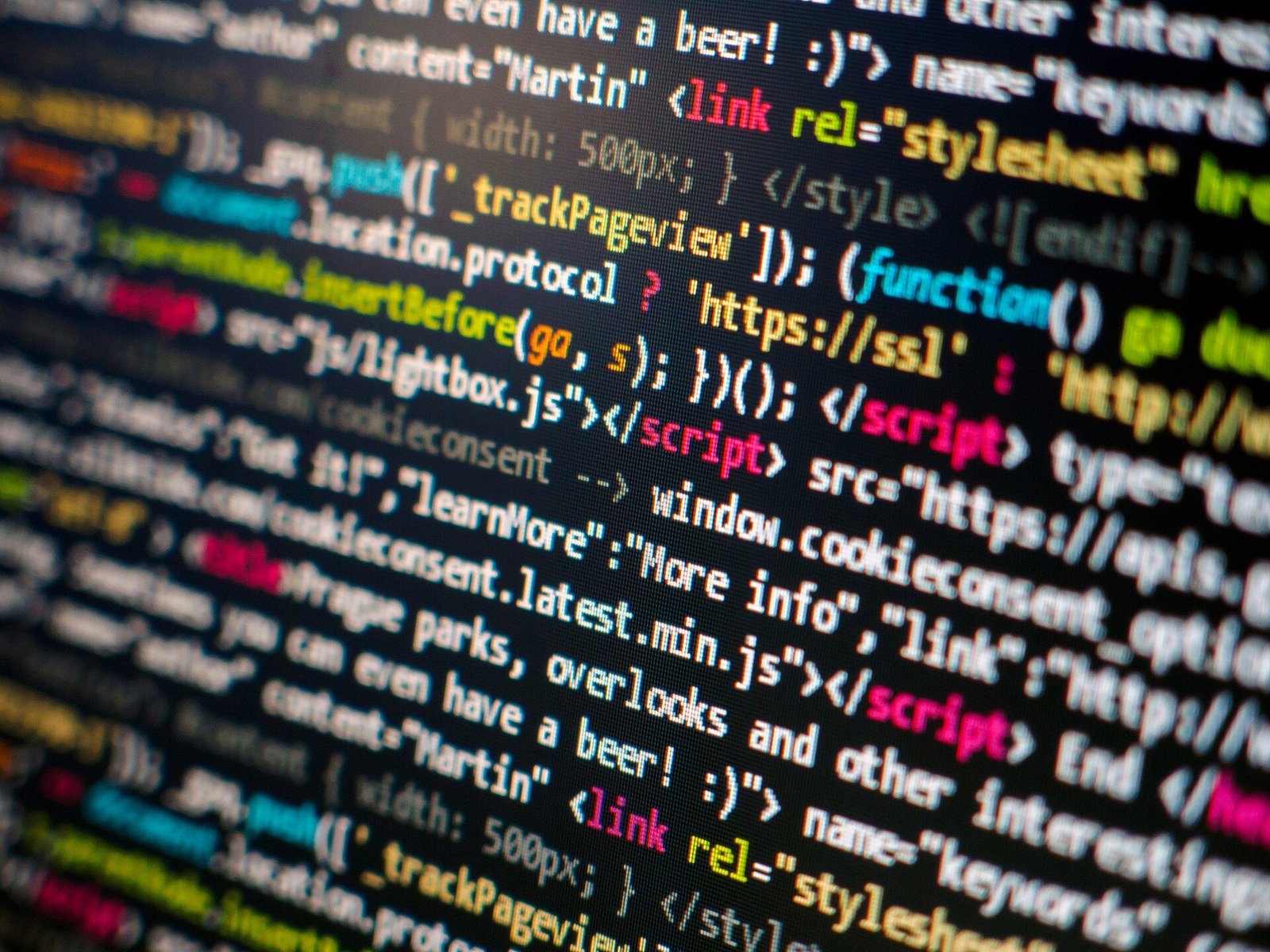
In controlled demonstrations, the team used Codex to generate a shield against Java4Shell, a recently discovered flaw in OpenJDK — the open-source version of Java — tracked as CVE-2026-114938 and affecting the Base64 decoder in certain unpatched builds. The shield blocked an exploit attempt against a running Elasticsearch service, rejecting the malicious input while the application continued operating without a restart.
Cisco said testing against a separate PHP vulnerability produced the same result: the system generated code that detected and blocked exploitation attempts. Both tests were controlled demonstrations rather than real-world attacks, and few technical details have been published so far. The companies have promised a deeper walkthrough and a public webinar on 15 December.
Shirudo did not appear from nowhere. It is a ground-up rewrite of Tetragon, the eBPF-based runtime security tool that Isovalent — the company behind the Cilium networking project, now part of Cisco — open-sourced in 2022. Isovalent engineers Thomas Graf and Liz Rice describe the rewrite as designed specifically so that AI agents, not only human engineers, can drive it through code rather than a configuration console.
Open source, early days — and what comes next

The project is open source from day one. The code is published on GitHub under the shirudo-dev organisation, licensed under BSD 2-Clause, with the eBPF programs themselves dual-licensed under BSD and GPL terms. Developers can download it, follow the documentation, and test protections in a virtual machine. The repository is currently listed as pre-release, and production use requires a compatible Linux kernel with Shirudo’s patches and a TPM 2.0 chip.
Cisco and OpenAI are inviting developers, researchers and enterprises to help shape what comes next: contribute a test that reproduces a vulnerability, run a shield against a kernel build they use, or report where a shield breaks legitimate traffic. That last invitation is an open admission that coverage is still unproven — Shirudo is an early step, not a finished product, and there are no public figures yet on adoption or how widely it has been tested.
The longer-term ambition is bigger than one tool. The companies describe a goal of self-defending infrastructure: systems hardened from the moment they are built, that keep getting harder to attack, and that can be restored to a known-good state if they are compromised. Future work is planned on strengthening operating-system security, restricting application permissions, and making software updates and recovery safer.
For now, Shirudo matters most as a sign of where security is heading. The same AI that helps attackers move faster is now being put to work on defence — and for the first time, the defence can arrive before the patch does.
Related Posts
 TechnologyCrowdStrike Buys Zscaler in $43.9 Billion Deal — the Biggest Cybersecurity Acquisition Ever
 TechnologyAnthropic Launches Claude Ship: AI That Reviews, Fixes and Approves Your Code
 TechnologySierra Raises $1.75 Billion at $30 Billion Valuation as AI Agents Take Over Customer Service
 TechnologyChatT: Pakistan’s Own Messenger Opens Closed Beta on 1 December — How to Apply
 TechnologyAgon Raises $70 Million Series A to Build Europe’s Defence AI Lab at $450 Million Valuation
 TechnologySimplexity Robotics Raises $100 Million at $1.6 Billion Valuation as Ant Group Bets on Humanoid Robots
Most Popular
 How-ToPTA Tax Calculator 2026: Check Mobile Tax on Any Phone421 views
 Pakistan NewsPIA Boeing 787 Lease Deal: What It Means for the Airline396 views
 Canada JobsTech Jobs in Canada: Roles, Salaries, and Skills Needed394 views
 SportsUEFA Champions League 2026-27: Format, Teams and Schedule390 views
 TechnologyPM Shehbaz Sets November Deadline for Alibaba AI and Digitalisation Projects in Pakistan370 views
 ShowbizWomen’s Fashion in Pakistan 2026: Trends, Brands and Style Guide366 views