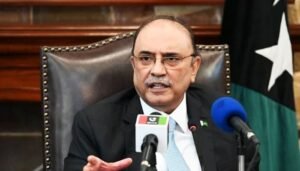
President Asif Ali Zardari has promulgated five ordinances for Khyber Pakhtunkhwa, in a sweeping change to the province’s legal and administrative framework that strips provincial lawmakers of major legal protections and hands new development powers to federally nominated committees.
The President’s House announced the move in a statement on Saturday, 21 November 2026. Four of the five ordinances were published in the Official Gazette on 19 November, while the fifth deals with the pay and privileges of the provincial assembly’s Speaker and Deputy Speaker.
The most consequential of the five is the Khyber Pakhtunkhwa Provincial Assembly (Powers, Immunities and Privileges) (Amendment) Ordinance 2026. It removes 21 of the 40 sections of the province’s existing privileges law — more than half of the statute that defined what protection an elected member of the provincial assembly could expect.
What the five ordinances cover
The five measures, as confirmed by the President’s House, are:
- The Khyber Pakhtunkhwa Provincial Assembly (Powers, Immunities and Privileges) (Amendment) Ordinance, 2026 — the privileges overhaul.
- The Khyber Pakhtunkhwa Special Initiatives Ordinance, 2026 (Specified Districts) — development framework for 12 designated districts.
- The Khyber Pakhtunkhwa Special Initiatives Ordinance, 2026 (Other Than Specified Districts) — the same framework for the province’s remaining districts.
- The Khyber Pakhtunkhwa Societies (Registration) (Amendment) Ordinance, 2026 — changes to the registration framework for societies, reported to cover the registration of religious seminaries.
- The Khyber Pakhtunkhwa Speaker and Deputy Speaker (Salaries, Allowances and Privileges) Ordinance, 2026.
The President also approved 12 amendment bills on the same day, covering subjects including the Rahmatul-lil-Alameen Authority, the Higher Education Commission and federal education.
Lawmakers lose key protections
The privileges amendment cuts deep into the legal shields provincial lawmakers have long relied on. Among the 21 omitted sections are the protections against preventive detention, the requirement that the Speaker’s permission be obtained before a member of the provincial assembly could be arrested or detained, and provisions covering a detained member’s attendance in the assembly.
Also removed are sections relating to members’ immunity from civil or criminal proceedings, the assembly’s own powers to summon and arrest, and the offences for breaching parliamentary privilege. The schedule listing offences connected to breaches of the privileges of the assembly, its members and its committees has been omitted as well.
In practical terms, a member of the Khyber Pakhtunkhwa Assembly now has far less legal cover than before. Arrest or detention no longer needs the Speaker’s prior permission, and the assembly’s own enforcement powers have been taken away with the sections that created them.
New development committees for 12 districts

Two of the ordinances create a new framework for special development initiatives across the province. Separate executive committees will supervise projects in the 12 designated districts — areas identified as facing intense security challenges, including the former tribal districts — and in the remaining districts of Khyber Pakhtunkhwa.
Each committee will have a chairman, vice chairman and other members. For the designated districts, the prime minister will nominate the committee members; for the remaining districts, appointments will be made by the provincial governor. The Area Development Secretariat will serve as the secretariat for the designated-district committee, while the provincial planning and development department will do the same job for the other districts.
The committees will hold extensive authority over projects involving public funds, including development schemes, rehabilitation and reconstruction works, procurement of goods, recruitment of staff and consultancy services. They will decide which initiatives qualify as urgent or emergency special initiatives, scrutinise and approve project proposals, concept papers and PC-Is, and grant anticipatory approval where needed. Their decisions will carry overriding effect over other laws, and they will oversee monitoring and evaluation, including third-party assessments.
Why this is happening now
The ordinances follow the imposition of emergency and governor’s rule in Khyber Pakhtunkhwa on 11 October 2026, which sidelined the Pakistan Tehreek-e-Insaf-led provincial government and placed the province’s administration under direct federal oversight. An Area Representative and Development Council was formed to oversee the 12 districts facing security challenges, including the former tribal districts, and the new committees build on that arrangement.
The timing makes the privileges changes especially significant. With the provincial assembly not functioning under governor’s rule, the lawmakers whose protections have been removed have no sitting forum in which to debate or challenge the ordinances.
What happens next
Ordinances are temporary by design. Under Article 89 of the Constitution, an ordinance lapses after 120 days unless the assembly approves it. With the Khyber Pakhtunkhwa Assembly sidelined under governor’s rule, it is not yet clear how or when that approval would take place, and the ordinances’ overriding effect means the new committees can begin work in the meantime.
The reaction from the province’s political parties, and from the lawmakers directly affected, will be the next test. For now, the province’s legal landscape has changed by presidential order — 21 sections gone, and a new federally steered development structure in place of the old one.
Related Posts
 Pakistan NewsAleema Khan Remains in Jail as Her Two Sisters Walk Free — Lahore High Court Fast-Tracks Detention Challenge
 Pakistan NewsThree TTP Terrorists Killed in Joint CTD–Army Operation in Peshawar’s Matni Area
 Pakistan NewsPresident Zardari’s Five Ordinances Strip KP Lawmakers of Key Privileges — 21 of 40 Sections Removed
 Pakistan NewsVeteran Journalist and Human Rights Activist Hussain Naqi Passes Away in Lahore
 Pakistan NewsZardari Steps In as PML-N and PPP Clash Over Referendum on New Provinces
 Pakistan News182 Couples Marry in One Day as Punjab’s Dhee Rani Programme Brings Mass Weddings to Khanewal
Most Popular
 How-ToPTA Tax Calculator 2026: Check Mobile Tax on Any Phone421 views
 Pakistan NewsPIA Boeing 787 Lease Deal: What It Means for the Airline396 views
 Canada JobsTech Jobs in Canada: Roles, Salaries, and Skills Needed393 views
 SportsUEFA Champions League 2026-27: Format, Teams and Schedule390 views
 TechnologyPM Shehbaz Sets November Deadline for Alibaba AI and Digitalisation Projects in Pakistan370 views
 ShowbizWomen’s Fashion in Pakistan 2026: Trends, Brands and Style Guide366 views