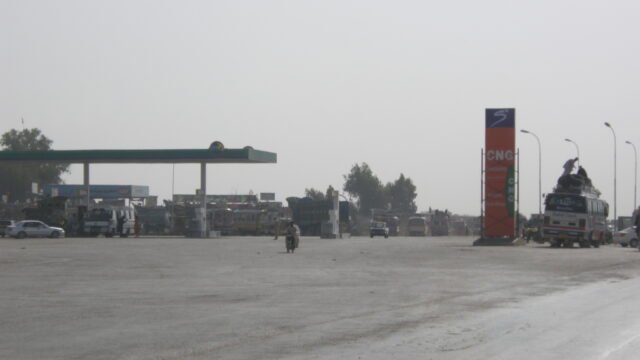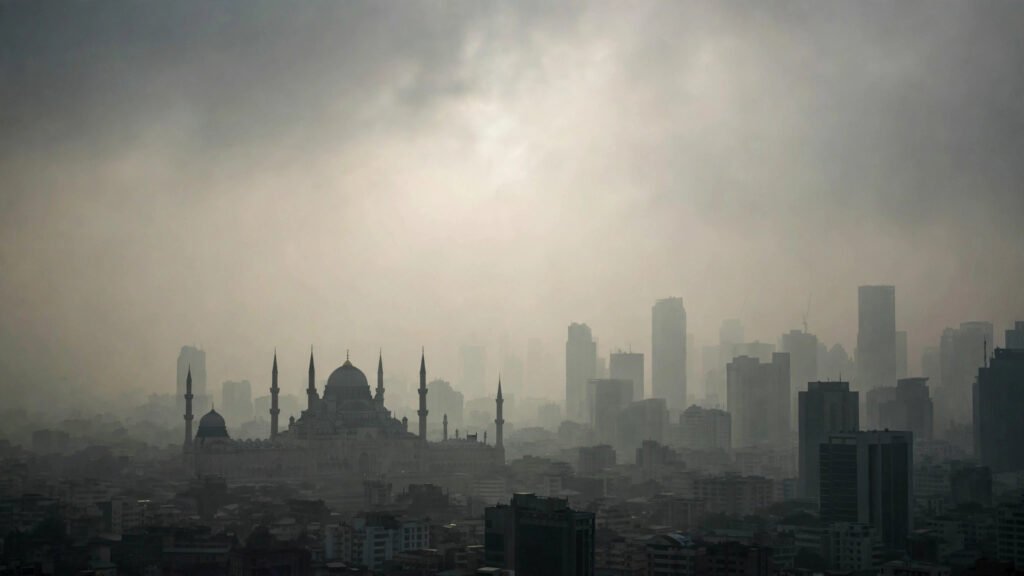
Pakistan’s space agency has warned that smog across Punjab is set to get worse over the next three days, after its satellites picked up nearly 700 active fires across the province and neighbouring areas in a single day.
The warning comes from the Pakistan Space and Upper Atmosphere Research Commission (SUPARCO), whose smog assessment for 17 November recorded 690 active fire incidents in the preceding 24 hours. Of those, 386 were detected inside Punjab and 304 in adjoining transboundary areas. The assessment covered 36 districts and was built on observations from NASA’s VIIRS and MODIS satellite instruments, which track fire hotspots and atmospheric conditions from orbit.
Seven districts have been singled out as facing high or severe smog conditions in the coming days: Jhang, Narowal, Sheikhupura, Sialkot, Hafizabad, Gujranwala and Dera Ghazi Khan. For people living in those districts, the message is blunt — the air is about to get worse before it gets better, and there is no rain on the way to clear it.
690 fires in a single day

The fire count is the sharpest single number in SUPARCO’s assessment, and it explains much of what is happening in the air over Punjab. Satellites sweep the province daily, logging every heat signature that looks like an active fire. In the 24 hours covered by the 17 November assessment, they found 690 of them.
The fires matter because they are one of the main sources feeding the smog. Smoke from burning — crop residue in the fields, garbage in and around towns, and other open burning — rises into air that is already heavy with traffic and industrial emissions. When the atmosphere cannot disperse what is being pumped into it, the pollution simply hangs there, thickening day by day.
That is exactly the situation SUPARCO describes. Atmospheric dispersion — the atmosphere’s ability to carry pollutants away and dilute them — was assessed as very poor, meaning pollutants stay concentrated close to the ground instead of rising and clearing. It is the same mechanism that turns a bad-air week into a smog emergency: the sources keep emitting, and the sky refuses to take the pollution away.
Punjab’s Environment Protection Agency has responded by stepping up field supervision of its anti-stubble-burning operations. Five senior directors from the agency’s headquarters have been deployed across different divisions to oversee field activities, coordinate with agriculture officials and district administrations, and verify reported fire incidents. EPA Director General Abdullah Nayyer Sheikh said the deployment was intended to improve direct supervision and ensure timely action against crop-residue burning.
Lahore back on top of the world’s most polluted list
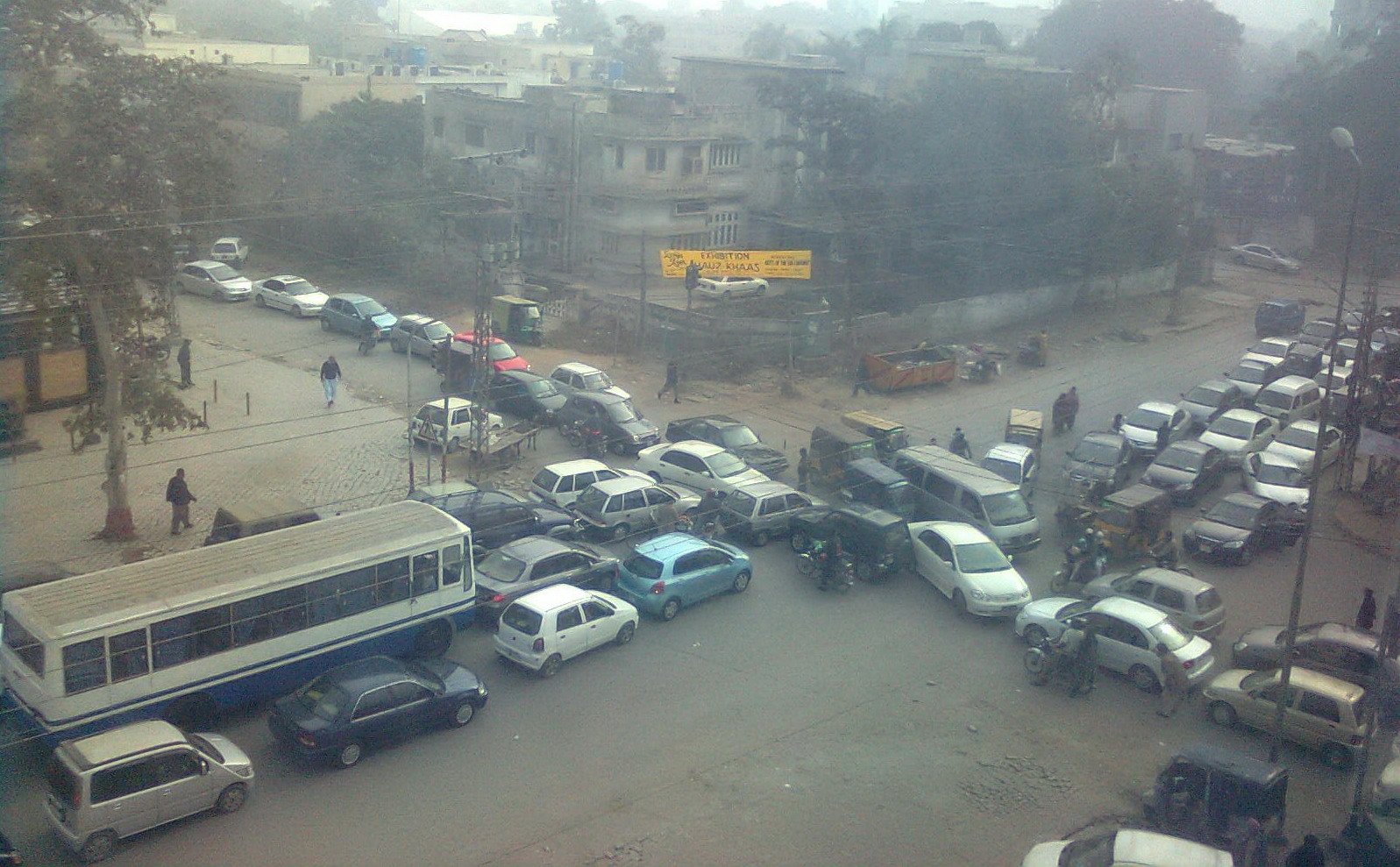
While SUPARCO looked down from orbit, the ground-level picture was just as grim. Lahore once again topped the global ranking of the world’s most polluted major cities on Wednesday morning, recording an air quality index (AQI) of 339 between 10am and 11am — deep into the hazardous category, where readings above 300 sit.
The reading eased later in the day, falling to 167 at 5pm before climbing again to 178 at 6pm. But the morning peak was enough to put Lahore ahead of Dhaka (221), Baghdad (199), Tashkent (182) and Kolkata (178) on the same global list. Karachi ranked sixth worldwide with a reading of 174.
Within Pakistan, the numbers were worse still. Faisalabad recorded an AQI of 686 — the highest of any Pakistani city that day — followed by Gujranwala at 550, Kahna Nau at 516, Multan at 437, Kasur at 371, Khanewal at 327, Sargodha at 314, Sahiwal at 253 and Dera Ghazi Khan at 238. Every one of those readings sits in the hazardous band. In plain terms, the air in much of Punjab on Wednesday was not merely unhealthy; by the standard scale, it was dangerous to breathe for extended periods.
The numbers look mixed — but the warning stands

One figure in SUPARCO’s assessment might look like good news at first glance. Tropospheric nitrogen dioxide — a pollutant closely tied to traffic and combustion — was recorded 21 percent below the average for the corresponding period between 2019 and 2025. But SUPARCO itself cautions against reading that as an improvement: other atmospheric indicators point the other way, towards deterioration over the following three days.
The assessment also recorded a mean aerosol optical depth of 0.25, a measure of how much aerosol is suspended in the atmosphere, with the highest concentrations over Chiniot, Jhang and Faisalabad. And the Copernicus Atmosphere Monitoring Service (CAMS) model projected fine particulate matter, or PM2.5, at around 51 to 71 micrograms per cubic metre. SUPARCO notes that model-based estimates generally run lower than ground-based monitoring readings during winter — so the air people actually breathe is likely to be worse than the projection suggests.
Taken together, the picture is consistent: the ingredients for a prolonged smog episode are all in place — heavy fire activity, poor dispersion, no rain, and pollution already at hazardous levels in several cities.
What Punjab is doing about it

Enforcement is running alongside the monitoring. In Multan, the district administration has received two modern anti-smog gun vehicles on the directions of Chief Minister Maryam Nawaz. Deputy Commissioner Dr Faisal Saleem said the vehicles would operate round the clock, spraying water in different parts of the city during morning and evening hours. The administration is also taking action against the burning of crop residues and garbage.
The combination — satellites tracking fires, models projecting pollution, field teams verifying incidents, and anti-smog guns spraying water — gives the authorities several different tools. Whether they are enough to break the pattern will depend on the weather, and the weather is not cooperating.
What to expect over the next 48 hours

The Pakistan Meteorological Department has forecast fog and smog at isolated places during morning and night hours over the next 48 hours, in Lahore, Sialkot, Narowal, Sheikhupura, Okara, Kasur, Faisalabad, Jhang, Khanewal, Multan and surrounding areas. Dry weather is expected across most districts, with no significant rainfall forecast to help disperse the accumulated pollutants.
For commuters, that means poor visibility on morning roads in the affected districts. For everyone else, it means the haze is not lifting soon. SUPARCO’s assessment will be updated as the satellite passes continue; the next three days will show whether the warning — or the response to it — makes the difference.
Read also: Lahore smog AQI 722 in Iqbal Town — November 2026
Related Posts
 Pakistan NewsFire Breaks Out at BOL News Office in Karachi — Staff Evacuated Safely, Part of Building Collapses
 Pakistan NewsPakistan Proposes Dedicated Buddhist Visa and a Peace March at Gandhara Dialogue to Welcome Pilgrims
 Pakistan NewsPetrol Price Cut Again to Rs322, Diesel Down to Rs355 From 19 November — Twelfth Straight Daily Cut
 Pakistan NewsPakistan Test-Fires Fatah-3 Supersonic Cruise Missile — ISPR Confirms Successful Launch
 Pakistan NewsPakistan’s Solar Revolution: Rooftop Panels Push Solar Share from 1% to 28% as Grid Falls Behind
 Pakistan NewsElectricity Tariff Increase December 2026: Bills May Rise Rs2.88 Per Unit
Most Popular
 How-ToPTA Tax Calculator 2026: Check Mobile Tax on Any Phone420 views
 Pakistan NewsPIA Boeing 787 Lease Deal: What It Means for the Airline396 views
 Canada JobsTech Jobs in Canada: Roles, Salaries, and Skills Needed392 views
 SportsUEFA Champions League 2026-27: Format, Teams and Schedule389 views
 TechnologyPM Shehbaz Sets November Deadline for Alibaba AI and Digitalisation Projects in Pakistan369 views
 ShowbizWomen’s Fashion in Pakistan 2026: Trends, Brands and Style Guide366 views