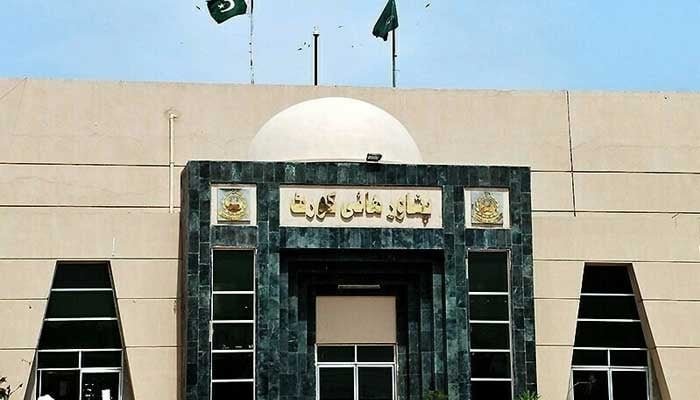
Peshawar High Court removes emergency petitions from its cause list
The Peshawar High Court has removed all petitions challenging the emergency and governor’s rule in Khyber Pakhtunkhwa from its cause list, leaving the legal challenge to the month-old federal intervention without a hearing date. The move, made on Saturday, followed a ruling by the Federal Constitutional Court that stripped the high court of jurisdiction over cases from the province filed after 12 October.
The petitions removed from the list included the challenges to the emergency and governor’s rule filed by the Pakistan Tehreek-e-Insaf and others, as well as petitions seeking the recovery of the province’s suspended chief minister, Sohail Afridi, the provincial assembly speaker, Babar Saleem Swati, and the PTI’s provincial president, Junaid Akbar. Petitions against arrests under the Maintenance of Public Order Ordinance were also taken off the list, and petitioners have been told to approach the appropriate forum instead.
What the Peshawar High Court did on Saturday
The high court’s Administrative Committee issued a notification directing that no writ petitions filed on or after 12 October be fixed for hearing. Petitions filed under Article 199 of the Constitution are to be returned to the petitioners, who have been advised to seek relief from the appropriate forum.
The order covers every writ petition filed on or after the cut-off date, not only the cases about the emergency. New petitions will neither be received nor entertained and will be returned at the filing counter.
Why the high court lost jurisdiction
The Federal Constitutional Court, in a written order on 5 November, held that because the armed forces had been called in aid of the civil administration in Khyber Pakhtunkhwa under Article 245 of the Constitution, proceedings on Article 199 petitions filed on or after 12 October stood suspended by virtue of Article 245(4).
The armed forces were called in under an order dated 11 October 2026, followed by an office memorandum from the Ministry of Defence dated 12 October. The Constitutional Court was hearing a challenge to the high court’s orders releasing people detained under the Maintenance of Public Order Ordinance.
The Constitutional Court also directed the province’s advocate general to submit a detailed report within seven days identifying the areas where the continued presence of the armed forces in aid of the civil administration was no longer required. The suspension of the proceedings could be reviewed after that report is examined.
The cases now left in limbo
The challenges to the emergency and governor’s rule were filed by PTI Chairman Barrister Gohar Ali Khan, National Assembly Opposition Leader Mahmood Khan Achakzai, the Khyber Pakhtunkhwa Bar Council, National Democratic Movement Chairman Mohsin Dawar and MNA Shandana Gulzar, among others.
On 20 October, the high court had issued a notice to the Attorney General on the petitions and adjourned the hearing to 10 November. It had also sought responses from the government on the petitions seeking the recovery of Afridi, Swati and Akbar. Whether the 10 November hearing will now proceed has not been made clear.
Afridi and some members of his cabinet are in preventive custody, according to federal officials, who say those facing cases will be charged and tried while others will be released. PTI lawmakers maintain that the chief minister was arrested, and officials have not publicly disclosed where he is being held.
How Khyber Pakhtunkhwa reached this point
On 11 October, President Asif Ali Zardari approved the advice of Prime Minister Shehbaz Sharif’s federal cabinet and imposed an emergency and governor’s rule in Khyber Pakhtunkhwa under Articles 232 and 234 of the Constitution. The move suspended the provincial government led by the PTI, which has governed the province since 2013.
The federal government said the decision followed rising terrorist violence and what it described as the provincial government’s deliberate disengagement from the fight against terrorism. Governor Faisal Karim Kundi took charge of the province with the assistance of an 11-member advisory council.
The PTI challenged the move in the Peshawar High Court, asking the court to declare the emergency and governor’s rule unconstitutional and set them aside.
What happens next
For now, the petitioners’ route through the Peshawar High Court is closed. They have been advised to approach the appropriate forum, which in practice means taking the challenge to the Federal Constitutional Court, the forum that issued the order removing the high court’s jurisdiction.
The advocate general’s report on the deployment of the armed forces is due within seven days of the 5 November order, and the Constitutional Court has said the suspension of proceedings could be reviewed once that report is examined. Until then, the emergency and governor’s rule remain in place, the provincial government remains suspended, and the legal challenge to them has no hearing date.
Related Posts
 Pakistan NewsKP Unveils Rs70 Billion Police Plan: 17,000 Vacant Posts to Be Filled, Faceless Anti-Terrorism Courts Planned
 Pakistan NewsPolio Drive Vaccinates 23.4 Million Children in Five Days as Campaign Enters Final Day
 Pakistan NewsPeshawar Lahore Direct Flights Resume on 9 November
 Pakistan NewsImaan Mazari, Hadi Ali Chattha Challenge 10-Year Sentences in Islamabad High Court
 Pakistan NewsRaiwind Ijtema 2026: First Phase Ends Today with Closing Dua as Lahore Roads Stay ClosedPakistan NewsBushra Bibi’s Eye Condition “Extremely Critical”, Lawyer Tells Islamabad High Court in £190 Million Case
Most Popular
 How-ToPTA Tax Calculator 2026: Check Mobile Tax on Any Phone418 views
 Pakistan NewsPIA Boeing 787 Lease Deal: What It Means for the Airline391 views
 Canada JobsTech Jobs in Canada: Roles, Salaries, and Skills Needed389 views
 SportsUEFA Champions League 2026-27: Format, Teams and Schedule385 views
 TechnologyPM Shehbaz Sets November Deadline for Alibaba AI and Digitalisation Projects in Pakistan366 views
 ShowbizWomen’s Fashion in Pakistan 2026: Trends, Brands and Style Guide361 views