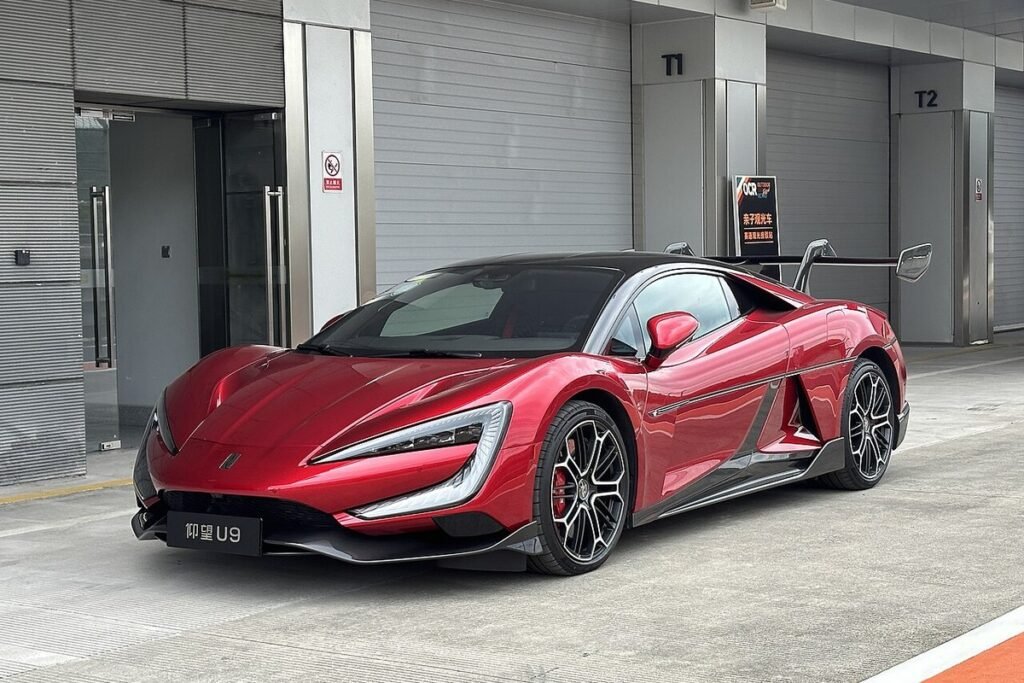
BYD Yangwang U9 Xtreme Becomes First Production Car to Pass 500 km/h at 503.17 km/h
The BYD Yangwang U9 Xtreme has become the first production car in history to travel faster than 500 kilometres per hour, reaching 503.17 km/h (312.66 mph) on a closed highway in Abu Dhabi. The run, made on 1 November 2026, has been recognised by the FIA, motorsport’s world governing body, and Guinness World Records has listed two records for the car. For a machine powered entirely by batteries, it is a landmark moment: the fastest production car on the planet is now an electric hypercar, and the 500 km/h barrier that stood for decades has finally fallen.
BYD announced the achievement on X on 6 November, calling the BYD Yangwang U9 Xtreme “the fastest production car on the planet” and saying it had “done the impossible”. The timing matters for Pakistan too. BYD is preparing to start operations at its plant in Pakistan, and the Chinese carmaker’s flagship is now the car the whole motoring world is talking about. This is the story of the record, the machine behind it, and the small print that still leaves room for debate.
A 503.17 km/h run on a closed Abu Dhabi highway
The record was set on the Sheikh Khalifa Bin Zayed International Road, the E11 highway, in Abu Dhabi’s Al Dhafra region. Authorities closed a stretch of roughly 10 kilometres of public road, including a straight of about seven kilometres, so the car could run at full speed in safety. German racing driver Marc Basseng, who had driven the car’s previous record run, was again behind the wheel.
It took four runs over two days. The first two attempts, on 31 October, peaked at 490 km/h. Engineers then worked overnight on the rear wing, the suspension damping and the tyre pressures, and on the second attempt of 1 November the car reached 503.17 km/h, verified by Racelogic timing equipment. The FIA confirmed the achievement on its website on 6 November, and Guinness World Records recognised the BYD Yangwang U9 Xtreme as the holder of the records for the highest speed by a production car and by an electric production car in a single-direction run. Electrek reported that it is the all-electric hypercar’s second top-speed record in just over a year, and the one it broke was its own.
Pakistani motoring coverage picked the story up quickly, with PakWheels noting that the 500 km/h world record had been officially recognised by the FIA. The 500 km/h figure is the one that captures the imagination: in miles per hour it is 312.66, a speed at which the car covers more than 139 metres every second.
How the U9 Xtreme makes close to 3,000 horsepower
The BYD Yangwang U9 Xtreme is the track-focused version of the Yangwang U9, the flagship supercar from BYD’s luxury brand Yangwang. Four electric motors work together to produce 2,959 horsepower, driving all four wheels and giving the car the traction it needs to put that power down at speeds where most cars are fighting simply to stay stable. Special Giti tyres were developed for the attempt, and BYD says four Guinness World Records were set in total, including two for the tyres themselves.
The car is as rare as it is fast. BYD plans to build only 30 examples of the U9 Xtreme, priced at around 3 million dollars each, which puts it firmly in the world of collectors rather than ordinary buyers. The same specification of car already holds the production electric vehicle lap record at the Nürburgring Nordschleife, completing the famous German circuit in 6 minutes 59.157 seconds. Even the standard Yangwang U9 is no slow machine: it reached 391.94 km/h in October 2024, before the Xtreme version pushed the family further still.
From Papenburg to Abu Dhabi: the record it beat was its own
The new mark improves on the 496.22 km/h (308.34 mph) the BYD Yangwang U9 Xtreme recorded at Germany’s ATP Papenburg proving ground in September 2025. That run had itself made history by beating the 490.48 km/h set by the Bugatti Chiron Super Sport 300+ in 2019, a petrol-powered record that had stood for six years. BYD had made no secret of its next target: the 500 km/h barrier, a round number no production car had ever reached.
The step from 496 to 503 km/h may look small on paper, but at these speeds every extra kilometre per hour demands more power, more downforce and more nerve. Air resistance grows with the square of speed, so the final few kilometres per hour are the hardest of all. That the same car and the same driver returned a year later and went faster shows how much of the achievement is engineering as well as bravery: overnight changes to the wing and the suspension were what turned a 490 km/h car into a 503 km/h car.
Why the single-direction detail matters
There is one honest caveat to the celebration. Production car top speed records have traditionally been the average of two runs in opposite directions, completed within an hour, so that wind and any slope in the road cancel each other out. The Abu Dhabi run was measured in one direction only, and both Guinness records are specified as single-direction records. That does not make the achievement any less real — 503.17 km/h was genuinely recorded, with independent timing and official recognition — but it does mean the old two-way argument about the world’s fastest production car is not fully settled.
What is settled is the direction of travel for the industry. A Chinese electric hypercar now sits at the top of the speed charts, ahead of the petrol-powered legends from Bugatti that defined the category for a generation. For Pakistan, where BYD’s plant is due to start operations by mid-December and interest in electric cars is growing fast, the record set by the BYD Yangwang U9 Xtreme is a sign of how quickly the centre of gravity in the car world is shifting. The fastest production car on earth no longer burns petrol. It plugs in.
Related Posts
 TechnologyBalochistan Launches Digital Nikah Registration via NADRA and Pak ID
 TechnologyNational CERT Warns Banks of AI-Powered Cyberattacks in Pakistan
 TechnologyBinance Reopens Withdrawals for More Assets After $6.3 Billion Hack — HYPE, INJ, APT, NEAR and LTC Targeted by Next Week
 TechnologySBP Core Banking Network Goes Live as Cisco Data Centre Switches On in Karachi
 TechnologyJaecoo J5 EV Pakistan Price Announced — Ex-Factory Price, Variants, Bookings and Delivery
 TechnologyAMD Q3 Earnings: Data Centre Revenue Soars 97% as AI Chip Demand Defies the Nasdaq Rout
Most Popular
 How-ToPTA Tax Calculator 2026: Check Mobile Tax on Any Phone417 views
 Pakistan NewsPIA Boeing 787 Lease Deal: What It Means for the Airline389 views
 Canada JobsTech Jobs in Canada: Roles, Salaries, and Skills Needed387 views
 SportsUEFA Champions League 2026-27: Format, Teams and Schedule384 views
 TechnologyPM Shehbaz Sets November Deadline for Alibaba AI and Digitalisation Projects in Pakistan364 views
 ShowbizWomen’s Fashion in Pakistan 2026: Trends, Brands and Style Guide360 views




One comment