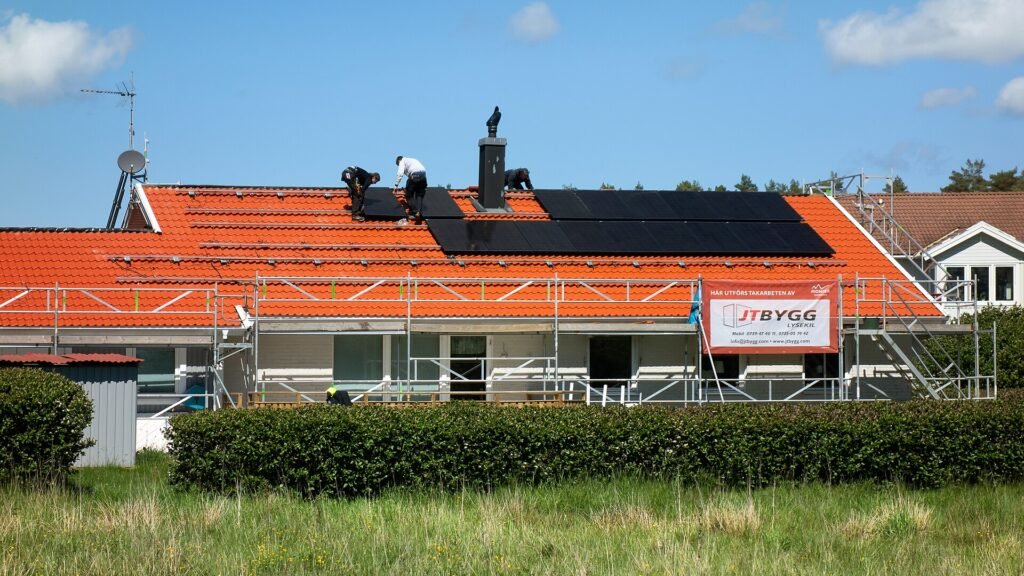
Pakistan’s rooftops have quietly become one of the country’s biggest power plants. Prime Minister Shehbaz Sharif told world leaders at the COP31 climate summit last week that Pakistan added nearly 22 gigawatts of rooftop solar capacity in just two years — a surge he credited entirely to ordinary citizens.
“In just two years, Pakistan has added nearly 22 gigawatts of rooftop solar capacity — a quiet revolution by ordinary citizens seeking affordable power and a cleaner, more predictable future,” the prime minister said, addressing a high-level dialogue titled “35 by 35: Powering the Future” in Antalya, Türkiye, on Wednesday 11 November.
The figure, which the prime minister presented as his government’s own account of the solar boom, has not been independently verified. A day later, in Pakistan’s national statement to the summit, the same expansion was described as more than 20 gigawatts of distributed solar — a figure consistent with the one given at the dialogue.
A quiet revolution on Pakistan’s rooftops
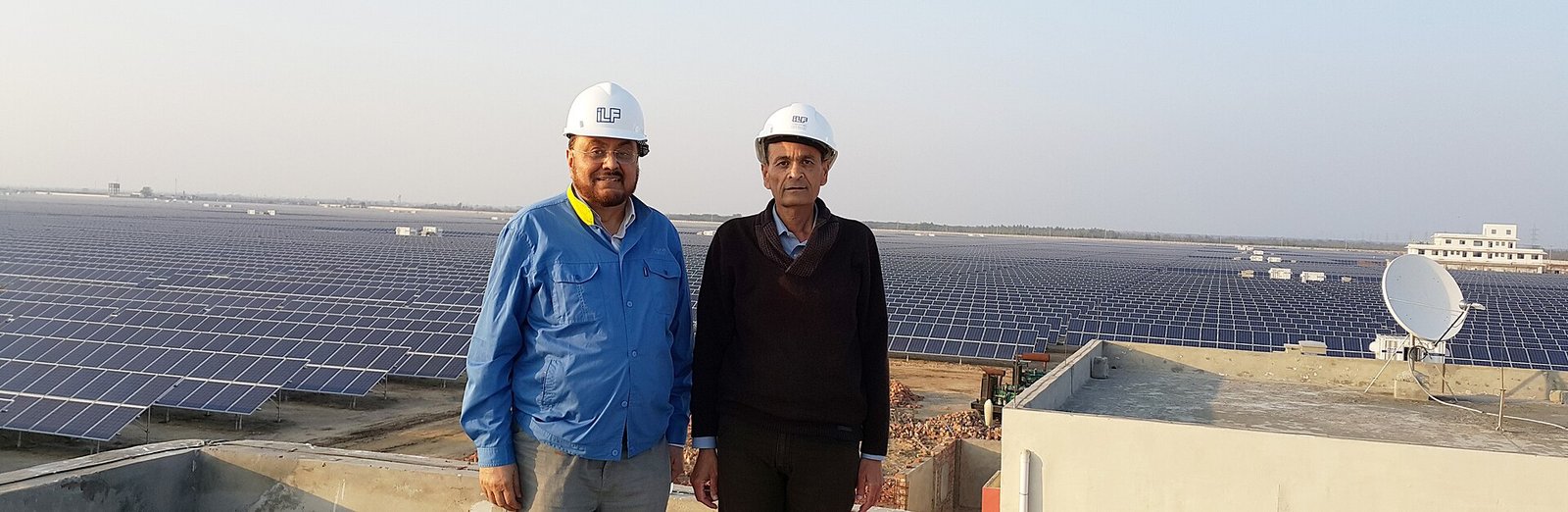
What makes the number striking is who is behind it. This was not a single mega-project or a government programme, but millions of individual decisions by households and businesses to put panels on their roofs. Families facing rising electricity bills and unpredictable power prices turned to the sun, and the result, according to the prime minister, is one of the fastest rooftop solar expansions anywhere in the world.
The prime minister described the shift as an extraordinary transformation driven by people looking for affordable electricity, cleaner energy and greater protection from power price volatility. Clean energy sources now account for nearly 55 per cent of Pakistan’s energy mix, he said, reflecting a broader move towards renewable and low-carbon electricity.
The momentum is visible beyond rooftops too. The prime minister pointed to the recent inauguration of a key section of the Chashma-5 nuclear power project, which is expected to add 1,200 megawatts of electricity to the national grid.
The 35-by-35 pledge and the $188 billion ask
At the heart of the prime minister’s address was a global pledge. Pakistan reaffirmed its support for the 35-by-35 Global Electrification Pledge, which aims to increase electricity’s share of total final energy consumption to about 35 per cent by 2035, supporting the worldwide transition to cleaner energy systems.
But the prime minister was blunt about what the transition will cost. Pakistan requires approximately $138 billion by 2035 for low-carbon power development, he said, along with a further $50 billion to replace coal-based power generation with solar energy — a total bill of about $188 billion on his figures.
“The momentum is real and it is accelerating,” he told the dialogue, while warning that progress without adequate financing could not be sustained. He called for rapid expansion of electricity grids, greater investment in energy storage and better access to emerging technologies, noting that developing countries already face heavy debt-related constraints.
“Let us resolve to power our economies without impoverishing our people and light up our homes without darkening our planet,” he said, urging countries to turn their climate commitments into practical action.
Electric vehicles and the wider transition
The prime minister also used the summit to set out Pakistan’s plans for cleaner transport. The country’s newly drafted automobile policy supports a target of making 30 per cent of new vehicle sales electric by 2030, backed by incentives including lower tariffs. All future government buses and motorcycles will be electric, he announced, adding that electric motorcycles accounted for more than one in every ten motorcycles sold in Pakistan for the first time this year.
Pakistan set up a dedicated pavilion at the COP31 venue in Antalya, hosting 54 events covering climate, energy and sustainability themes. On the sidelines, the prime minister met several international leaders, including Iranian President Masoud Pezeshkian, Kuwait’s Prime Minister Ahmad Al-Abdullah Al-Ahmad Al-Sabah and Palestinian Prime Minister Mohammad Mustafa.
COP31, which opened in Antalya on 9 November and runs until 20 November, has brought together delegates from nearly 200 countries to negotiate progress on clean energy, electrification, climate finance and the transition away from fossil fuels. UN Secretary-General António Guterres warned leaders that the climate crisis was advancing faster than efforts to contain it, urging governments to strengthen their commitments.
For Pakistan, the message from Antalya was clear: the solar boom on its rooftops is real, it was built by its own citizens, and keeping it going will now depend on the finance, grids and storage the prime minister spent his summit asking the world to help provide.
Sources: Energy Update and Dawn/APP via PMO.
Related Posts
 TechnologyBitcoin Falls Below $60,000 to Lowest Since September 2024
 TechnologyLSE Financial Services Launches AI Order Management System for Pakistan’s Brokers
 TechnologyPakistan Jumps 17 Places to 119th in UN E-Governance Ranking 2026 — Best-Ever Position
 TechnologyAnthropic Mathematician Claims Claude Helped Prove the 167-Year-Old Riemann Hypothesis
 TechnologyGTA 6 Makes $3.79 Billion on Day One — Biggest Entertainment Launch in History
 TechnologyPakistan 9.4 Million Cyberattacks in One Year, Kaspersky Reports
Most Popular
 How-ToPTA Tax Calculator 2026: Check Mobile Tax on Any Phone421 views
 Pakistan NewsPIA Boeing 787 Lease Deal: What It Means for the Airline396 views
 Canada JobsTech Jobs in Canada: Roles, Salaries, and Skills Needed392 views
 SportsUEFA Champions League 2026-27: Format, Teams and Schedule390 views
 TechnologyPM Shehbaz Sets November Deadline for Alibaba AI and Digitalisation Projects in Pakistan370 views
 ShowbizWomen’s Fashion in Pakistan 2026: Trends, Brands and Style Guide366 views