On Friday 20 November 2026, a mathematician at Anthropic posted a four-page note on his personal website with a sentence that travelled around the world within hours: “I believe I have, working with Claude, discovered a proof of the Riemann Hypothesis.” Levent Alpöge says he and Anthropic’s AI system have cracked a problem that has resisted the world’s best mathematicians since 1859. If the claim survives scrutiny, it would be one of the great milestones in the history of mathematics — and the first time an AI system has played a central role in solving a problem of this scale. But for now, it is a claim, not a confirmed proof.
What is the Riemann Hypothesis?

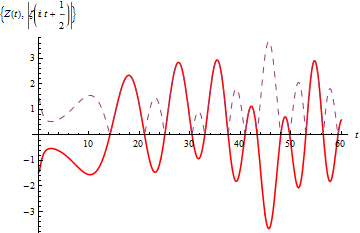
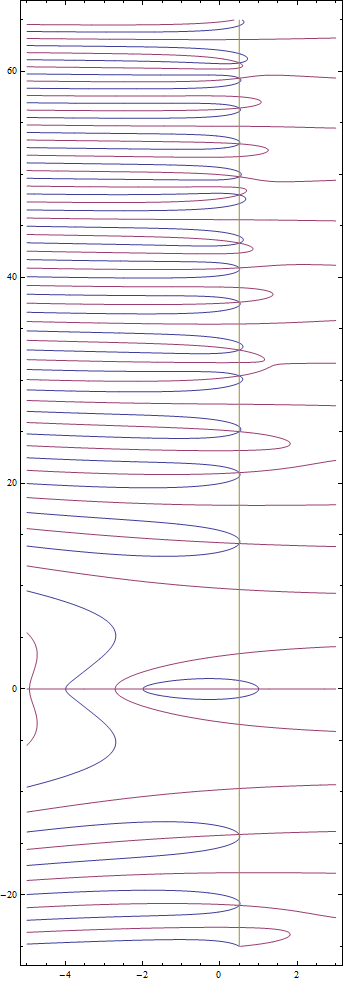
The hypothesis concerns prime numbers — 2, 3, 5, 7, 11 and so on — numbers divisible only by 1 and themselves. Primes become rarer as numbers grow, but their distribution is irregular, and mathematicians have spent generations trying to pin down the pattern. In 1859, the German mathematician Bernhard Riemann proposed a precise rule: all the “nontrivial” zeros of a mathematical function called the Riemann zeta function lie on a single vertical line, the so-called critical line, with real part equal to one-half. The rule has been checked for trillions of cases by computer, and thousands of mathematical results assume it is true — but no one has ever proved it. It is one of the seven Millennium Prize Problems set by the Clay Mathematics Institute, each carrying a $1 million award.
What exactly has been claimed?
Alpöge’s note says the proof also covers the Generalized Riemann Hypothesis, which extends the idea to a broader family of mathematical functions, and he expects another extension, the Extended Riemann Hypothesis, to follow with more work. But there is no conventional paper. Instead of a readable argument, Alpöge has released the proof written in Lean, a programming language and proof assistant that checks mathematical reasoning step by step, split across 14 archive files. Written out in ordinary mathematical prose, he says the argument would run to more than 250,000 pages. He is candid that he does not yet command all of the mathematics in it, and he credits Claude with pulling ahead of him in the final stretch of the work. By his account, he directed the effort toward a promising approach, and Claude supplied major advances as the argument developed — including a central step built on a technique borrowed from a mathematical setting where an analogue of the hypothesis is already known.
Why mathematicians are taking it seriously

Claims of Riemann proofs appear regularly and are almost always wrong within a page. This one is different for three reasons: the claimant’s credentials, the released formalization, and the reaction of leading experts. Alpöge is a published number theorist — a former junior fellow in the Harvard Society of Fellows — and he has form with AI-assisted mathematics. In July 2026 he used Claude to find a counterexample to the Jacobian conjecture, a problem in algebraic geometry that had stood since 1939. Then in August, Anthropic reported that an experimental version of Claude had raised the proven share of zeta zeros known to lie on the critical line from 41.6% to 67.2%. The new claim would take that figure to 100%. James Maynard, Regius Professor of Mathematics at Oxford and a 2022 Fields Medal winner, told IBM Think: “If this fully checks out, it is clearly a historic milestone in mathematics, establishing one of the great mysteries of the subject.” He added: “I suspect that the proof will turn out to be correct, although even checking the Lean verification will take some time.” Early reports say outside mathematicians have rebuilt the Lean code and it compiles without errors — but a final verification check is still pending, and no peer-reviewed paper has been published.
What happens next
Verification is only the first task. Even if the computer check holds up, mathematicians will need to understand how the proof works before accepting it — a process one expert said could take months or even years. “Mathematics is mainly about understanding why something is true,” Youness Lamzouri, a professor of mathematics at the University of Lorraine, told IBM Think. “We need to understand the ideas in the proof well enough to explain them, teach them and build on them.” The $1 million prize will also wait: the Clay Mathematics Institute’s rules require publication in a qualifying outlet, at least two years after publication, and general acceptance by the global mathematics community before it will consider a proposed solution. For now, the claim stands as a serious, machine-checked challenge to 167 years of failure — one that the world’s mathematicians are now racing to check.
Related Posts
 TechnologyGTA 6 Makes $3.79 Billion on Day One — Biggest Entertainment Launch in History
 TechnologyPakistan 9.4 Million Cyberattacks in One Year, Kaspersky Reports
 TechnologyPakistan Fiber Broadband Jumps 73% to 4.03 Million as PTCL Share Slides to 25%
 TechnologyPUBG MOBILE WOW Dash Pakistan: 8,000 Players Compete, Two Winners Head to PMGC in Türkiye
 TechnologyXbox Game Pass November Wave 2 Brings 10 Games, Two Day-One Launches — and 8 Leave on 30 November
 TechnologyHBL Goes Offline for 59 Hours: Services Unavailable From Friday Night Until Monday Morning
Most Popular
 How-ToPTA Tax Calculator 2026: Check Mobile Tax on Any Phone421 views
 Pakistan NewsPIA Boeing 787 Lease Deal: What It Means for the Airline396 views
 Canada JobsTech Jobs in Canada: Roles, Salaries, and Skills Needed392 views
 SportsUEFA Champions League 2026-27: Format, Teams and Schedule390 views
 TechnologyPM Shehbaz Sets November Deadline for Alibaba AI and Digitalisation Projects in Pakistan370 views
 ShowbizWomen’s Fashion in Pakistan 2026: Trends, Brands and Style Guide366 views