Google has put app developers on notice: from April 2027, apps on Google Play must work properly on foldable phones — or they will no longer be able to publish updates. The new Google Play foldable apps April 2027 rules, announced on 18 November 2026, set a firm quality bar for the first time, and the message to developers is blunt: make your app fit the big screen, or lose your place in the store.
It is the biggest shake-up of Google Play’s quality rules in years, and it lands just as foldable phones move from a niche curiosity to a mainstream choice. More than 580 million large-screen Android devices are already in use around the world, according to Google, yet many apps still open on a foldable’s inner display with black bars down the sides, a stretched layout, or a screen that resets when the phone is unfolded. From April 2027, Google says that will no longer be good enough.
What Google Just Announced
Google Play is introducing new adaptive app quality requirements that take effect in April 2027. Under the new rules, every app must meet at least Tier 3 — labelled “Adaptive ready” — of Android’s adaptive app quality guidelines for foldables, and developers must also publish foldable device screenshots on their store listings.
The Tier 3 bar is deliberately basic, but it covers the frustrations foldable owners know best. An app must fill the available display area without letterboxing or other compatibility modes, and it must preserve the user’s scroll position, typed text and media playback when the device is rotated, resized, folded or unfolded. In other words, the app has to behave like it was designed for the screen it is running on — not like a phone app squeezed onto a tablet-sized display.
Developers can already upload foldable screenshots in the Play Console, and Google says they should start appearing in store listings over the coming weeks. From April 2027, providing three foldable screenshots — alongside the standard two phone screenshots — becomes a standard submission requirement for new apps and updates.
The April 2027 Deadline — What Apps Must Do
The consequences for missing the deadline are serious. Apps that fail to meet the Tier 3 standard by April 2027 “will no longer be able to publish or update on Google Play, and may have reduced visibility on the store,” according to Google’s announcement. That is a hard stop: no updates means no bug fixes, no new features and no security patches reaching users through the store.
There is one important exception. Existing apps that are simply left alone — never updated after the deadline — will still be available to download. Google is not deleting apps from the store; it is blocking their future. For developers, that still amounts to a slow death: an app frozen in time quickly falls behind on features and security.
The requirements go further over time. Google says its quality framework will progressively expand to Tier 2 and Tier 1 standards across foldables, tablets, laptops and Android XR devices. Tier 2, called “Adaptive optimized”, calls for responsive multi-pane layouts and basic support for keyboards, mice, trackpads and styluses. Tier 1, “Adaptive differentiated”, covers tabletop and book postures, camera continuity and interactive picture-in-picture. Apps that reach the higher tiers can already apply for special badging and extra promotion on Google Play.
Games Get More Time
Games have a slightly longer runway. Titles on Google Play will need foldable screenshots in their listings by April 2027, the same as apps, but they will not have to meet the Tier 3 quality bar until August 2027. For games, Tier 3 means full-screen rendering in supported orientations, unobstructed HUD safe areas, and state and touch alignment preserved across folding, unfolding, rotation and multi-window resizing.
August 2027 brings a second deadline for apps as well. From then on, new and updated apps will be required to target Android 17, which removes the opt-outs that currently let developers lock orientation or block resizing on large screens. Together, the two deadlines close the loopholes developers have used to avoid adapting their apps.
Why Google Is Acting Now
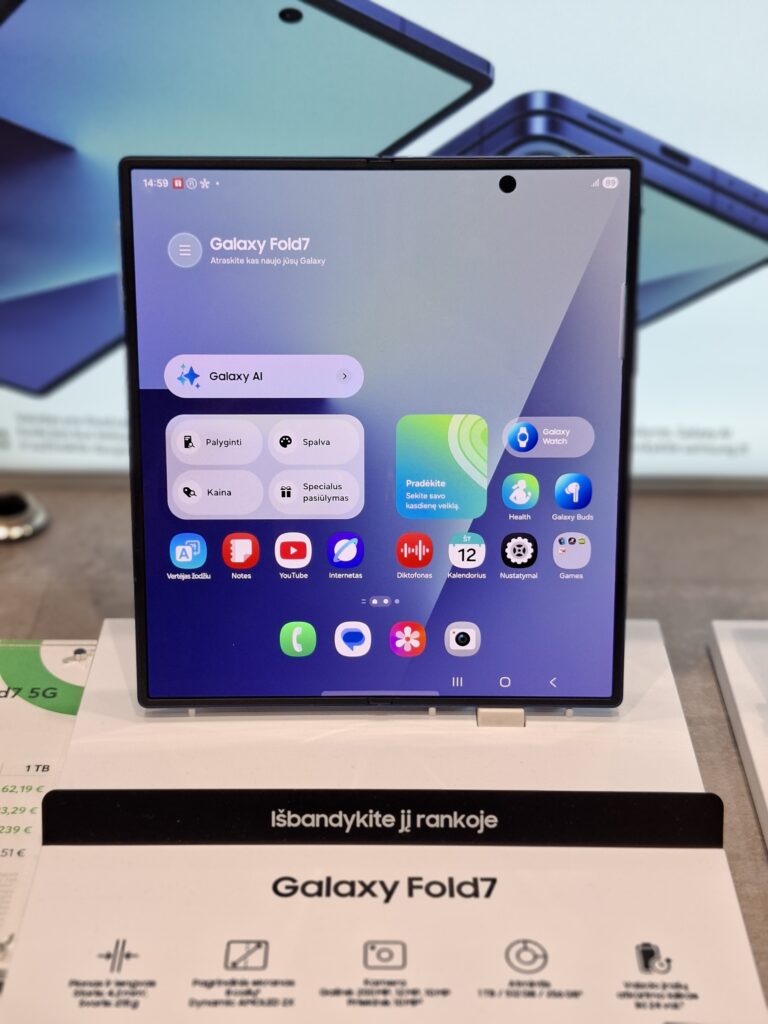
The timing is no accident. Foldable phones are no longer an experiment. Samsung’s Galaxy Z Fold line is in its seventh generation, Google’s own Pixel foldables are established, and new book-style foldables — including the leaked Motorola Razr Flex 2027 — are on the way. Apple has also entered the foldable market with the iPhone Duo, raising the stakes for the whole category, and Google is clearly determined that Android’s app experience should not be the weak link.
The screenshots Google requires show how seriously it takes the change. Developers must provide shots for foldables with a 1:1 inner display — Google names the Samsung Galaxy Z Fold8 Ultra and the Google Pixel 11 Pro Fold as examples — and for devices with a 4:3 inner display, plus a portrait shot of the folded outer screen. The store listing itself is becoming a proof of foldable support, visible to shoppers before they install anything.
What It Means for Foldable Phone Owners
For anyone who already owns a foldable, the change should be good news — eventually. Apps that today open with black bars or reset when the phone unfolds will have to be fixed, or their developers will lose the ability to update them at all. Over the next five months, expect a wave of app updates advertising foldable support, and store listings that finally show what an app looks like on the big inner screen.

There is a catch for users too. If a favourite app’s developer does not make the grade, that app will stop receiving updates from April 2027 — including security fixes. The app will keep working as it is, but it will slowly fall behind. For foldable owners, that makes the new screenshots worth checking: an app with proper foldable shots in its listing is one whose developer has done the work.
Google’s message, in the end, is simple. Foldables are no longer a side project for Android — they are part of the platform’s future, and from April 2027 the apps on Google Play will have to act like it. UrduPro will follow the rollout as developers race to meet the deadline.
Read more: Motorola Razr Flex 2027 and Samsung Galaxy S26.
Source: Android Developers Blog; 9to5Google
Related Posts
 TechnologyDucky Bhai Becomes First Pakistani Streamer to Play GTA 6 in Pakistan
 TechnologyMotorola Razr Flex 2027 Leak Reveals 165Hz Wide Foldable to Take on Galaxy Z Fold 8
 TechnologyNCCIA Busts Rs1 Trillion Online Gambling Network in Karachi — Five Arrested
 TechnologyApple’s iPhone Camera Chief Jon McCormack Retires After Eight Years — No Successor Named
 TechnologyGTA VI Sells 24.6 Million Copies on Day One — $2.36 Billion in Estimated SalesTechnologyGTA 6 Sales Pass $2.36 Billion on Day One as 24.6 Million Copies Sell
Most Popular
 How-ToPTA Tax Calculator 2026: Check Mobile Tax on Any Phone420 views
 Pakistan NewsPIA Boeing 787 Lease Deal: What It Means for the Airline396 views
 Canada JobsTech Jobs in Canada: Roles, Salaries, and Skills Needed392 views
 SportsUEFA Champions League 2026-27: Format, Teams and Schedule389 views
 TechnologyPM Shehbaz Sets November Deadline for Alibaba AI and Digitalisation Projects in Pakistan370 views
 ShowbizWomen’s Fashion in Pakistan 2026: Trends, Brands and Style Guide366 views