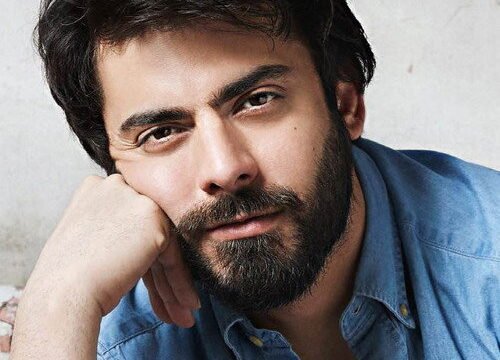
Faran Tahir has a message for every parent watching Dar-e-Nijaat: the drama’s lesson about raising children is not only about daughters. In a new BBC Urdu interview, the actor — who plays Habib, the father of Zaryab — said the show’s parenting debate applies just as much to sons, and he hopes viewers do not read it any other way.

Faran Tahir in 2016 — public domain photo via Wikimedia Commons
Dar-e-Nijaat, the ARY Digital drama written by Umera Ahmed and directed by Saqib Khan, has become one of the most talked-about shows of the season. Its story of Zaryab, her broken relationship with childhood friend Zamil, and her unexpected bond with Abu Bakar has filled social media timelines for weeks — and the parenting at the heart of the family has become part of the argument. Tahir’s interview puts the show’s own position on the record.
Not just daughters — sons too
Tahir was direct about the point he wants audiences to take from the drama. “There are some places where I hope people do not think only girls should be raised in a different way,” he said. “In the story, I have three daughters but the message is not that girls should be treated a certain way, boys should be left alone.”
In the drama, Habib is the father of three daughters — Faryal, Zaryab and Tanya. But Tahir stressed that the upbringing shown on screen is a conversation about all children, not a rulebook for daughters alone. “The discussion is on the upbringing of children,” he said. “We are not saying what Zamil has done is correct and it is only on Zaryab.”
That last line matters, because Zamil — played by Nameer Nawaz Khan — is the character whose choices set the story in motion. Zaryab, played by Dur-e-Fishan Saleem, won admission to Harvard University and was ready to give up the opportunity for her relationship with her childhood friend. The relationship fell apart when Zamil left her and married another woman. Tahir’s point is that the blame in that story does not sit on one side: what the boy did wrong has to be named too.
Trust them, guide them, give them structure
Tahir also set out the balance he believes good parenting needs — trust on one side, guidance on the other. “It is important to trust kids but also to guide them,” he said. “It is also important to give them structure.”
It is a line that fits his character. Habib is written as a father who tries to hold his family together with care rather than control, and Tahir said the show is not teaching parents to police their children. The lesson, as he described it, is about guidance: being present, setting boundaries, and still trusting children enough to let them grow. The distinction matters to the drama’s fans, who have spent weeks debating whether the parents in the story were too strict, too soft, or simply too late.
A story about goodness — not a documentary
Tahir was also careful to draw a line between drama and real life. “We are telling a story,” he said. “There is a lesson to be learned on goodness. It is not a documentary.”
He also spoke about Abu Bakar, the soft-spoken character played by Sheheryar Munawar who has become the show’s breakout figure, describing his influence on Zaryab as a calming one. Viewers have already turned Abu Bakar into a talking point of his own — the “green flag” hero whose patience and quiet decency are held up as the standard for real men.
Why the drama has everyone talking
Few Pakistani dramas this year have generated as much conversation as Dar-e-Nijaat. ARY Digital announced in October that the show had passed 1.7 billion views across social media after 23 episodes, and the debate has only grown since — over Zaryab’s choices, over the dress row that followed one episode, and over the way the drama handles faith, forgiveness and family pressure. The story has also kept viewers guessing week to week, from episode 31’s big reveal to Zaryab’s much-discussed ivory outfit.
The show airs on ARY Digital every Friday and Saturday at 8:00 PM, and its cast — Sheheryar Munawar, Dur-e-Fishan Saleem, Nameer Nawaz Khan, Sania Saeed, Saba Hameed, Nadia Afgan and Tahir himself — has kept it at the centre of the weekly drama conversation.
The actor behind Habib
For many viewers, Tahir is a familiar face from a very different screen. The Pakistani-American actor built his career in Hollywood before returning to Pakistani television, where he has appeared in dramas including Bus Tera Saath Ho, Leader and Tapish. He is the son of veteran actor Naeem Tahir and legendary broadcaster Yasmeen Tahir, and the brother of actor Ali Tahir.
He also shared a lighter detail from the set: the drama’s many dinner scenes — including its fights and emotional confrontations around the dining table — were all filmed on a single day. “We have a lot of dinner scenes in our serial Dar-e-Nijaat, which were all shot on the same day,” he said. “So just think about what it was like to take a new bite every five minutes!”
Tahir’s interview leaves viewers with a simple takeaway — and a challenge. If the lesson of Dar-e-Nijaat is about how children are raised, it cannot stop at daughters. Sons need the same trust, the same guidance and the same structure. In a drama that has already made the country argue about love, faith and family, that may be the most practical lesson it has offered yet. Watch the full BBC Urdu interview with Faran Tahir, and read more about the drama’s story and cast.
Related Posts
 ShowbizPakistan’s First Netflix Series Jo Bachey Sang Samait Lo Trailer Launch Reported for 24 November in Karachi
 ShowbizAmitabh Bachchan to Get Additional Security After Suspected Attack Plot Outside Jalsa
 ShowbizHunger Games: Sunrise on the Reaping Reviews — 71% on Rotten Tomatoes as Critics Call It the Franchise’s Most Devastating Film Yet
 ShowbizDia Mirza Calls Nawazuddin Siddiqui a ‘Nightmare to Work With’ — Fans Ask: Real Feud or Promo Stunt?
 ShowbizNetflix Top 10: Heartland Tops Films as Taken Leads TV in a Quiet Week
 ShowbizDurefishan Saleem Stuns as Showstopper at Kanwal Malik’s Zebunnisa Bridal Showcase
Most Popular
 How-ToPTA Tax Calculator 2026: Check Mobile Tax on Any Phone420 views
 Pakistan NewsPIA Boeing 787 Lease Deal: What It Means for the Airline396 views
 Canada JobsTech Jobs in Canada: Roles, Salaries, and Skills Needed392 views
 SportsUEFA Champions League 2026-27: Format, Teams and Schedule389 views
 TechnologyPM Shehbaz Sets November Deadline for Alibaba AI and Digitalisation Projects in Pakistan369 views
 ShowbizWomen’s Fashion in Pakistan 2026: Trends, Brands and Style Guide366 views