Saudi Arabia’s Delta Energy Saudi and Pakistan’s state-owned Inter State Gas Systems have signed an agreement to assess a natural gas infrastructure programme worth about $30 billion, in one of the largest energy proposals Pakistan has seen in years. The Delta Energy Pakistan gas framework was announced on Tuesday, 17 November 2026, and it covers cross-border pipelines, liquefied natural gas facilities, gas processing plants, storage and export terminals.
The deal is a framework for evaluation, not a final investment decision. Neither company has committed to fund or build any of the projects yet. But the scale of the proposal, the routes it names and the supply sources it identifies make it a story worth watching closely, because it could reshape how Pakistan buys, moves and sells natural gas.
What the Delta Energy Pakistan gas framework covers
Inter State Gas Systems, known as ISGS, operates under Pakistan’s Petroleum Division and is the state body that executes and monitors gas contracts. Its agreement with Delta Energy Saudi, part of the Saudi-based Delta International Group, was signed under the auspices of the Special Investment Facilitation Council, the government body set up to attract investment and help projects move through administrative processes.
The companies described a proposed investment of approximately $30 billion. The government put the pipeline proposal at $25 billion to $30 billion. The framework covers pipelines crossing national borders, facilities for liquefied natural gas, gas processing plants, storage and export terminals. Before any money is committed, engineers and commercial teams must assess whether the routes, the gas supplies, the facilities and the expected sales can support an investment of this size.
Pipelines to Gwadar — and a line to the Indian border
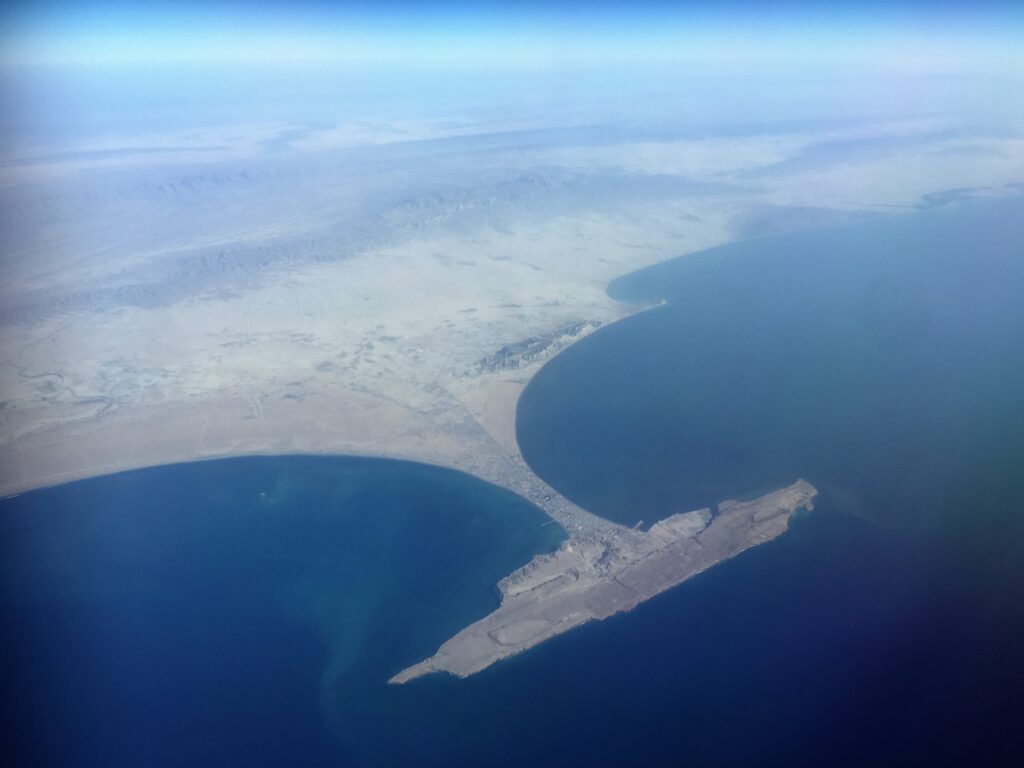
The proposed network would enter Pakistan through its western border and extend towards Gwadar, the Arabian Sea port in south-western Balochistan. Gwadar would give the network a connection to the sea, and the programme includes LNG facilities and export infrastructure that could link gas moving through Pakistan with maritime markets as well as customers inside the country.
The programme also envisages a second, more ambitious route: a pipeline from Chaman, on Pakistan’s border with Afghanistan, running across the country towards the Indian border near Fazilka. Delta Energy described that route as a “core strategic commitment”, but it would require formal engagement and agreements with both Pakistani and Indian authorities before it could proceed. Extending infrastructure towards the eastern border would add another set of government and commercial negotiations to a programme that already involves potential supplies from Afghanistan and facilities on Pakistan’s coast.
Where the gas would come from
A central question is where the gas would come from. Delta Energy identified Afghanistan’s Kashk gas concession and other Afghan resources as potential suppliers. The Pakistani government separately described a feasibility proposal involving Turkmen gas passing through Afghanistan. Delta Energy was explicit that its programme is separate from the Turkmenistan-Afghanistan-Pakistan-India pipeline, known as TAPI, and does not depend on Turkmenistan.
The Afghan supply picture has a concrete starting point. On 7 September, Afghanistan’s Ministry of Mines and Petroleum and Saudi Arabia’s Delta International signed an agreement for exploration and extraction in the Kushk-Tirpul oil and gas basin in Herat and Badghis provinces, in western Afghanistan. Afghan authorities put the basin’s area at around 22,000 square kilometres, while Delta describes the wider contract area as approximately 23,317 square kilometres. Delta International will initially invest $200 million to explore seven gas blocks, carrying out geological and geophysical studies, seismic surveys, exploration drilling and reservoir evaluation to establish how much gas exists and whether it can be produced commercially.
The $200 million exploration plan and the proposed $30 billion infrastructure programme cover different activities. The first concerns investigating gas resources in Afghanistan; the second concerns assessing a much larger transport and processing network in Pakistan. A working system would require the supply and transport sides to develop together.
Why this is not a done deal yet
The most important caveat is in the companies’ own words: the agreement provides a framework for evaluating the projects and does not constitute a final investment decision or a commitment to finance or build them. No construction timetable, confirmed gas supply volume or financing arrangement has been announced. Those details will determine the network’s possible size, cost and ability to serve customers.
Pakistan has seen big pipeline announcements stall before. Plans for other pipelines intended to bring gas into the country have been delayed for years, and TAPI’s progress has repeatedly been held back by security problems in Afghanistan despite agreements and announcements meant to advance construction. The Delta Energy Pakistan gas proposal will be judged the same way: by confirmed supply estimates, selected routes, facility specifications, financing arrangements and government agreements, not by the headline number alone.
How it compares with TAPI — and what happens next
TAPI is a separate, longstanding proposal to carry gas from Turkmenistan’s Galkynysh field through Afghanistan and Pakistan to India. Its planned route runs for 1,800 kilometres through Herat and Kandahar in Afghanistan, then Quetta and Multan in Pakistan, before reaching Fazilka in India. The planned capacity is 33 billion cubic metres of gas a year. Its first phase, designed to move gas using available pressure, has an estimated cost of $5 billion to $6 billion, with compressor stations adding at least another $1.9 billion.
The proposed Delta programme has a broader description, including LNG facilities, processing, storage and export terminals alongside pipelines, so its $30 billion figure covers a different set of proposed assets. Both plans involve Afghanistan, Pakistan and a possible connection to India, but Delta Energy’s stated supply strategy centres on Afghan resources rather than Turkmen gas.
Notably, TAPI diplomacy continued on the same day. On 17 November, Pakistan’s Deputy Prime Minister and Foreign Minister Ishaq Dar discussed TAPI with Turkmen Foreign Minister Rashid Meredov in Islamabad at the sixth session of the Pakistan-Turkmenistan Joint Intergovernmental Commission, and the two sides agreed to convene a TAPI steering committee meeting. No date was announced.
For Pakistan, the government says the proposed infrastructure is intended to diversify gas supplies and strengthen energy security. Natural gas accounted for approximately 29 per cent of the country’s primary energy supply during fiscal 2025–26, so additional supply routes and storage could give the country more ways to obtain gas and manage deliveries — provided the projects attract financing and secure reliable production. Afghanistan, meanwhile, could gain an export outlet if its identified resources can be developed and connected to the network. The next developments to watch are the feasibility findings, any financing announcements and the government agreements the routes require.
Related reading: clean energy and ML-3 railway upgrade. Sources: Reuters report and Asia Daily.
Related Posts
 BusinessGold Price in Pakistan Falls Below Rs400,000 Per Tola After Rs10,000 Single-Day Drop
 BusinessPakistan Receives Largest-Ever LPG Shipment of 15,000 Tonnes at Port Qasim
 BusinessPetrol Price Cut by Rs3 to Rs325 Per Litre From 18 November: Diesel Unchanged at Rs358
 BusinessPetrol and Diesel Prices Cut by Rs2: Petrol Now Rs328, Diesel Rs358 From 17 November
 BusinessPakistan Delays $1 Billion ML-3 Railway Upgrade for a Third Time as Reko Diq Link Stalls
 BusinessHUBCO Aluminium Smelter: Pakistan’s Largest Power Producer Plans 300,000-Tonne Plant
Most Popular
 How-ToPTA Tax Calculator 2026: Check Mobile Tax on Any Phone420 views
 Pakistan NewsPIA Boeing 787 Lease Deal: What It Means for the Airline396 views
 Canada JobsTech Jobs in Canada: Roles, Salaries, and Skills Needed392 views
 SportsUEFA Champions League 2026-27: Format, Teams and Schedule389 views
 TechnologyPM Shehbaz Sets November Deadline for Alibaba AI and Digitalisation Projects in Pakistan369 views
 ShowbizWomen’s Fashion in Pakistan 2026: Trends, Brands and Style Guide366 views