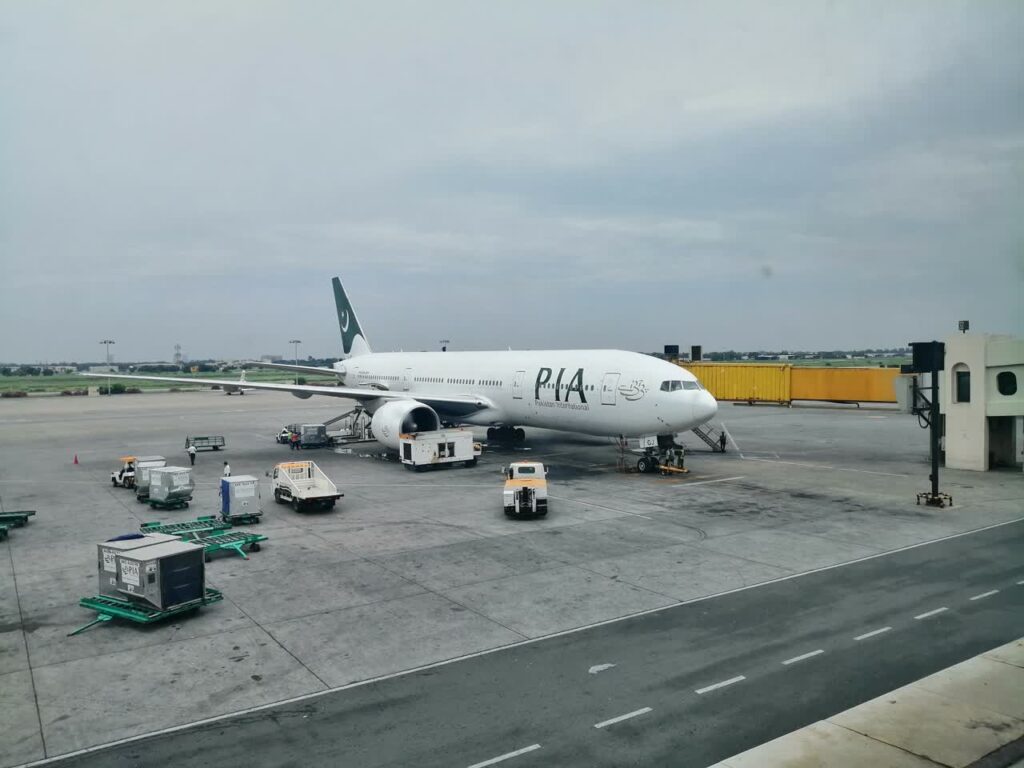
Passengers on Pakistani flights may soon be able to browse the internet at cruising altitude. The Pakistan Telecommunication Authority (PTA) has finalised the licensing framework for satellite-based in-flight internet on Pakistani aircraft, clearing the regulatory path for Wi-Fi and mobile services in the sky.
What the PTA in-flight internet Pakistan framework actually does
Under the framework, announced on 17 November 2026, licensed companies will be able to offer internet and communication services aboard aircraft registered in Pakistan, using satellites registered with the Pakistan Space Activities Regulatory Board (PSARB) and subject to the PTA’s licensing requirements. The move is a first in the country’s telecom history.
For years, passengers on Pakistani airlines have had to switch their phones off for the whole flight, while travellers on Emirates, Qatar Airways and Turkish Airlines browsed the web at cruising altitude. The framework closes that gap at the regulatory level: the legal route for in-flight connectivity on Pakistani carriers now exists.
There is one more condition with a wider reach. Foreign aircraft passing through Pakistani airspace will also need a No Objection Certificate (NOC) from the PTA to use in-flight satellite services. International airlines transiting Pakistan cannot simply switch on their own in-flight Wi-Fi without going through a formal approval process first.
The licence rules — fee, term and the 3,000-metre limit
A licence costs $10,000, with no spectrum charges applied initially. Licences run for 10 years with an option for renewal, and companies must begin operations within one year of obtaining a licence. Licences are non-exclusive, so more than one provider can enter the market — a deliberate choice designed to encourage competition rather than leaving the service to a single operator.
Mobile services will only be allowed once the aircraft climbs above 3,000 metres — roughly 10,000 feet — in line with aviation safety rules. Below that height, mobile connectivity stays off, so phones will still need to stay in flight mode during take-off and landing.
Providers must also establish local gateway infrastructure inside Pakistan and route all data traffic through domestic systems. The framework requires lawful interception and monitoring systems, bars foreign control over critical infrastructure, and requires prompt reporting and resolution of service disruptions. Consumer protections cover data privacy and security, and unauthorised telecom equipment is banned.
From draft to done — a six-month journey
The announcement did not come out of nowhere. On 6 May 2026 the PTA published a draft licensing framework for In-flight Telecommunication Satellite (ITS) services and opened public consultation until 31 May 2026. After collecting feedback from airlines, satellite operators and telecom companies, the regulator has now published the final version. What changed between the draft and the final version is not yet fully public, but the core commercial terms are now set — and the market finally has a rulebook to work from.
Who could provide the service
The framework does not name any specific provider. The most obvious candidate is Starlink, SpaceX’s low-Earth-orbit satellite internet service, which is already used for in-flight connectivity by several international airlines and delivers faster, lower-latency connections than older geostationary satellite systems. In March 2025, PSARB granted provisional registration to Starlink Internet Services Pakistan (Private) Limited — a step that matters because any in-flight provider must use a satellite operator registered with the board. Other global in-flight providers include Inmarsat and Viasat.
None of this means Starlink — or any other company — has been confirmed as a provider. A licence still has to be applied for and granted, and airlines still have to sign up. But the non-exclusive model means Pakistani airlines could eventually choose between several options, which should help keep prices competitive when the service does arrive.
When passengers will actually get Wi-Fi
Passengers should not expect to log on to in-flight Wi-Fi next week. The framework is finalised, but commercial service still needs a licensed provider to set up infrastructure and start operations. Based on the licence rules, the earliest realistic first commercial launches on Pakistani aircraft are expected in mid-to-late 2027.
But the framework itself is the hard part. Without a clear legal path, no satellite company would invest in the ground infrastructure, airline agreements and onboard hardware needed to run the service. That legal path now exists.
For business travellers on domestic routes between Karachi, Lahore and Islamabad, or Pakistanis on long international routes with PIA, staying connected mid-air could change how flight time is used — replying to emails, joining calls, and catching up on work that currently sits idle during a two-hour flight.
Related on UrduPro: Six satellite internet companies register in Pakistan — but Starlink’s licence still waits on security clearance (https://urdupro.info/six-satellite-internet-companies-register-pakistan-starlink-licence-pending/) and PTA proposes IoT licensing rules 2026 (https://urdupro.info/pta-iot-lpwan-licensing-regulations-2026/).
Related Posts
 TechnologyOpenAI Launches GPT-6.2 Astra and Sol: Cheaper, Faster Models Land as Anthropic IPO Prices Today
 TechnologyMicrosoft Copilot Is the New OS for Work, Nadella Declares at Ignite 2026
 TechnologyNvidia Q3 Earnings: Revenue Doubles to $115.8 Billion in First Report Since Jensen Huang Exit
 TechnologyVoyager 1 Reaches One Light-Day From Earth Today — A Message Now Takes a Full Day
 TechnologyOpenAI Puts AI Agents Inside Hospitals: GPT-6 Astra Rated Safe on 99% of 325 Tasks
 TechnologyKarachi Teen Builds AI Tutor Smartpet That Breaks Any Goal Into 10 Steps, Applies to Y Combinator
Most Popular
 How-ToPTA Tax Calculator 2026: Check Mobile Tax on Any Phone420 views
 Pakistan NewsPIA Boeing 787 Lease Deal: What It Means for the Airline395 views
 Canada JobsTech Jobs in Canada: Roles, Salaries, and Skills Needed391 views
 SportsUEFA Champions League 2026-27: Format, Teams and Schedule388 views
 TechnologyPM Shehbaz Sets November Deadline for Alibaba AI and Digitalisation Projects in Pakistan368 views
 ShowbizWomen’s Fashion in Pakistan 2026: Trends, Brands and Style Guide365 views