Nanga Parbat 2026: Height, Climbing Guide and History
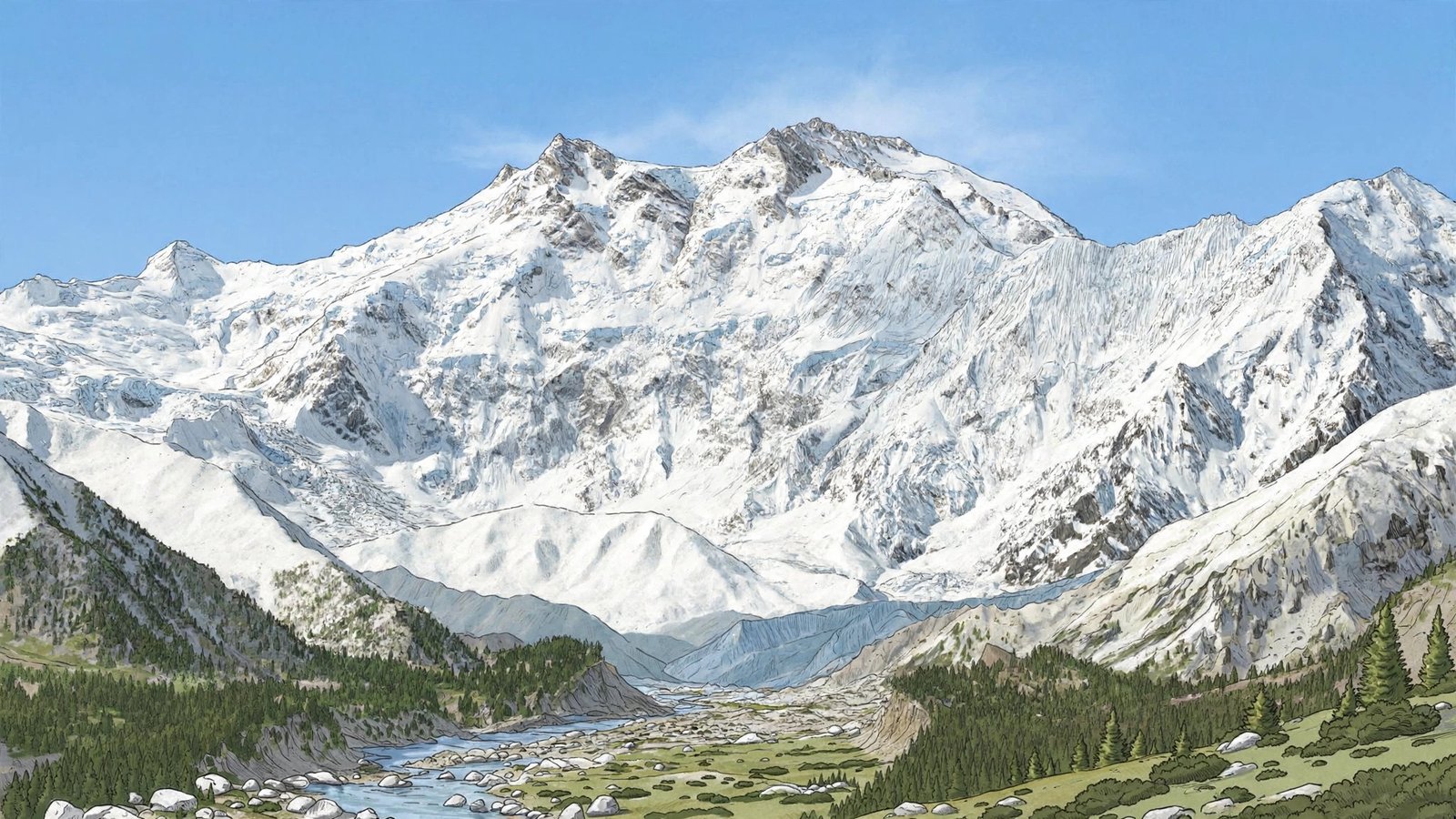
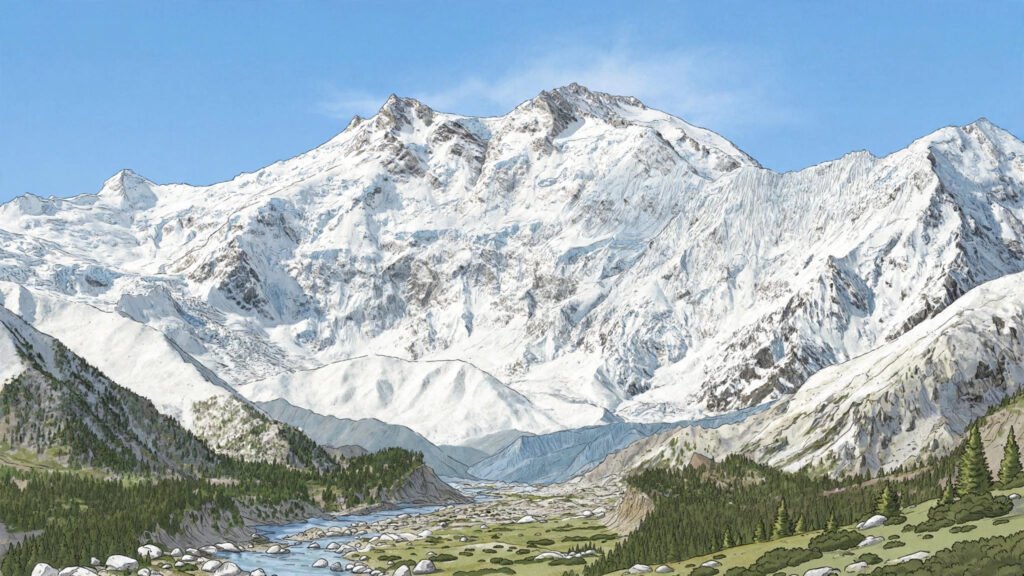
Nanga Parbat, the world’s ninth-highest mountain, is one of Pakistan’s most iconic and intimidating peaks. Standing at 8,126 metres (26,660 feet), the giant towers over the Diamer district of Gilgit-Baltistan, where its immense faces have tested mountaineers for more than a century. Known around the world as the “Killer Mountain”, this giant made global headlines again in 2026, when Polish ski mountaineer Andrzej Bargiel completed the first continuous ski descent from its summit without supplemental oxygen.
Nanga Parbat: Height and Location
Its height is officially recorded at 8,126 metres above sea level, which converts to 26,660 feet. It is the second-highest peak in Pakistan after K2 and the ninth-highest mountain on Earth. Unlike the Karakoram giants, the mountain stands at the western edge of the Himalayan range, rising dramatically from the low valleys of the Indus River to form one of the greatest vertical reliefs on the planet.
The mountain’s most famous feature is the Rupal Face on its southern side, widely recognised as the highest mountain wall on Earth. This single sweep of rock and ice climbs roughly 4,600 metres from base to summit, towering over the Rupal Valley below. The northern Diamir Face, accessed via the famous Fairy Meadows, is the most commonly used climbing route, while the Rakhiot and Raikot faces offer far more technical and exposed lines reserved for the most advanced alpinists.
Climbing History of the Killer Mountain
The peak earned its fearsome nickname during a string of disastrous early expeditions in the 1930s, when German teams suffered heavy losses on its slopes. The mountain’s reputation as the “Killer Mountain” became part of mountaineering legend. The breakthrough came on 3 July 1953, when Austrian climber Hermann Buhl made the first successful ascent of the peak. His climb is considered one of the greatest achievements in mountaineering history because he reached the summit alone and without supplemental oxygen, returning exhausted to his high camp in a 41-hour solo push that remains legendary.
Since Buhl’s historic climb, the peak has been summited via several routes, but it remains one of the most difficult 8,000-metre mountains in the world. Steep slopes, avalanche danger, crevasses and unpredictable weather make every expedition a serious undertaking. The Diamir Face is the standard commercial route, while the Rupal Face and Rakhiot Face demand advanced technical skills, strong acclimatisation and exceptional endurance.
The Historic 2026 First Ski Descent
In June 2026, the mountain once again became the centre of mountaineering history. Polish ski mountaineer Andrzej Bargiel climbed the 8,126-metre peak without supplemental oxygen and then completed the mountain’s first continuous ski descent from the summit to the end of its skiable snow. He departed Base Camp at 4,200 metres on 28 June, overnighted at Camp II and Camp III, and reached the summit on 30 June before descending via the Messner Route. The entire round trip took two days and nine hours.
What made the descent historic was that Bargiel found a route through the upper Diamir Face serac barrier, which had previously forced every skier to remove their skis and navigate sections on foot. By linking the summit to the continuous snow line, he completed a vertical descent of around 4,000 metres. With this achievement, Bargiel became the first person to climb and ski all of Pakistan’s eight-thousand-metre peaks, having previously completed ski descents of Broad Peak, K2, Gasherbrum I and Gasherbrum II. For readers following Pakistan’s great peaks, our K2 climbing guide covers the second-highest mountain in the world.
Trekking Guide: Fairy Meadows and Beyond
You do not need to be a mountaineer to experience the mountain. The Fairy Meadows trek is one of Pakistan’s most famous trekking routes, leading to a lush alpine meadow at around 3,300 metres with direct views of the Diamir Face. The trek begins at Raikot Bridge on the Karakoram Highway, followed by a thrilling jeep ride to the village of Tato and a 3–4 hour hike to the meadows. From here, trekkers can continue to the base camp viewpoint at around 3,900 metres.
The best time to trek is from April to October, with July and August offering the clearest views. The climbing season runs from June to August. Trekkers should budget roughly PKR 25,000–50,000 for a 4–5 day trip from Islamabad, depending on transport and accommodation. Accommodation ranges from wooden huts and camps at Fairy Meadows to guesthouses in nearby villages. For more northern adventures, see our Hunza Valley travel guide and our Murree tour guide.
As of 15 October 2026, tour operators report that Fairy Meadows remains open to visitors, with winter snow expected to close the upper trails by late November. According to Unofficial Networks, Bargiel’s ski descent marked the first uninterrupted line from the summit in history. Expedition details and route information are also documented by operators like Adventure14Summit, which runs guided expeditions to the peak.
Frequently Asked Questions
What is the height of the mountain?
It stands at 8,126 metres (26,660 feet), making it the world’s ninth-highest mountain and Pakistan’s second-highest peak after K2.
Where is the mountain located?
It is located in the Diamer district of Gilgit-Baltistan, Pakistan, at the western edge of the Himalayan range, rising above the Indus River valley.
Why is Nanga Parbat called the Killer Mountain?
The nickname comes from the heavy losses suffered by early expeditions in the 1930s, combined with its extreme weather, avalanches and technical difficulty.
Who made the first ascent?
Austrian climber Hermann Buhl made the first ascent on 3 July 1953, reaching the summit alone and without supplemental oxygen.
What happened on Nanga Parbat in 2026?
Polish skier Andrzej Bargiel completed the first continuous ski descent from the 8,126-metre summit on 30 June 2026, climbing and skiing without supplemental oxygen.
Related Posts
 Pakistan NewsMaryam Nawaz Removes Jhelum DC After Exam Postponed for Her Visit
 Pakistan NewsPakistan Considers 12 Provinces: Referendum May Come Before Proposed 28th Amendment
 Pakistan NewsPoliceman Martyred as Motorcycle Bomb Explodes in Shangla’s Chakesar Area
 Pakistan NewsSupreme Court Acquits Two Brothers in Blasphemy Case After 20 Years on Death Row
 Pakistan NewsMilitant Attacks in Pakistan Jump to 49 in a Week as Violence Surges Again, PICSS Reports
 Pakistan NewsSanam Javed Files for Khula From Husband Atiq Riaz, Lahore Family Court Issues Notice for November 25
Most Popular
 How-ToPTA Tax Calculator 2026: Check Mobile Tax on Any Phone419 views
 Pakistan NewsPIA Boeing 787 Lease Deal: What It Means for the Airline392 views
 Canada JobsTech Jobs in Canada: Roles, Salaries, and Skills Needed389 views
 SportsUEFA Champions League 2026-27: Format, Teams and Schedule386 views
 TechnologyPM Shehbaz Sets November Deadline for Alibaba AI and Digitalisation Projects in Pakistan367 views
 ShowbizWomen’s Fashion in Pakistan 2026: Trends, Brands and Style Guide362 views



One comment