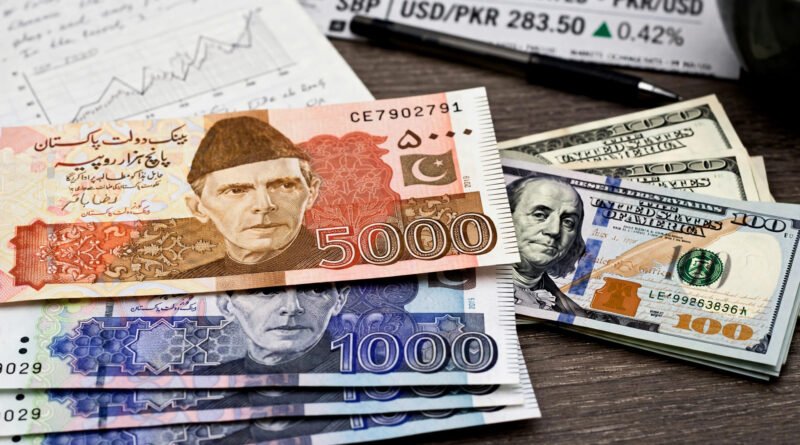
Currency Rates in Pakistan Today — Dollar, Euro, Pound, Riyal, Dirham | UrduPro
Currency Rates in Pakistan Today — Dollar, Euro, Pound, Riyal & Dirham
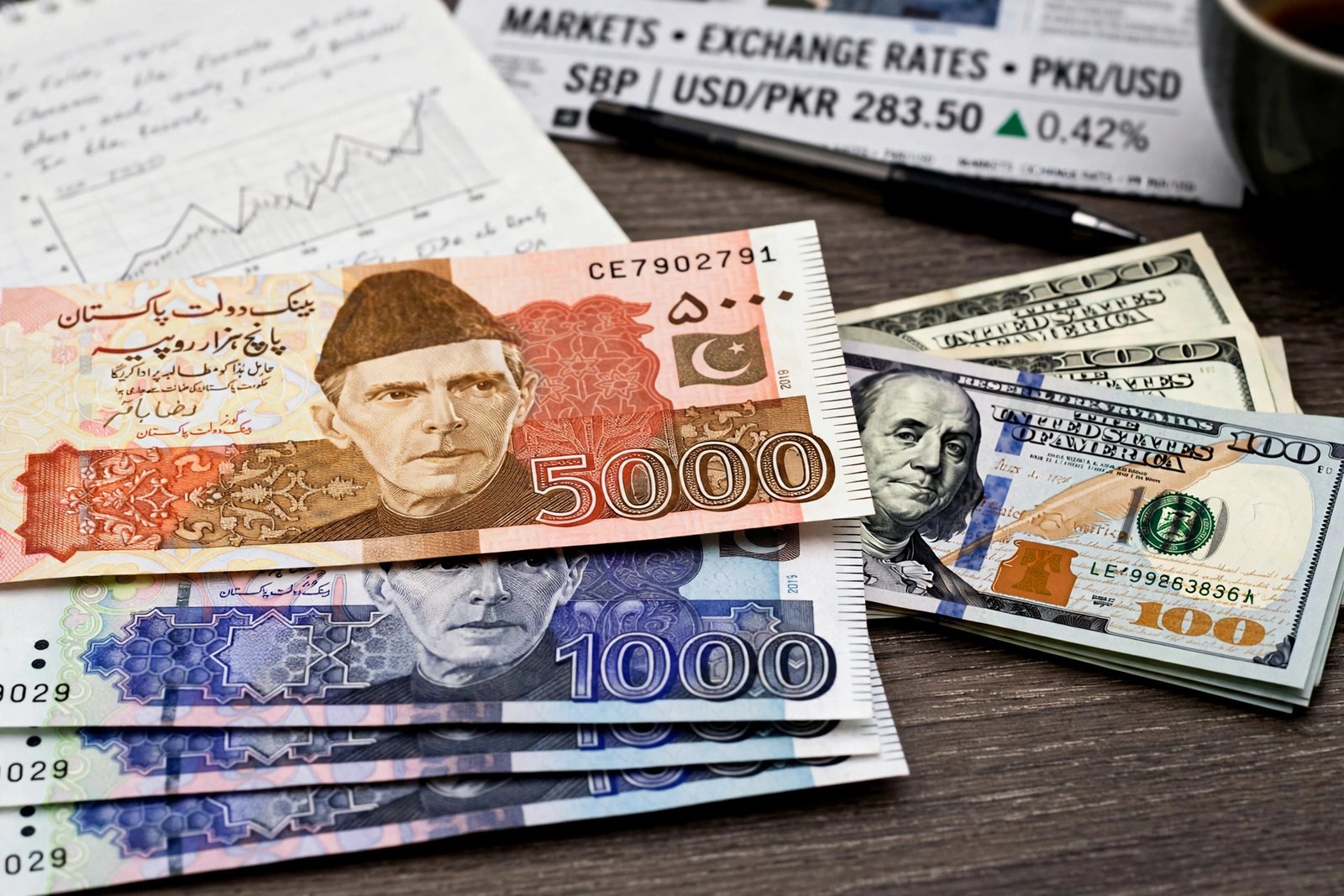
Ask any Pakistani what number they check first in the morning, and half will say the dollar rate. The rupee’s value against foreign currencies touches everything — the price of petrol at the pump, the cost of your next smartphone, the gold your family buys for a wedding, and the remittance your brother sends from Dubai. This page is the definitive hub for currency rates in Pakistan today: live interbank and open market rates for the US Dollar, Euro, British Pound, Saudi Riyal, UAE Dirham and more, plus the guides that turn raw numbers into useful decisions — how interbank and open market rates differ, how to send and receive money wisely, what the new currency notes mean for you, and how exchange rates ripple through your household budget.
Exchange rates move every working day, driven by trade flows, remittances, central-bank policy and global events. The tables below are refreshed daily; for the deepest dive on the greenback, see our dedicated Dollar Rate Pakistan Today — USD to PKR Live page.
Today’s Exchange Rates in Pakistan (PKR)
Interbank rates as of 14 October 2026. Rates refresh every morning — confirm with your bank or exchange company before large transactions.
| Currency | Buying | Selling |
|---|---|---|
| US Dollar (USD) | 276.85 | 277.35 |
| Euro (EUR) | 309.37 | 309.92 |
| British Pound (GBP) | 366.01 | 366.67 |
| Saudi Riyal (SAR) | 73.72 | 73.85 |
| UAE Dirham (AED) | 75.38 | 75.52 |
| Canadian Dollar (CAD) | 194.95 | 195.30 |
| Australian Dollar (AUD) | 193.69 | 194.04 |
| Chinese Yuan (CNY) | 41.37 | 41.45 |
| Japanese Yen (JPY) | 1.75 | 1.75 |
| Swiss Franc (CHF) | 332.83 | 333.41 |
US Dollar open market: buying 277.60 / selling 280.30. For the deepest daily dive on the greenback, see our Dollar Rate Pakistan Today — USD to PKR Live page.
US Dollar to PKR — Pakistan’s Most-Watched Rate
The USD/PKR rate is the single most important price in the Pakistani economy. Pakistan imports fuel, machinery, edible oil and countless raw materials priced in dollars — so when the dollar rises, inflation follows within weeks. For the full daily breakdown, bookmark Dollar Rate Pakistan Today.
Interbank vs Open Market: What’s the Difference?
The interbank rate is the wholesale rate at which banks trade dollars with each other — it is the “official” rate you see in headlines. The open market rate is what exchange companies charge walk-in customers, usually a rupee or two higher. When you buy dollars for travel or study abroad, you pay the open market (selling) rate; when you sell dollars, you get the (slightly lower) buying rate. A wide gap between interbank and open market often signals pressure on the rupee.
Why Does the Dollar Move?
Four forces dominate: remittance inflows (dollars sent home by overseas Pakistanis strengthen the rupee), the trade deficit (more imports than exports drains dollars), IMF and debt payments (large outflows weaken the rupee), and global dollar strength (when the US Federal Reserve raises rates, the dollar rises against nearly everything — see what US inflation means for Pakistan).
Euro & British Pound Rates
The Euro and Pound matter most to Pakistanis with family in the UK and Europe, students paying foreign university fees, and importers sourcing machinery from Germany and Italy. Both currencies typically trade at a premium to the dollar against the rupee. If you receive money from the UK, compare the pound’s TT (telegraphic transfer) rate across two or three banks — the difference on a large transfer can cover a month’s groceries.
Saudi Riyal & UAE Dirham — The Remittance Currencies
More Pakistani workers live in Saudi Arabia and the UAE than anywhere else abroad, so SAR and AED rates directly set the value of the remittances flowing into millions of households. Both currencies are pegged to the US dollar, which means they move in lockstep with USD/PKR — when the dollar rises against the rupee, the riyal and dirham rise by the same proportion.
Getting the Best Rate on Remittances
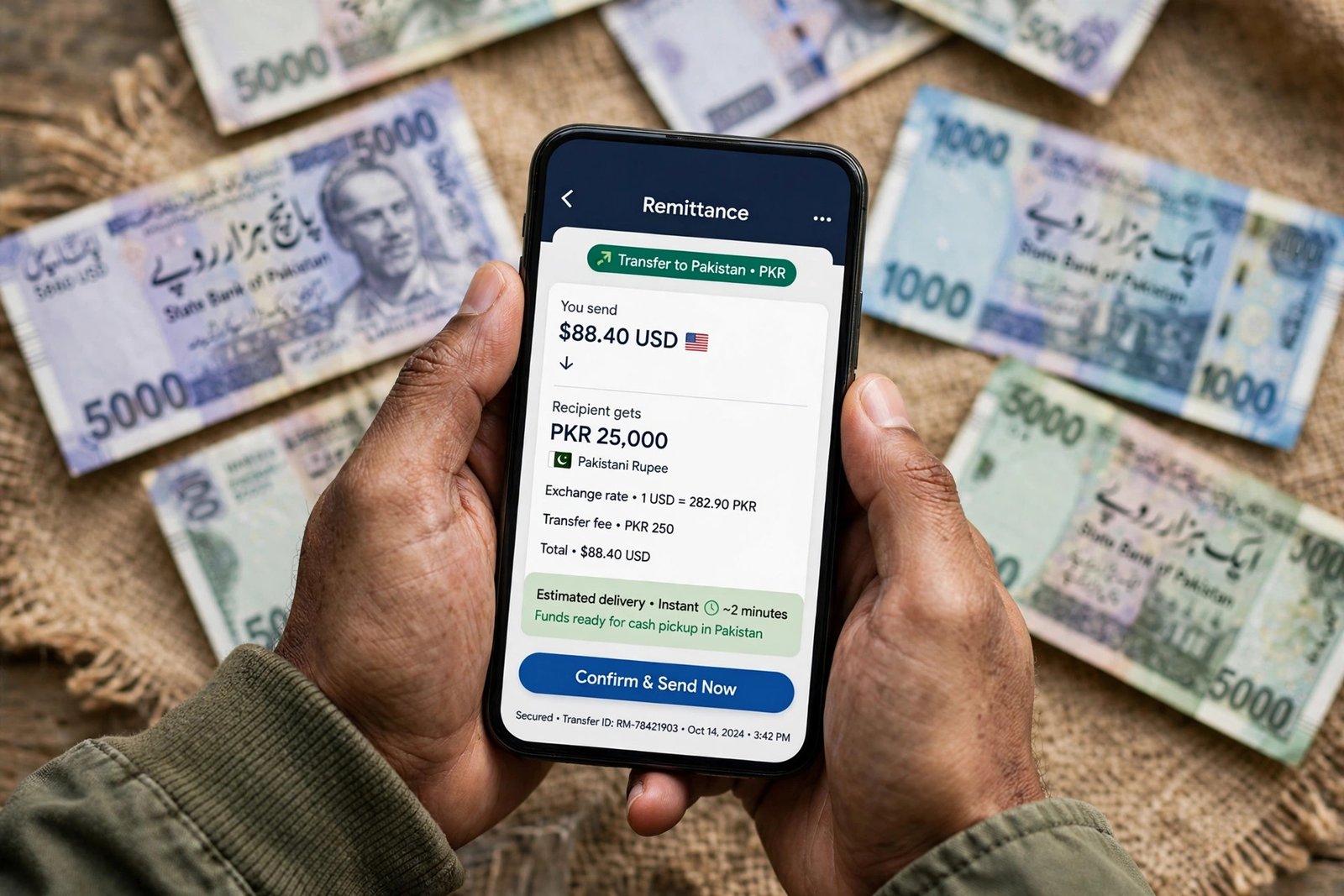
Always use official banking or licensed exchange-company channels: they are safer, they give you a paper trail, and the government offers incentives for remittances sent through formal channels — see Federal Government Programs 2026 for current schemes. Avoid informal hawala/hundi operators entirely: the rates look tempting, but you have zero protection if the money disappears, and it is illegal.
New Currency Notes in Pakistan
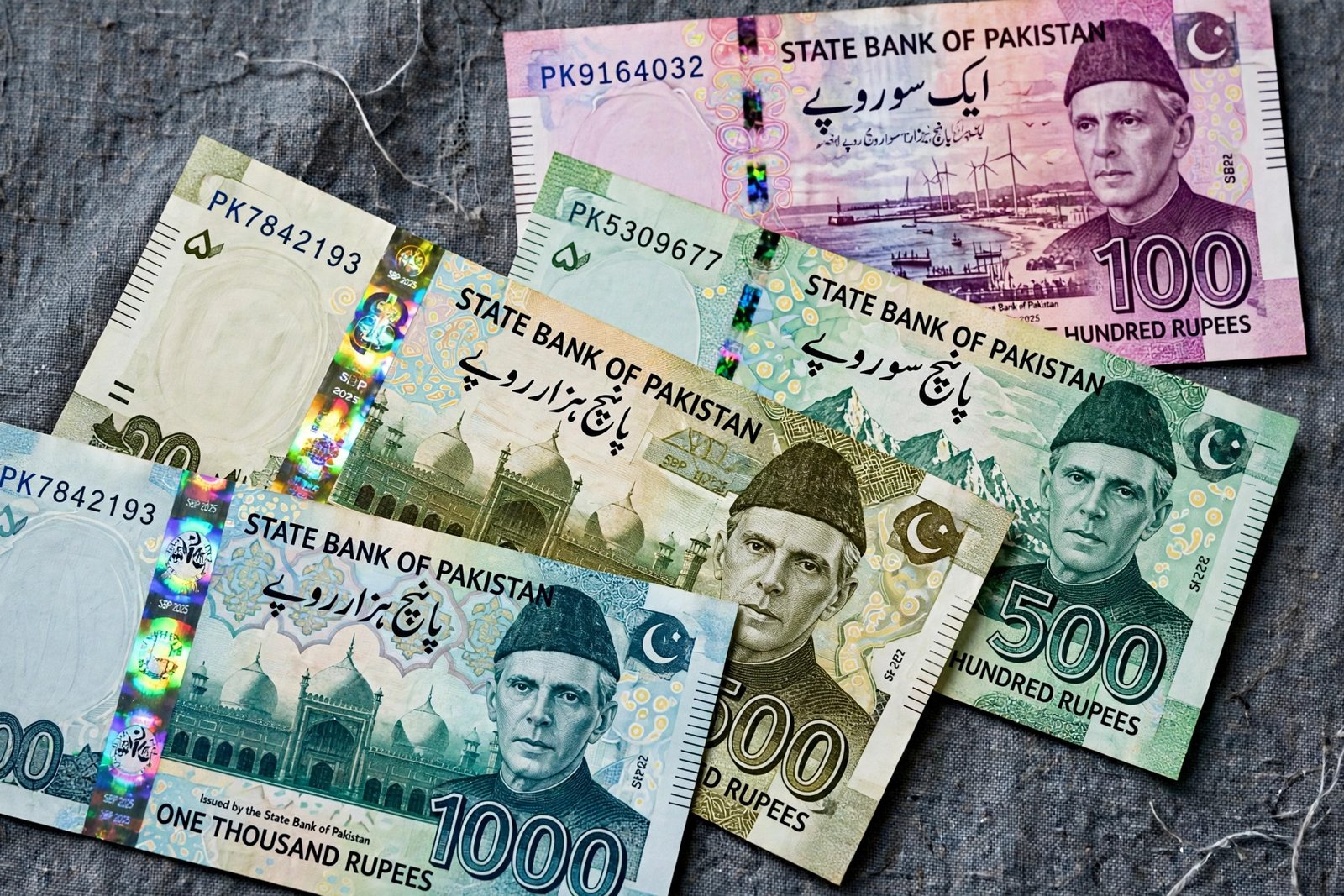
The State Bank of Pakistan has been rolling out redesigned banknotes with upgraded security features. If you handle cash regularly — shopkeepers, take note — learn the new designs so you can spot fakes. Our full explainer covers every denomination: New Currency Notes in Pakistan — SBP’s New Designs.
Sending & Receiving Money: Practical Guide
Banks vs Exchange Companies
Banks offer TT rates that are convenient if you already hold an account, but licensed exchange companies often quote slightly better open-market rates for cash transactions. For large amounts, get quotes from both — and always insist on a printed receipt showing the rate applied.
What You’ll Need
Sending money abroad legally requires documentation: CNIC, proof of purpose (university admission letter, medical papers, etc.) and compliance with State Bank limits. Receiving is simpler — the sender’s receipt and your CNIC are usually enough. Keep every receipt; you may need them for tax filing.
Timing Your Transfer
Rates fluctuate through the week. If your transfer is not urgent, watching the trend for a few days on our daily dollar update can save real money — but never try to “time the market” on money you need immediately.
Travel Currency Tips
- Buy before you fly: airport counters charge the worst rates in the country. Buy foreign currency from a licensed exchange company in the city a day or two before departure.
- Carry the receipt: you may need to show the currency exchange receipt at the airport, and it protects you if questions arise on return.
- Cards vs cash: international debit/credit cards use the bank’s rate plus a conversion margin — fine for hotels, expensive for small purchases. Carry a mix.
- Declare large amounts: Pakistan has legal limits on currency you can carry across borders. Check current State Bank rules before travelling.
How Exchange Rates Affect Your Wallet
Petrol and Diesel Prices
Pakistan imports nearly all its petroleum, priced in dollars. A weaker rupee directly raises fuel costs — which is why the petrol price and the dollar rate so often move together.
Gold Prices
Gold is priced in dollars internationally, so rupee weakness pushes local gold prices up even when world prices are flat. Track both on our gold rates hub and daily gold update.
Electricity Bills
Fuel for power generation is imported, so currency depreciation feeds into the fuel adjustments on your bill. Our NEPRA fuel adjustment explainer shows exactly how this reaches your meter.
Inflation on Everything Else
From cooking oil to mobile phones, import costs pass through to shop shelves. Understanding the dollar helps you understand inflation itself — start with US Inflation: What It Means for Pakistan.
Market & Economy: The Bigger Picture
Currency is one thread in the economic fabric. Follow the rest here:
- Dollar Rate Today — USD to PKR Live
- New Currency Notes in Pakistan — SBP’s redesigned banknotes
- Gold Rates in Pakistan — per tola and per gram, updated daily
- Gold Rate Pakistan Today — the daily price update
- Silver Rate Pakistan — per tola silver prices
- Petrol Price in Pakistan — latest fuel update
- NEPRA Fuel Adjustment — why your bill changes monthly
- US Inflation (CPI): What It Means for Pakistan
- Khaadi IPO on PSX — price, dates and how to apply
- How to Invest in the Pakistan Stock Exchange — beginner’s guide
- Prize Bonds in Pakistan 2026 — types, prizes, draw schedule
- Loan Programs in Pakistan 2026 — government, bank and interest-free loans
- Insurance in Pakistan 2026 — types, takaful and best companies
Frequently Asked Questions
What is the dollar rate in Pakistan today?
See our dollar rate today page for live interbank and open market USD to PKR rates, updated every morning with the day’s market context.
What is the difference between interbank and open market rates?
The interbank rate is the wholesale bank-to-bank rate (the “official” number in headlines). The open market rate is what exchange companies charge the public — usually slightly higher. You buy currency at the selling rate and sell at the buying rate.
Where can I get the best rate for sending money to Pakistan?
Compare your bank’s TT rate with two or three licensed exchange companies. Always use official channels — they are safer, documented, and may qualify you for government remittance incentives (see federal programs).
Why does the rupee keep falling against the dollar?
The main drivers are the trade deficit (more imports than exports), external debt repayments, and global dollar strength. Strong remittance inflows help support the rupee — which is why official remittance channels matter nationally, not just personally.
Should I buy dollars as an investment?
Holding dollars protects against rupee depreciation, but it earns nothing and timing is difficult. For most savers, a mix — some foreign currency, plus productive assets — works better. Read our PSX beginner’s guide and prize bonds guide before deciding.
What are the new currency notes in Pakistan?
The State Bank has introduced redesigned banknotes with modern security features. Full details by denomination: New Currency Notes in Pakistan.
How does the dollar rate affect gold prices?
Gold is priced in US dollars worldwide. When the rupee weakens, the same dollar-priced gold costs more rupees — so local gold prices rise even if the world price is unchanged. Follow both on our gold hub.
Is it legal to buy dollars from the open market?
Yes — from licensed exchange companies, with CNIC and a receipt, within State Bank limits. Avoid unlicensed dealers: no receipt means no protection and possible legal trouble.
Explore More on UrduPro
- Gold Rates in Pakistan — per tola and per gram, updated daily
- Prize Bonds in Pakistan — draws, prizes and results
- Jobs in Pakistan — career guides and application how-tos
- Mobile Prices in Pakistan — latest phones with PTA tax
- Car Prices in Pakistan — new cars, comparisons and guides
- Watch Prices in Pakistan — branded and smartwatches
- Business section — all our money and market coverage