Men’s Footwear in Pakistan: Khussas, Peshawari Chappal and Sneakers Compared
Men’s Footwear in Pakistan: Khussas, Peshawari Chappal and Sneakers Compared
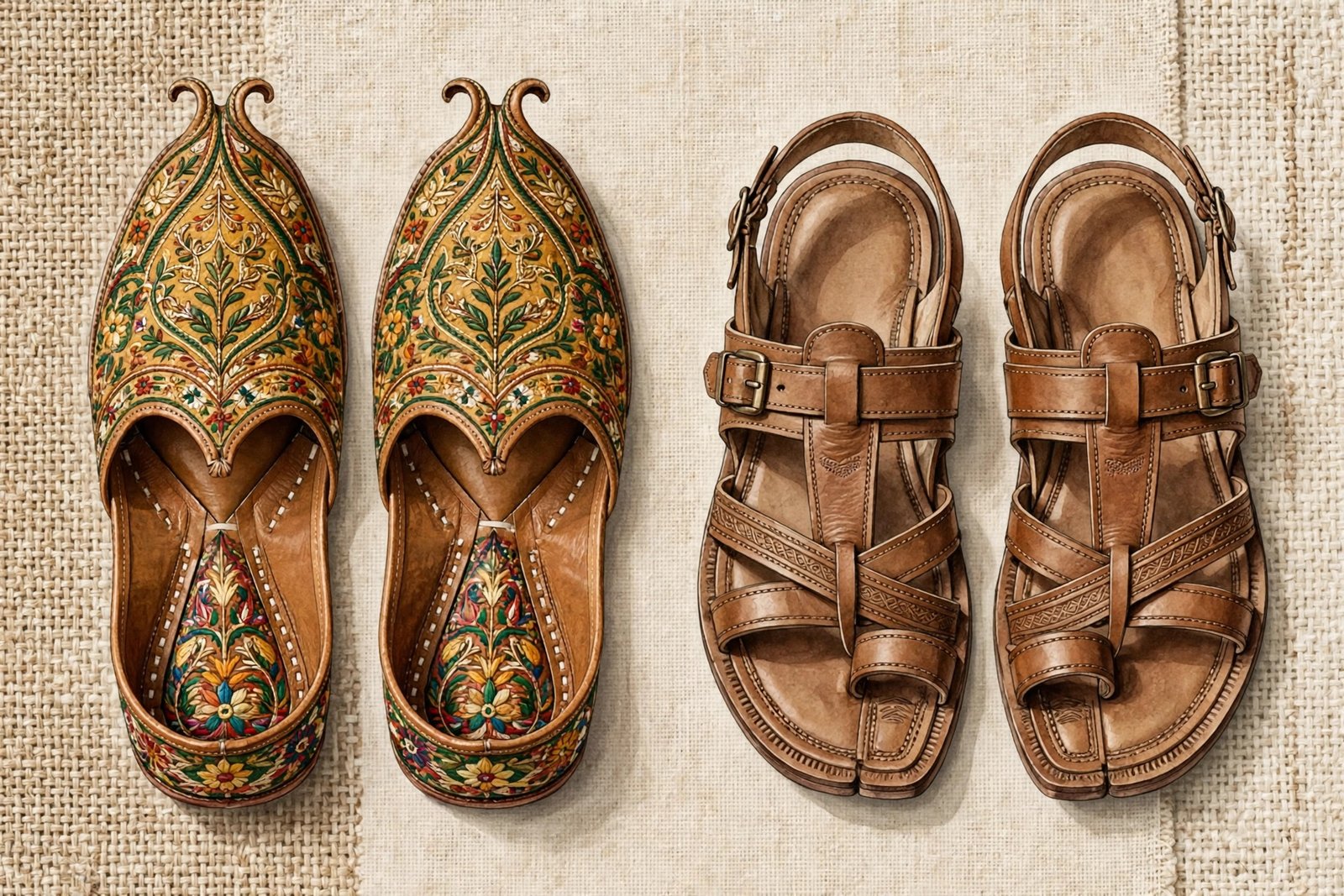
Shopping for men’s footwear Pakistan style means navigating one of the richest shoe cultures in South Asia — handcrafted khussas and Peshawari chappals with centuries of heritage on one side, and global sneaker drops on the other. In 2026, Pakistani men are wearing both, often in the same week. This guide compares the four pillars of the modern Pakistani man’s shoe rack: the khussa, the Peshawari chappal, the loafer/formal shoe, and the sneaker — with honest pros, cons, price bands and buying advice.
Men’s Footwear Pakistan: The Khussa — Heritage on Your Feet
The khussa is Pakistan’s most iconic traditional shoe: a handcrafted leather slipper with the distinctive curled toe, often embroidered with tilla (gold thread), dabka or mirror work. Originating in the royal courts of the Mughal era and perfected by artisans in Lahore, Multan and Bahawalpur, it remains the definitive wedding shoe — no groom’s sherwani is complete without a matching pair.
Expect to pay roughly Rs. 2,500–6,000 for a good handmade embroidered khussa in city markets, with premium designer pairs (from bridal-wear houses) reaching Rs. 10,000+. When buying, check that the sole is stitched, not just glued; press the insole — it should feel cushioned, not hollow; and walk in them — a khussa that’s tight in the shop will not magically loosen. Khussas pair with shalwar kameez, kurta pajama and sherwani; they do not belong with jeans. For wedding season, the khussa remains the crown jewel of men’s footwear Pakistan. Prices are approximate.
The Peshawari Chappal: From Charsadda to the World
Few items of men’s footwear in Pakistan have travelled as far as the Peshawari chappal. Handmade in Charsadda and Peshawar from genuine leather with its signature double-sole and criss-cross straps, it has gone from regional staple to national icon — and even international fashion runways. The classic “Kaptaan” style, popularised by Imran Khan, remains the benchmark design.
Price bands are wide: local handmade chappals sell for roughly Rs. 1,000–4,500 in Peshawar and Lahore markets, while branded versions from Junaid Jamshed, Borjan and similar labels run about Rs. 4,000–8,500+ for premium textured leather. Genuine leather is the key quality marker — bend the strap; real leather creases naturally and smells distinct, while synthetic (rexine) versions crack within months. A well-made leather chappal, conditioned occasionally, can last years and moulds to your foot — no survey of men’s footwear Pakistan would be complete without this icon. It is the most versatile traditional shoe: equally at home with shalwar kameez, jeans or chinos.
Loafers and Formal Shoes: The Office and Events
For offices, universities and formal dinners, every man needs at least one pair of proper closed shoes — the foundation of Pakistani men’s shoes for formal life. Loafers (penny or tassel) are the smart-casual sweet spot — comfortable, versatile and widely available from Bata, Servis, Hush Puppies Pakistan and English Shoes in the Rs. 3,500–9,000 range. Oxfords and Derbies in black or tan handle weddings, interviews and formal events; expect Rs. 5,000–15,000 for quality leather.
Fit rules matter more than brand: there should be a thumb’s width between your longest toe and the shoe’s end, the heel should not slip when you walk, and leather shoes need a day of rest between wears (cedar shoe trees extend their life dramatically). Buy formal shoes in the evening, when feet are slightly swollen — it prevents the classic mistake of morning-tight shoes. A quality pair of formals is a non-negotiable pillar of men’s footwear Pakistan for professionals.
Sneakers: The Everyday Essential
Sneakers have completed their takeover of casual men’s footwear in Pakistan. White minimalist sneakers (from Servis, Bata, or international brands via local retailers) pair with everything from jeans to kurta pajama for a contemporary fusion look — typically Rs. 3,000–8,000 locally. Running shoes from global athletic brands, bought from authorised retailers to avoid counterfeits, run Rs. 12,000–30,000+.
The counterfeit warning is serious: Pakistan’s markets are flooded with fake branded sneakers. Buy from official brand stores, authorised multi-brand retailers or verified online sellers; check stitching quality, sole labelling and box details. For daily beaters, local brands offer genuinely good value — a Rs. 4,000 pair from a reputable local maker often outlasts a Rs. 4,000 fake “imported” pair. For most young buyers, sneakers are the entry point into men’s footwear Pakistan fashion — and men’s footwear in Pakistan 2026 is more sneaker-driven than ever.
Building Your Shoe Rack: What to Own
The ideal rotation for the best shoes for men in Pakistan: one embroidered khussa (weddings/festive), one leather Peshawari chappal (daily traditional + smart casual), one pair of loafers or derbies (office/formal), one pair of white sneakers (casual), and one pair of running shoes (sports/daily comfort). Five pairs cover virtually every occasion — and rotating them lets each pair rest, which doubles their lifespan. Stick to this rotation and every men’s footwear Pakistan occasion, from weddings to workouts, stays covered.
Care basics: polish leather monthly, use wooden shoe trees, never machine-wash leather, and store chappals away from direct sunlight to prevent cracking. Good shoes, maintained well, are cheaper per-wear than cheap shoes replaced yearly.
Pair your footwear with the right outfit using our shalwar kameez stitching guide and the complete men’s fashion in Pakistan 2026 style guide.
Pingback: Shalwar Kameez Designs for Men 2026: Styles and Stitching Guide - Urdu Pro
Pingback: Men's Fashion in Pakistan 2026: Trends, Brands and Style Guide - Urdu Pro