Shalwar Kameez Designs for Men 2026: Styles and Stitching Guide
Shalwar Kameez Designs for Men 2026: Styles and Stitching Guide
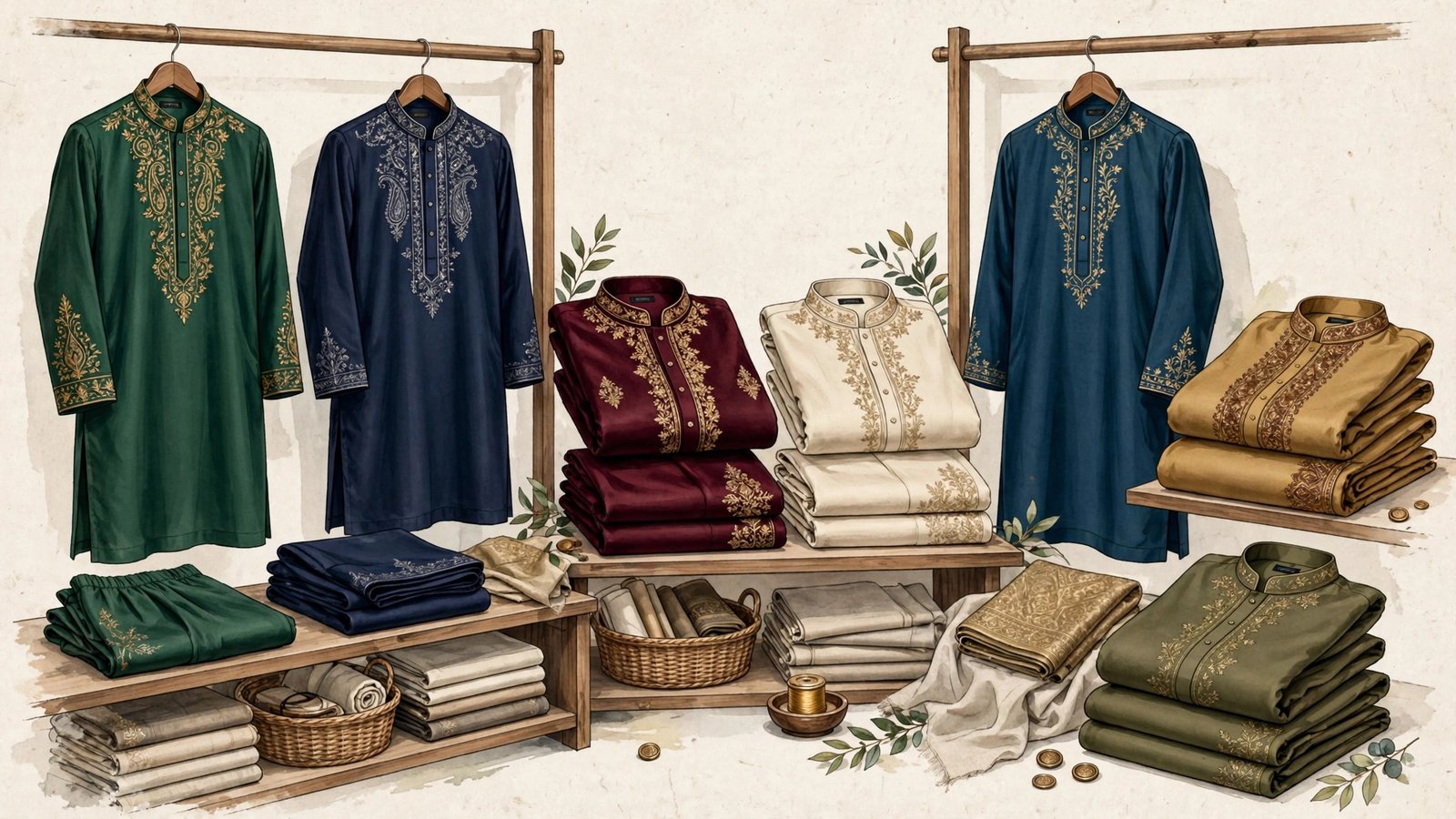
Few garments carry as much cultural weight as the shalwar kameez — and shalwar kameez designs for men in 2026 prove the classic is evolving, not fading. From boardrooms to baraats, the national dress of Pakistan is being reimagined with sharper collars, smarter cuts and richer fabrics. This guide walks you through every major design element: collars, cuffs, plackets, cuts and fabrics — plus practical stitching advice and what each option typically costs.
Shalwar Kameez Designs for Men: Collar Styles That Define the Look
The collar is the first thing people notice, and 2026’s shalwar kameez designs for men offer more choice than ever in men’s shalwar kameez styles. The band collar (also called the sherwani or Mandarin collar) remains the most popular — clean, formal and flattering on most face shapes. The regular shirt collar gives a semi-western look that pairs well with waistcoats. The V-placket or kurta collar, with its simple overlapping neckline and button loop, is the casual everyday choice.
For festive wear, consider the embroided neckline — subtle thread work around the collar and placket that elevates a plain suit without being flashy. A useful rule: stiff, structured collars (with fusing/bukram) suit formal and office wear, while soft unstructured collars are more comfortable for daily summer use. Ask your tailor which interlining he uses — cheap fusing bubbles after a few washes.
Cuts and Fits: Straight, Slim and Classic
The silhouette of the kameez has three main families. The straight cut falls evenly from shoulder to hem — the traditional, comfortable option and the most forgiving across body types. When exploring shalwar kameez designs for men, always match the cut to your body type before choosing between slim and straight silhouettes. The slim/tapered fit narrows at the waist for a modern, tailored look; it photographs beautifully but demands accurate measurements. The A-line or flared cut, slightly wider at the hem, is regaining popularity for its graceful drape and airflow in heat.
Sleeve design matters too: full sleeves with French or button cuffs for formal wear, and the classic simple cuff for daily use. Side slits (chaaks) should sit at a comfortable height — roughly mid-thigh — so the kameez moves freely when you sit. Shalwar styles range from the traditional loose shalwar with its characteristic gathers to the sleeker pajama cut, which younger men increasingly prefer with kurtas.
Fabrics: Choosing the Right Cloth for the Season
Fabric makes or breaks a shalwar kameez. For summer, cotton (especially cotton-satin and Egyptian cotton blends) breathes best; expect branded unstitched cotton suits around Rs. 3,000–6,000. Wash-and-wear (poly-viscose) is the pragmatic daily choice — wrinkle-resistant and durable — typically Rs. 2,000–4,500 unstitched. Latha, the crisp starched cotton, is the traditional choice for formal white suits but needs regular ironing.
For winter, khaddar (hand-loomed cotton) offers warmth with texture, karandi adds a subtle sheen for semi-formal wear, and wool blends handle the coldest weeks in northern Punjab and KP. For weddings and Eid, jamawar, raw silk and self-jacquard fabrics bring the richness the occasion demands — usually Rs. 8,000–20,000 for the cloth alone. Matching the right fabric to the occasion is half the battle in shalwar kameez designs for men. All prices are approximate; confirm at the shop before buying.
Stitching Guide: Getting the Perfect Fit From Your Tailor
Even the finest fabric looks ordinary with poor stitching. Take a well-fitting suit as your reference sample rather than relying on verbal instructions. Specify: collar type and stiffness, placket style (visible buttons vs. concealed), cuff width, kameez length (for most men, just below the knee or mid-thigh for a modern look), and shoulder seam placement — it should sit exactly at the shoulder bone.
Good tailors in major cities charge roughly Rs. 1,500–3,000 for a standard suit, more for embroidered or designer cuts, and need 5–10 days (longer before Eid — the season when the newest shalwar kameez designs 2026 hit the shelves, so book at least three weeks ahead; early shoppers get the best pick of fabrics and tailoring slots). Always do a trial fitting if the tailor offers one; small adjustments to sleeve length and waist suppression transform the result. Keep your tailor’s measurements card — consistent sizing across suits is the secret of a sharp wardrobe.
Price Guide: What Shalwar Kameez Costs in 2026
Budget unstitched suits start around Rs. 2,000 in local markets; mid-range branded unstitched (Gul Ahmed, Al Karam, Junaid Jamshed) runs Rs. 3,500–7,000; branded ready-made suits typically cost Rs. 4,500–12,000; and the latest shalwar kameez design for men from top designers starts near Rs. 15,000 and climbs steeply. Stitching adds Rs. 1,500–3,000. Buying unstitched cloth and using a trusted tailor usually delivers the best value per rupee — and with this price map in hand, navigating shalwar kameez designs for men becomes a matter of taste rather than guesswork. Those who prefer ready-made designer wear can browse festive collections from established labels like Amir Adnan.
Complete your traditional look with the right men’s footwear — our comparison of khussas, Peshawari chappals and sneakers shows what pairs with each design. For the broader picture, see our men’s fashion in Pakistan 2026 style guide.